Selecting the right jaw plate manufacturers is a critical decision for mining and aggregate operations, as these wear components directly dictate the uptime and efficiency of primary crushing circuits. In the context of the heavy metal casting industry, the quality of the jaw plate determines how long a machine can operate before costly maintenance stops occur.
Operational challenges often arise from premature wear, catastrophic fractures, or mismatched material grades for specific ore types. Whether dealing with highly abrasive granite or high-impact basalt, the metallurgy and casting precision of the replacement plates determine the total cost per ton of material processed.
This analysis provides a comprehensive framework for evaluating manufacturing capabilities, comparing metallurgical grades like high-manganese and high-chromium steels, and establishing a technical selection process to optimize crusher lifespan.

Evaluating Casting Capabilities of Manufacturers

When assessing jaw plate manufacturers, the underlying casting technology is the primary indicator of product consistency. Advanced methods such as lost foam casting, coated sand shell casting, and resin sand casting allow for tighter dimensional tolerances and reduced internal porosity, which are essential for plates subject to extreme compressive forces.
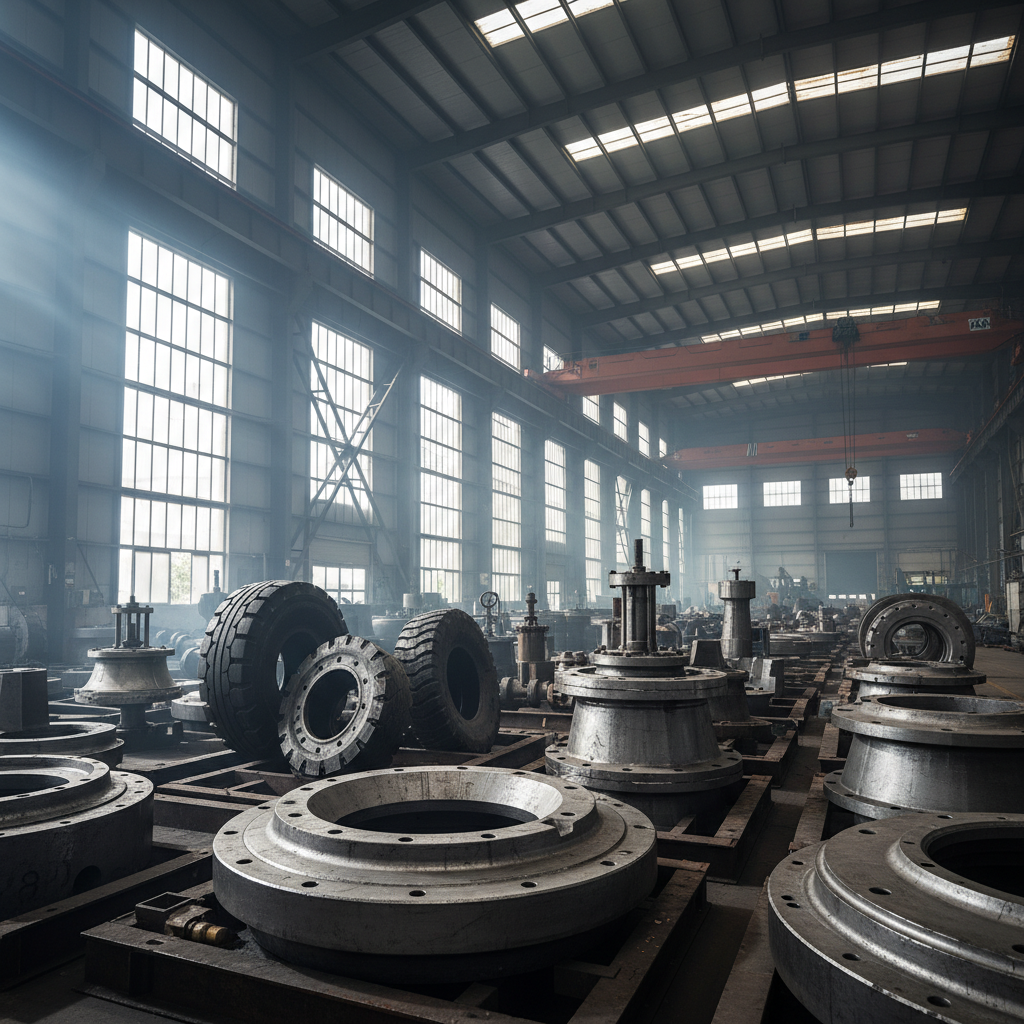
Hebei Dezhong Machinery Co., Ltd. (DZMC) utilizes these diverse casting technologies within a facility spanning 56,760 square meters, ensuring that the metallurgical structure is uniform across large-scale components. This capacity allows for reverse development based on customer samples or precise production from technical drawings, ensuring a perfect fit for various crusher brands.
High-Manganese Steel: The Work-Hardening Standard
High-manganese steel is the industry standard for jaw plates due to its unique ability to work-harden. Under the impact of crushing, the surface hardness increases while the core remains tough, preventing the plate from cracking under heavy loads. Typical grades include Mn13 for general applications and Mn18 for more severe conditions.
For instance, Mn13 typically starts at 200-250 HB and can reach 450-550 HB during operation, making it ideal for medium abrasive materials. In contrast, Mn18 is engineered for highly abrasive granite or basalt, achieving work-hardened hardness levels of 500-600 HB, which significantly extends the service interval in high-stress environments.
High-Chromium Cast Iron for Extreme Abrasion
In scenarios where the material being crushed is silica-rich or extremely abrasive, high-chromium cast iron (Cr26, Cr28) is preferred over manganese steel. Unlike manganese steel, which relies on impact to harden, chromium alloys provide consistent hardness throughout the service life due to the presence of M7C3 carbides.
Cr26 alloys typically maintain a hardness of 58-62 HRC, while the premium Cr28 grade reaches 60-64 HRC. These plates offer superior corrosion resistance and an exceptional resistance to sliding abrasion, though they lack the impact toughness of manganese steel, making them better suited for steady-state abrasive wear rather than high-impact shocks.
Bimetal Composite Technology and Performance
Bimetal composite jaw plates represent a hybrid approach to wear resistance. By utilizing a vacuum casting process, manufacturers can bond a high-chromium cast iron wear surface (60-64 HRC) to a tough manganese steel base (200-250 HB). This removes the trade-off between hardness and toughness.
This relative performance index illustrates the balance between impact absorption and abrasion resistance. Bimetal plates typically provide a 2-3x longer lifespan compared to standard single-material plates, specifically in mixed-material processing where both shock and abrasion are present.
Matching Plate Profiles to Material Types
The geometry of the jaw plate—its tooth profile—is as important as the material grade. Different profiles are designed to handle different feed sizes and desired end-product shapes. Deep-tooth profiles are often used for primary crushing to increase grip, while flatter profiles are used for secondary stages to optimize throughput.
Application across crusher types varies significantly: jaw crushers require profiles optimized for primary compression, cone crushers utilize concave/mantle designs for cubical products, and hammer crushers require reinforced fixing points and special alloy combinations to withstand high-velocity impact crushing.
Quality Control and Material Verification
Reliable jaw plate manufacturers must employ rigorous testing to ensure the chemical composition matches the specified grade. Spectrometer material verification is used to confirm manganese and chromium percentages, while ultrasonic testing is critical for detecting internal voids or cracks that could lead to catastrophic failure during operation.
Beyond the casting stage, dimensional inspection using CMM (Three-Dimensional Coordinate Measuring Machines) ensures that the plates fit the crusher frame perfectly. Improperly fitted plates can cause uneven wear or damage the crusher's main frame, leading to expensive structural repairs and extended downtime.
Manufacturer Selection Decision Framework
Choosing the right supplier requires a balance of metallurgical expertise, production capacity, and quality assurance. The following framework compares the three primary material solutions based on operational requirements.
| Material Type | Primary Strength | Best Application | Main Limitation |
|---|---|---|---|
| Mn13 Steel | Impact Toughness | General Crushing | Lower Abrasion Resistance |
| Mn18 Steel | Work-Hardening | Abrasive Granite | High Initial Cost |
| Cr26 Iron | Surface Hardness | Silica-Rich Ore | Brittle under Impact |
| Cr28 Iron | Corrosion Resistance | Highly Abrasive | Low Shock Absorption |
| Bimetal Composite | Hybrid Performance | Mixed Materials | Complex Manufacturing |
| Carbon Steel | Low Cost | Soft Materials | Very Short Lifespan |
By aligning the material choice with the specific geological characteristics of the mine, operators can reduce the cost per ton and minimize the frequency of replacement cycles.
Frequently Asked Questions
Choose Manganese steel for high-impact applications where materials are tougher but less abrasive. Choose Chromium cast iron for materials that are extremely abrasive (like quartz) but involve less shock loading.
Bimetal plates combine a hard chromium surface for wear resistance with a manganese steel core for impact strength, typically resulting in a 2-3x longer lifespan than standard plates.
Manganese steel plates generally have good weldability for repairs. However, high-chromium cast iron is much more difficult to weld and often requires specialized procedures to avoid cracking.
Common causes include using an incorrect material grade for the ore type, poor casting quality resulting in internal defects, or incorrect installation leading to uneven stress distribution.
Work-hardening occurs when the impact of the crushing process transforms the austenite in manganese steel into martensite, significantly increasing the surface hardness during actual operation.
Look for ISO9000 quality management system certification and evidence of rigorous internal testing, such as spectrometer analysis and ultrasonic flaw detection.
Conclusion
The efficiency of a crushing plant depends heavily on the synergy between the equipment and the wear parts. By understanding the metallurgical differences between Mn-series and Cr-series alloys, and leveraging advanced bimetal composites, operators can drastically reduce downtime and lower the overall cost per ton of material processed.
For organizations evaluating new wear parts, reviewing the technical capabilities and material grades available at www.dzmccasting.com can provide the necessary data to optimize crusher performance and extend component service life.