The operational efficiency of heavy-duty crushing equipment often hinges on a single technical variable: the ability of the wear components to withstand extreme thermal and mechanical stress. When standard alloys fail prematurely under high-friction environments, the industry turns to specialized material engineering to prevent unplanned downtime.
Thermal degradation and abrasive wear are not separate issues but synergistic forces that accelerate the erosion of crusher liners and mortar walls. Addressing these challenges requires a strategic shift from generic steel grades to alloys specifically designed for high-temperature stability and impact toughness.
Selecting the right custom heat resistant steel involves analyzing the specific mineralogy of the feed material and the kinematic profile of the machinery. This guide explores the technical logic behind material selection and how precision casting ensures these alloys perform in the most demanding mining environments.


The foundation of heat-resistant and wear-resistant steel lies in the control of alloying elements like Chromium (Cr), Manganese (Mn), and Carbon (C). In the context of black metal casting, the goal is to create a microstructure that remains stable even as kinetic energy transforms into thermal energy during the crushing process.
For instance, high-manganese steels (Mn13, Mn18) utilize a unique work-hardening mechanism. While they start with a relatively low hardness, the surface layers transform into a hard, wear-resistant martensitic structure upon impact, making them indispensable for high-impact applications like jaw crushers.
Selecting the appropriate grade of steel depends on the balance between abrasion and impact. High-chromium cast irons (Cr26, Cr28) are designed for extreme abrasion resistance. With hardness levels reaching HRC 58-62, these materials are ideal for processing highly abrasive minerals like quartz or iron ore where the primary failure mode is scratching rather than fracturing.
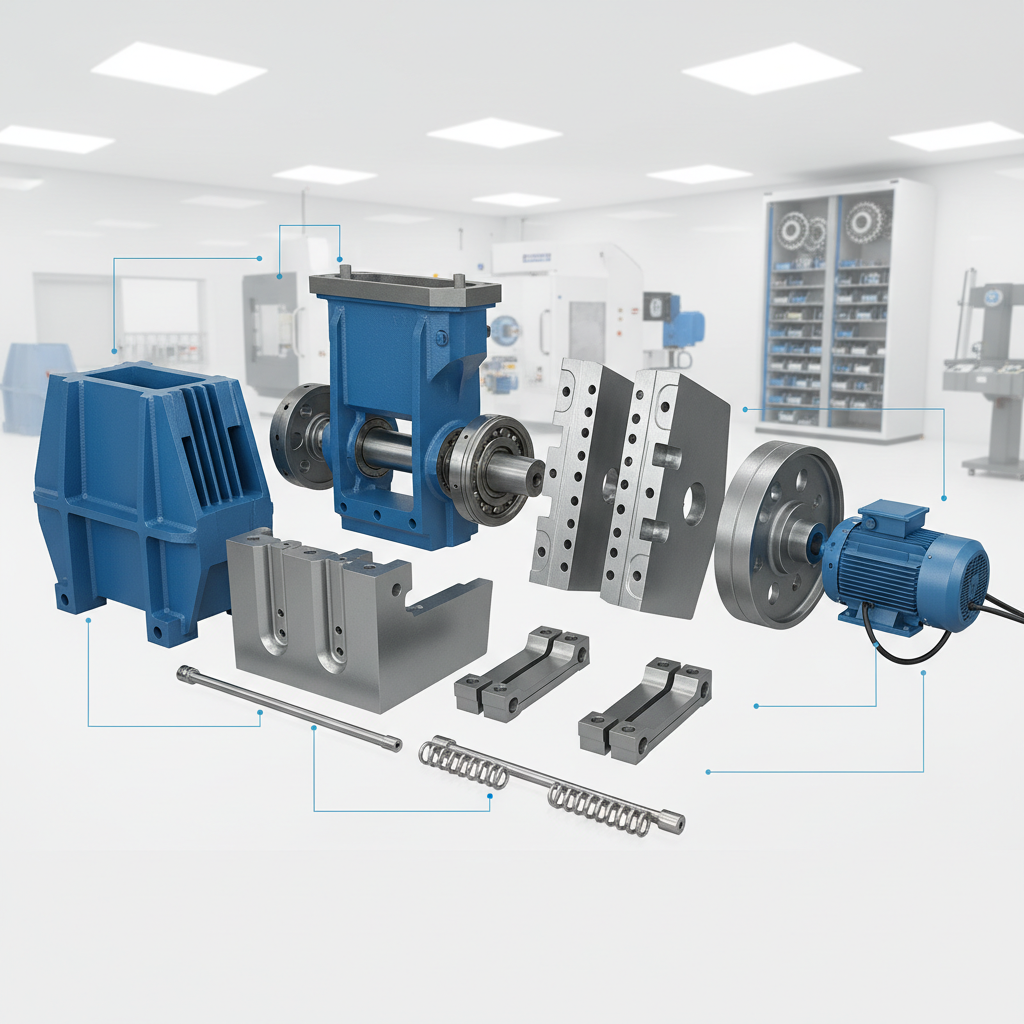
Beyond chemistry, the manufacturing process plays a critical role. Advanced casting techniques—such as lost foam or coated sand shell casting—are utilized by Hebei Dezhong Machinery Co., Ltd. (DZMC) to ensure uniform material density. This prevents internal voids that could become failure points when the steel is subjected to thermal expansion and contraction.
Precision machining via CNC centers further optimizes performance by ensuring a perfect fit within the crusher housing. An improper fit leads to uneven loading, which creates localized "hot spots" and premature wear, regardless of the steel's inherent heat resistance.
One of the most persistent challenges in metallurgy is the inverse relationship between hardness and toughness. A material that is extremely hard is often brittle, while a tough material may wear away too quickly in abrasive conditions.
The emergence of bimetal composites resolves this conflict by overlaying a hard chromium-iron surface onto a tough manganese steel base, effectively isolating the impact absorption and abrasion resistance functions.
This composite approach allows operators to customize wear zones. By reinforcing only the high-abrasion areas, the overall cost-performance ratio is optimized, extending the service life of Rolling Mortar Walls by 30-50% compared to single-alloy alternatives.
To evaluate the suitability of different alloys, industry professionals use relative indices that measure performance across five key dimensions: Impact Resistance, Abrasion Resistance, Thermal Stability, Cost-Efficiency, and Longevity.
High-manganese steel excels in impact, whereas high-chromium iron dominates in abrasion resistance. Bimetal composites attempt to provide a balanced profile, making them the most versatile option for mixed-material feed.
The real-world application of custom heat resistant steel is best illustrated in the differences between primary and secondary crushing. In a primary jaw crusher processing granite or basalt, the high-impact forces necessitate the work-hardening properties of Mn13 or Mn18 steel to prevent catastrophic brittle failure.
Conversely, in secondary cone crushers handling abrasive aggregates or recycled concrete, the focus shifts toward maintaining a sharp crushing geometry. In these scenarios, high-chromium iron or bimetal composites are preferred to ensure the equipment maintains consistent output without frequent geometry degradation.
Modern metallurgy has moved beyond simple casting toward "precision thermal management." The heat treatment process is now meticulously optimized to enhance the internal grain structure of the steel, which directly impacts its ability to dissipate heat during operation.
Non-destructive testing (NDT) has become a standard requirement for high-performance components. By verifying structural integrity before delivery, manufacturers can guarantee that the components will not fail under the combined load of thermal stress and physical impact.
The integration of robotic CNC machining ensures that parts for Metso, Sandvik, and Symons series crushers fit with zero tolerance, reducing vibration and mechanical friction—two primary sources of heat in crushing circuits.
Procuring wear parts should not be based on price alone, but on the "cost per ton" crushed. A cheaper alloy that requires replacement every three months is significantly more expensive than a premium alloy that lasts six months, when accounting for lost production uptime.
The decision framework must prioritize the feed material's properties. Quartzite demands chromium; basalt demands manganese; mixed asphalt demands bimetal. Misaligning the material to the application is the leading cause of premature wear.
Finally, the reliability of the manufacturer's quality system, such as ISO9000 certification, ensures that the chemical composition of the alloy is consistent across every batch, preventing "weak links" in the production line.
| Feed Material | Primary Stress | Recommended Alloy | Selection Logic |
|---|---|---|---|
| Granite / Basalt | High Impact | High-Mn Steel | Work-hardening capability |
| Quartz / Iron Ore | Severe Abrasion | High-Cr Iron | Extreme surface hardness |
| Mixed Aggregates | Mixed Stress | Bimetal Composite | Balanced toughness/hardness |
| Recycled Concrete | Moderate Abrasion | Mn-Steel / Bimetal | Cost-performance ratio |
| Slag / Abrasives | High Friction | High-Cr Iron | Corrosion & wear resistance |
| Soft Limestone | Low Impact | Carbon/Low Alloy | Basic wear requirement |
In the crushing industry, heat resistance refers to the alloy's ability to maintain its mechanical properties, such as hardness and structural integrity, while subjected to the intense thermal energy generated by friction and impact. Unlike furnace steels, these alloys must resist thermal softening and prevent the formation of internal cracks during rapid temperature fluctuations.
The choice depends on the nature of the wear. If your operation involves high-impact crushing of hard rocks like granite, High-Mn steel is superior because it hardens under impact. If you are processing highly abrasive, non-impact materials like quartzite or iron ore, High-Cr iron is the better choice due to its inherent high hardness (HRC 58-62).
Yes. By combining a manganese steel base for toughness with a chromium iron overlay for hardness, bimetal composites eliminate the trade-off between the two. This allows the component to absorb heavy impacts without cracking while resisting the abrasive "scrubbing" effect of the ore, typically extending service life by 30% to 50%.
CNC machining ensures precise dimensions for a perfect fit within the crusher. If a wear part is slightly undersized or misaligned, it creates uneven pressure distribution and excessive vibration. This leads to localized friction and overheating, which can cause even the highest quality heat-resistant steel to fail prematurely.
Custom castings can be more cost-effective if they are tailored to the specific mineralogy of your site. Standard OEM parts are designed for general use; a custom alloy optimized for your specific rock type can reduce replacement frequency and downtime, lowering the overall cost per ton of processed material.
Heat treatment optimizes the alloy's microstructure, ensuring that the hardness is distributed uniformly. Proper quenching and tempering prevent internal stresses that could lead to brittle fracture. It essentially "locks in" the material's ability to withstand both high temperatures and heavy mechanical loads.
The transition from standard wear parts to custom heat resistant steel represents a move toward data-driven maintenance. By aligning material chemistry—whether Mn13, Cr28, or bimetal composites—with the specific physical demands of the ore, mining operators can significantly reduce their operational expenditure.
Ultimately, the longevity of a crusher's mortar walls is a product of three factors: the correct alloy selection, precision casting and machining, and a rigorous heat treatment protocol. Investing in these technical details ensures that the machinery remains productive, minimizing downtime and maximizing throughput in the most abrasive environments.