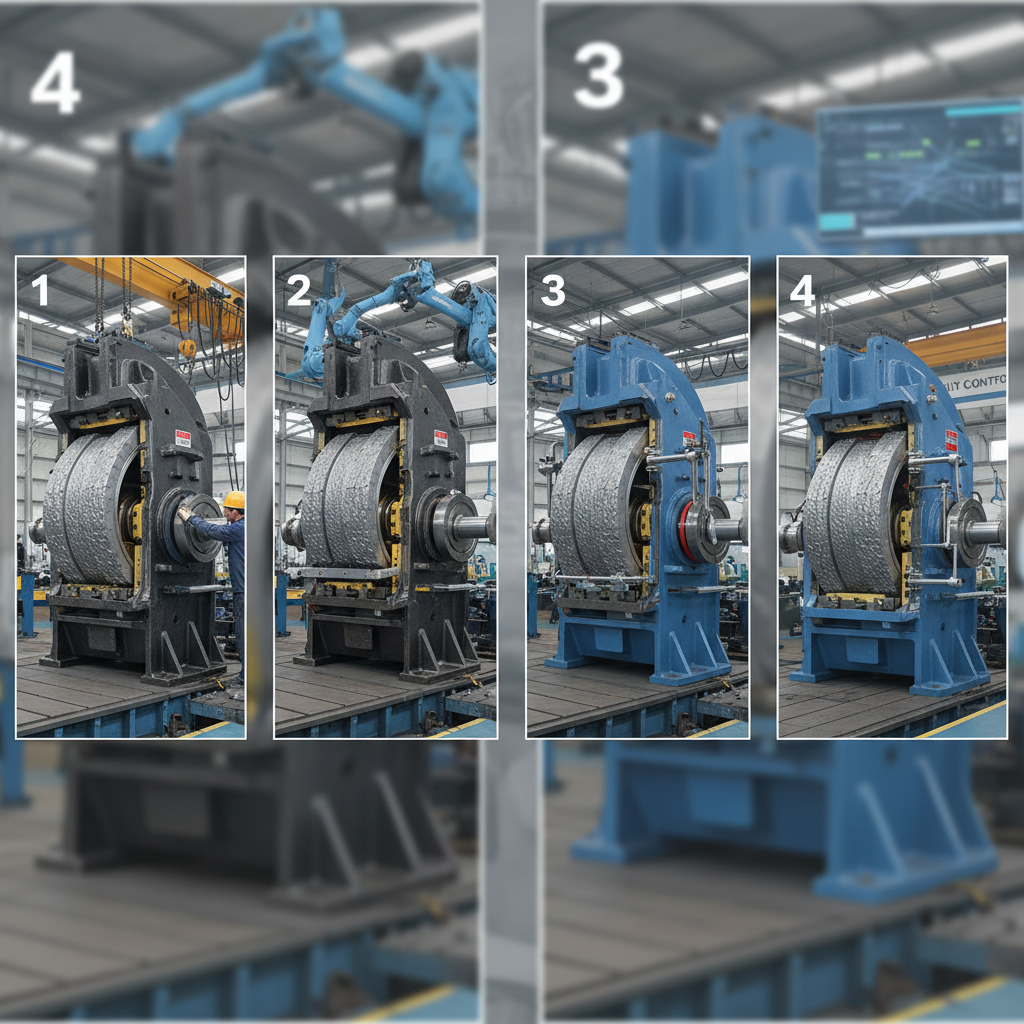
In the demanding world of heavy-duty mining and quarrying, the efficiency of a primary crushing circuit depends almost entirely on the integrity of its wear components. primary gyratory crusher parts are the frontline defense against extreme abrasive forces, ensuring that massive boulders are reduced to manageable sizes without compromising the machine's structural stability. Understanding the metallurgy and geometry of these parts is not just a technical necessity but a financial imperative for operators looking to maximize uptime.
The global demand for minerals and aggregates continues to rise, pushing primary crushers to operate under increasingly harsh conditions with harder ores. This shift has placed a spotlight on the importance of high-performance primary gyratory crusher parts, where the balance between hardness and toughness determines the lifespan of the equipment. When these components fail prematurely, the resulting downtime can cost mining operations thousands of dollars per hour, making the selection of premium casting materials a critical strategic decision.
By integrating advanced heat-resistant steel and precision casting techniques, modern primary gyratory crusher parts provide the reliability needed for continuous 24/7 operations. Whether it is the main shaft, the concave, or the mantle, each part must be engineered to withstand immense compressive stress while resisting the constant scouring of abrasive minerals. This guide explores the technical depths of these components and how they drive productivity in the global mining industry.
Global Industry Relevance of Primary Gyratory Crusher Parts
On a global scale, the mining industry is the backbone of modern infrastructure, providing the raw materials necessary for everything from skyscrapers to electric vehicle batteries. primary gyratory crusher parts play a pivotal role here, as the primary crusher is the first stage of the comminution process. According to international mining standards and ISO guidelines, optimizing the wear life of these parts is the most effective way to reduce the carbon footprint of a mine by decreasing the frequency of heavy machinery transport and replacement.
The challenge lies in the geological diversity of ore bodies. From the iron mines of Australia to the copper belts of Chile, the abrasive nature of the rock varies wildly. This requires a highly adaptable approach to the manufacturing of primary gyratory crusher parts, where material scientists must tailor the alloy composition—such as adjusting chromium or manganese levels—to match the specific hardness of the processed material, ensuring global supply chains remain uninterrupted.
Defining the Core Function of Primary Gyratory Crusher Parts
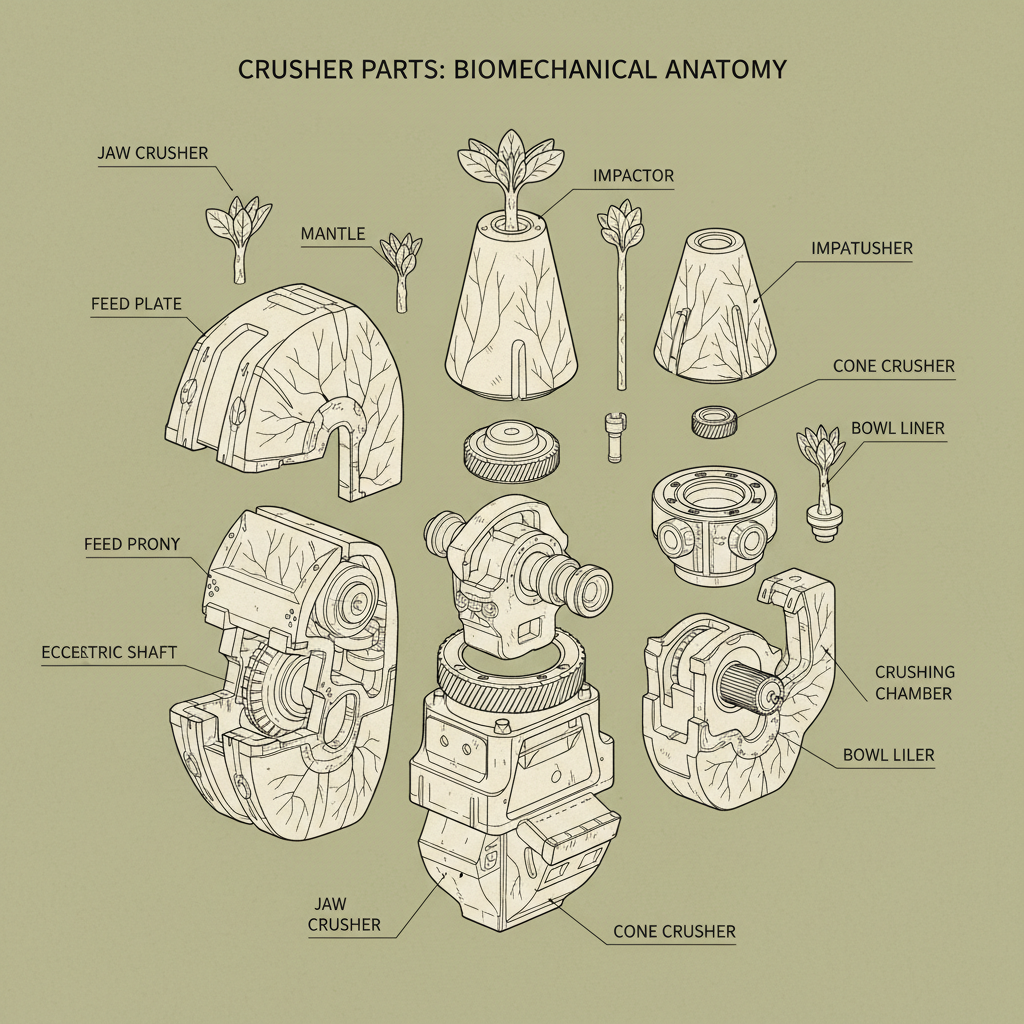
In simple terms, primary gyratory crusher parts are the heavy-duty components that facilitate the crushing action of a gyratory crusher. Unlike jaw crushers that use a reciprocating motion, the gyratory crusher utilizes an eccentric drive to move a conical head (the mantle) within a fixed bowl (the concave). The "parts" referred to typically include the mantle, concave liners, the eccentric, and the main shaft, all of which must work in perfect synchronicity to compress rock until it fractures.
From an industrial perspective, these parts are the "consumables" of the mining world. While the frame of the crusher may last for decades, the wear liners—the primary gyratory crusher parts in direct contact with the ore—are designed to wear away over time. The goal of modern engineering is to extend this wear life as much as possible. By doing so, companies can avoid the catastrophic risk of "punching through" the liner, which could damage the main frame of the machine.
The connection to broader humanitarian and industrial needs is clear: the more efficiently we can crush rock, the more affordably we can extract the minerals needed for global development. Whether it is limestone for cement in developing urban areas or gold and copper for high-tech electronics, the reliability of primary gyratory crusher parts directly influences the cost and availability of essential global resources.
Key Factors Driving Component Durability
The first critical factor for primary gyratory crusher parts is Material Hardness vs. Toughness. A part that is too hard will be brittle and may crack under the impact of a massive boulder (spalling), while a part that is too soft will wear away too quickly. The ideal component utilizes a specialized alloy that provides a hard surface for abrasion resistance but maintains a tough core to absorb shock.
Secondly, Geometric Precision is paramount. If the primary gyratory crusher parts, such as the mantle and concave, do not fit perfectly with a tight tolerance, "gap" areas occur. These gaps lead to uneven wear patterns and can cause localized stress concentrations, which significantly shorten the operational life of the liners and increase the risk of mechanical failure.
Finally, Heat Treatment Processes define the ultimate performance of the steel. For primary gyratory crusher parts, controlled quenching and tempering are used to create a uniform martensitic structure in the steel. This ensures that the wear resistance is consistent throughout the entire thickness of the part, preventing premature failure in the mid-section of the liner.
Global Applications and Industrial Use Cases
The application of high-grade primary gyratory crusher parts spans across the most rugged environments on Earth. In the high-altitude mines of the Andes, where temperatures fluctuate wildly, these parts must maintain their structural integrity without becoming brittle in the cold. In these regions, the use of heat-resistant and impact-resistant steel alloys ensures that the crushing process remains consistent despite the extreme environmental stress.
In remote industrial zones, such as the iron ore fields of Western Australia, the focus shifts to scalability and logistics. Because replacing primary gyratory crusher parts requires massive cranes and significant labor, operators prioritize "extra-life" liners. By utilizing advanced casting techniques that increase the density of the chromium carbides, mines can extend the interval between maintenance shutdowns from months to years.
Performance Analysis of Different Primary Gyratory Crusher Parts Alloys
Long-Term Economic Value and Reliability
Investing in premium primary gyratory crusher parts provides a tangible return on investment (ROI) that extends far beyond the initial purchase price. While low-cost alternatives may seem attractive, they often lead to increased "cost per ton" due to frequent replacements and unplanned downtime. High-quality parts ensure a stable throughput, allowing the entire downstream processing plant—including secondary and tertiary crushers—to operate at peak efficiency.
Beyond the balance sheet, there is a critical safety and trust component. A catastrophic failure of a main shaft or an eccentric in a gyratory crusher can be dangerous for the onsite crew. By utilizing primary gyratory crusher parts manufactured to rigorous E-E-A-T (Experience, Expertise, Authoritativeness, and Trustworthiness) industrial standards, mining companies protect their most valuable asset: their people. The peace of mind that comes from knowing the equipment can handle the hardest ore is invaluable.
Future Trends in Wear-Resistant Metallurgy
The future of primary gyratory crusher parts is being shaped by the digital transformation of the mining industry. We are seeing the integration of "smart liners"—wear parts embedded with sensors that can monitor thickness in real-time. This allows operators to predict exactly when a part will fail, shifting maintenance from a reactive "break-fix" model to a predictive, data-driven strategy.
Material science is also evolving with the introduction of nano-structured alloys and additive manufacturing (3D printing) for complex internal geometries. These innovations allow for primary gyratory crusher parts that have optimized weight-to-strength ratios, reducing the energy required to drive the eccentric motion and thereby lowering the overall electrical consumption of the mine.
Furthermore, there is a growing push toward "green casting." The industry is moving toward recycled scrap steel and lower-emission smelting processes to produce primary gyratory crusher parts. This alignment with global sustainability goals ensures that the mining industry can continue to provide essential minerals while reducing its environmental impact.
Common Challenges and Engineering Solutions
One of the most persistent challenges in the use of primary gyratory crusher parts is the phenomenon of "uneven wear." Often, the bottom of the mantle wears significantly faster than the top, leading to an inefficient crushing chamber. The engineering solution involves "profile optimization," where the thickness of the liner is strategically varied during the casting process to ensure the part wears evenly across its entire surface.
Another common issue is the impact of "tramp metal"—unwanted steel pieces (like excavator teeth) that enter the crusher. This can cause immediate cracking in standard primary gyratory crusher parts. To combat this, engineers are developing "hybrid" materials that combine the extreme hardness of white irons with the flexibility of manganese steels, creating a part that can "give" slightly under sudden impact without fracturing.
Finally, the logistical challenge of transporting these massive components is being addressed through modular design. By creating primary gyratory crusher parts in segmented sections that can be bolted together with high-tension fasteners, manufacturers are reducing shipping costs and simplifying the installation process in remote regions.
Technical Analysis of Primary Gyratory Crusher Parts Solutions
| Challenge Category |
Common Symptom |
Engineering Solution |
Efficiency Gain |
| Abrasive Wear |
Rapid liner thinning |
High-Chromium Alloy Casting |
+30% Wear Life |
| Impact Stress |
Surface spalling/cracks |
Mn-Steel with Quenching |
Reduced Failure Rate |
| Uneven Wear |
Tapered wear patterns |
Profiled Liner Geometry |
Balanced Throughput |
| Thermal Shock |
Internal stresses |
Controlled Tempering |
Increased Stability |
| Installation Time |
Long downtime for replacement |
Modular Segmented Design |
-20% Maintenance Time |
| Energy Loss |
High power consumption |
Lightweight Alloy Optimization |
5% Energy Saving |
FAQS
Replacement frequency varies based on the hardness of the ore and the quality of the parts. Typically, liners are replaced every 6 to 18 months. However, using premium primary gyratory crusher parts with high-chromium content can extend this interval. We recommend monthly ultrasonic thickness testing to monitor wear and schedule replacements during planned shutdowns to avoid emergency failures.
Manganese steel is preferred for high-impact applications because it "work-hardens" under pressure, meaning the more it is hit, the harder the surface becomes. Chromium steel, on the other hand, offers superior resistance to pure abrasion (sliding wear). For most primary gyratory crusher parts, a balanced alloy or a composite design is used to provide both impact toughness and abrasion resistance.
Yes, provided the manufacturer adheres to strict ISO and metallurgical standards. Many high-quality aftermarket primary gyratory crusher parts actually outperform OEM components by using updated alloy compositions and precision casting techniques. The key is to ensure the parts have the exact geometric tolerances to prevent gaps and uneven wear.
Spalling occurs when small pieces of the metal surface break away due to excessive brittleness or extreme impact. Once spalling begins on primary gyratory crusher parts, it creates "pitting," which accelerates the wear of the surrounding area. This is usually a sign that the material is too hard or the heat treatment was improper, necessitating a switch to a tougher alloy.
Ceramic inserts offer incredible abrasion resistance, but they are brittle. In primary crushing, where large rocks create high-impact forces, pure ceramics often fail. However, "Ceramic Matrix Composites" (CMC) integrated into the steel of primary gyratory crusher parts can provide the best of both worlds: the toughness of steel and the hardness of ceramics.
Look for a consistent grain structure and the absence of porosity (air bubbles) in the casting. High-quality primary gyratory crusher parts should have a smooth surface finish and a certification of chemical composition (Mill Test Report). X-ray or ultrasonic testing is the best way to ensure there are no internal defects that could lead to premature cracking.
Conclusion
In summary, the operational success of any large-scale mining project is inextricably linked to the quality and durability of its primary gyratory crusher parts. From the initial selection of high-performance alloys and precision casting to the implementation of predictive maintenance and profile optimization, every detail counts. By prioritizing materials that balance hardness with toughness, operators can significantly reduce downtime, lower their cost-per-ton, and ensure a safer working environment for their teams.
Looking forward, the convergence of smart sensors and advanced metallurgy will redefine the lifespan of these critical components. We encourage mining professionals to move away from the "lowest initial cost" mindset and instead embrace a total cost of ownership (TCO) approach. Investing in superior primary gyratory crusher parts today is the most reliable way to secure the productivity and sustainability of tomorrow's mineral extraction. Visit our website: www.dzmccasting.com