Carbon steel, renowned for its strength and versatility, faces significant challenges in high-temperature environments. Understanding carbon steel heat resistance is crucial for a wide array of industries, from power generation and aerospace to automotive and manufacturing. The ability of carbon steel to maintain its mechanical properties at elevated temperatures dictates the lifespan and reliability of critical components, influencing safety, efficiency, and cost-effectiveness.
Globally, the demand for materials capable of withstanding extreme heat is constantly increasing, driven by advancements in technology and the need for more efficient energy systems. The World Steel Association reports a consistent rise in the use of high-strength steels, many of which require specialized treatments to enhance their thermal stability. Failure to address carbon steel heat resistance can lead to catastrophic failures, resulting in significant economic losses and potential environmental damage.
The critical nature of this property necessitates ongoing research and development into novel alloys, protective coatings, and optimized heat treatment processes. Effectively managing carbon steel heat resistance ensures the longevity and performance of infrastructure and machinery essential to modern life.
The Fundamentals of Carbon Steel Heat Resistance
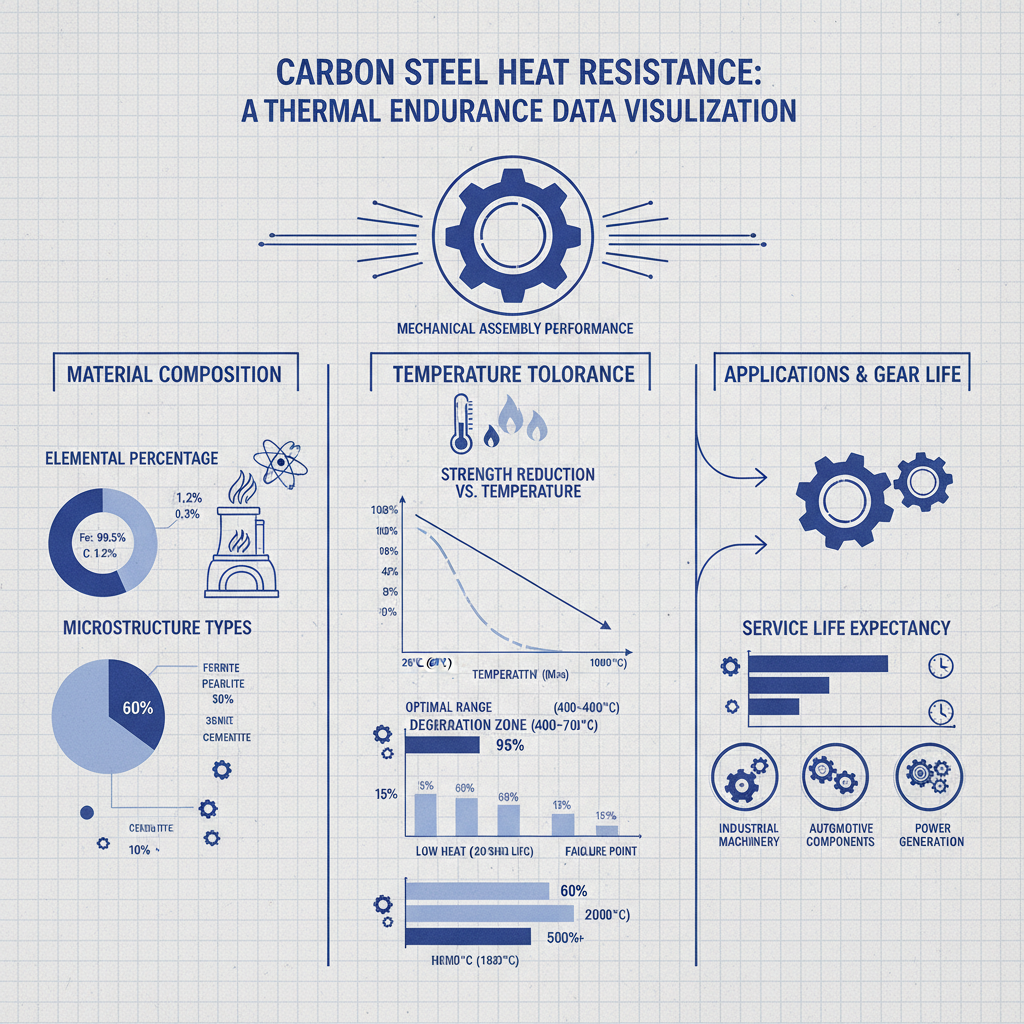
At its core, carbon steel heat resistance is determined by the steel’s chemical composition and microstructure. The amount of carbon present, along with alloying elements like chromium, molybdenum, and vanadium, significantly impacts its ability to withstand oxidation and maintain strength at high temperatures. The microstructure – the arrangement of grains and phases within the steel – also plays a vital role.
Different heat treatment processes, such as tempering and annealing, are employed to modify the microstructure and enhance the material’s resistance to thermal degradation. Understanding these fundamental relationships is key to selecting the appropriate carbon steel grade and processing parameters for specific high-temperature applications. carbon steel heat resistance is a crucial aspect of material selection.
The Global Significance of Thermal Stability
The demand for materials with high carbon steel heat resistance is globally significant, impacting key sectors worldwide. In power generation, for example, superalloys and heat-resistant steels are essential components in gas turbines, steam boilers, and nuclear reactors, ensuring efficient and reliable energy production. The International Energy Agency (IEA) projects a continued increase in global energy demand, further intensifying the need for these materials.
Furthermore, the aerospace industry relies heavily on high-temperature alloys for jet engines and exhaust systems. The increasing trend towards more fuel-efficient aircraft requires materials capable of withstanding even higher temperatures. The European Space Agency (ESA) and NASA are actively researching and developing next-generation materials to meet these demands.
Moreover, the automotive industry utilizes heat-resistant steels in exhaust manifolds and turbocharger components, enhancing engine performance and reducing emissions. Global automotive production continues to grow, particularly in emerging markets, driving up the demand for materials with improved thermal stability.
Defining Carbon Steel Heat Resistance
Carbon steel heat resistance refers to the ability of a carbon steel alloy to retain its mechanical strength, creep resistance, and oxidation resistance when exposed to elevated temperatures. It’s not simply about withstanding the heat, but maintaining structural integrity and functionality under thermal stress. This property is critical for applications where components are subjected to continuous or cyclical heating and cooling.
The degree of heat resistance varies significantly depending on the specific alloy composition. Higher carbon content, along with alloying elements like chromium, molybdenum, and vanadium, generally improves heat resistance. Understanding the specific temperature range and operating conditions is crucial for selecting the appropriate carbon steel grade. These materials allow for the development of more robust and reliable infrastructure in a variety of industries.
This property is intrinsically linked to modern industrial needs, particularly in sectors demanding high performance and longevity. From the production of energy to the manufacture of durable goods, carbon steel heat resistance provides a foundation for innovation and efficiency.
Core Factors Influencing Heat Resistance
Several key factors govern a carbon steel’s ability to resist heat. First, chemical composition is paramount. The addition of alloying elements, such as chromium, dramatically improves oxidation resistance by forming a protective oxide layer. Molybdenum enhances creep resistance, preventing deformation under prolonged stress at high temperatures.
Second, microstructure plays a critical role. Fine-grained microstructures generally exhibit superior heat resistance compared to coarse-grained structures. Heat treatment processes, like quenching and tempering, are used to refine the microstructure and optimize its properties.
Carbon Steel Heat Resistance – Comparison of Methods
Real-World Applications Across Industries
The application of materials with enhanced carbon steel heat resistance spans numerous industries. In the power generation sector, these steels are critical for constructing boiler tubes, turbine blades, and other components exposed to high temperatures and pressures. The automotive industry employs them in exhaust systems and turbocharger housings to withstand extreme heat cycles.
The aerospace industry demands materials that can maintain their strength and integrity at the temperatures encountered during flight. Heat-resistant steels are used in jet engine components, exhaust nozzles, and other critical parts. Furthermore, chemical processing plants utilize these materials in reactors and heat exchangers, where corrosion and high temperatures are prevalent.
Advantages and Long-Term Value Proposition
Investing in carbon steel with superior heat resistance offers substantial long-term benefits. Reduced maintenance costs stem from the decreased frequency of component replacements due to thermal degradation. Enhanced safety is another critical advantage, as robust materials minimize the risk of catastrophic failures.
From a sustainability perspective, extending the lifespan of components translates to reduced material consumption and lower energy expenditure in manufacturing. The reliability and durability of these steels contribute to increased operational efficiency and improved productivity, bolstering a company’s overall competitiveness.
Future Trends and Innovations in Heat Resistance
Ongoing research is focused on developing new alloys and surface treatments to further enhance the carbon steel heat resistance. Additive manufacturing (3D printing) is emerging as a promising technique for creating complex geometries with tailored microstructures, optimizing heat resistance in specific areas.
The development of advanced coatings, such as ceramic matrix composites, offers another avenue for improving thermal protection. Furthermore, the integration of digital technologies, like machine learning, is enabling predictive modeling of material behavior under high temperatures, leading to more informed design decisions.
The drive towards sustainable materials is also influencing research, with a focus on developing more environmentally friendly alloys and reducing the energy intensity of heat treatment processes.
FAQS
The chemical composition, particularly the addition of alloying elements like chromium and molybdenum, is a primary factor. The microstructure of the steel, achieved through specific heat treatments, is also crucial. Finally, operating temperature and the presence of corrosive environments play a significant role in determining long-term heat resistance.
Surface coatings, like aluminizing or ceramic coatings, create a barrier between the steel and the harsh environment, preventing oxidation and corrosion. These coatings also reduce heat transfer, protecting the underlying steel from thermal damage. The effectiveness of the coating depends on its composition, thickness, and adhesion to the steel.
Creep resistance is a material’s ability to resist deformation under sustained stress at high temperatures. It’s vital for components operating in high-heat environments because prolonged exposure can cause them to slowly deform and fail. Alloying elements like molybdenum and vanadium enhance creep resistance.
Generally, increasing the carbon content can improve the strength and hardness of steel, but it can also reduce its ductility and weldability. While it doesn't directly enhance oxidation resistance, it can influence the steel's overall response to high-temperature environments. The optimal carbon content depends on the specific application and desired properties.
Tempering, annealing, and normalizing are common heat treatment processes. Tempering reduces brittleness and improves toughness, while annealing softens the steel and relieves internal stresses. Normalizing refines the grain structure, enhancing strength and toughness. The specific process chosen depends on the desired properties and steel grade.
Resources like the ASTM International standards, the American Iron and Steel Institute (AISI), and material data sheets from steel manufacturers provide detailed information on the composition, properties, and heat resistance ratings of various carbon steel alloys. Websites like MatWeb also offer comprehensive material databases.
Conclusion
In conclusion, understanding carbon steel heat resistance is paramount for ensuring the durability, reliability, and safety of numerous industrial applications. From selecting the appropriate alloy composition and implementing effective heat treatment processes to exploring innovative coatings and manufacturing techniques, a holistic approach is essential for optimizing thermal performance. The continued advancement in materials science and engineering promises to unlock even greater levels of heat resistance in carbon steels, addressing the evolving needs of a rapidly changing world.
Looking ahead, prioritizing research and development in this area is crucial for driving innovation in energy production, aerospace, automotive, and other critical sectors. By embracing new technologies and fostering collaboration between industry and academia, we can unlock the full potential of carbon steel and build a more sustainable and resilient future. For reliable solutions in carbon steel, visit our website: www.dzmccasting.com