In the demanding world of aggregate production and mineral processing, the efficiency of a crushing plant hinges on the resilience of its consumable components. High-quality impact crusher wear parts are the primary defense against the relentless abrasion and impact forces encountered during the reduction of hard rocks and ores. Without precision-engineered wear components, operators face increased downtime and plummeting productivity, making the selection of superior materials a critical business decision.
Across global mining hubs, from the iron ore fields of Australia to the limestone quarries of Europe, the challenge remains the same: balancing the cost of replacements with the necessity of maximum uptime. The integration of advanced metallurgy, specifically in the realm of heat-resistant steel and high-manganese alloys, has transformed how impact crusher wear parts are manufactured, allowing for longer service intervals and more consistent product sizing.
Understanding the synergy between material hardness and toughness is essential for any plant manager seeking to optimize their operation. By focusing on the engineering behind these critical components, companies can significantly reduce their total cost of ownership while enhancing the safety and reliability of their crushing circuits. This guide explores the technical nuances and strategic importance of selecting the right wear solutions for modern impact crushers.
Global Industrial Significance of Wear Components
The global demand for construction aggregates and mineral ores has placed unprecedented pressure on crushing equipment. According to industry standards aligned with ISO quality benchmarks, the wear rate of impact blow bars and liners directly correlates to the operational energy efficiency of the entire plant. When impact crusher wear parts degrade, the crushing geometry changes, leading to increased power consumption and a deviation from the target particle size distribution.
In large-scale mining operations, unplanned downtime for part replacement can cost thousands of dollars per hour. Therefore, the global shift toward "predictive maintenance" relies heavily on the availability of high-consistency wear parts that offer predictable lifespans. This reliability allows operators to schedule maintenance windows precisely, ensuring that the global supply chain for raw materials remains uninterrupted.
Defining High-Performance Impact Crusher Wear Parts
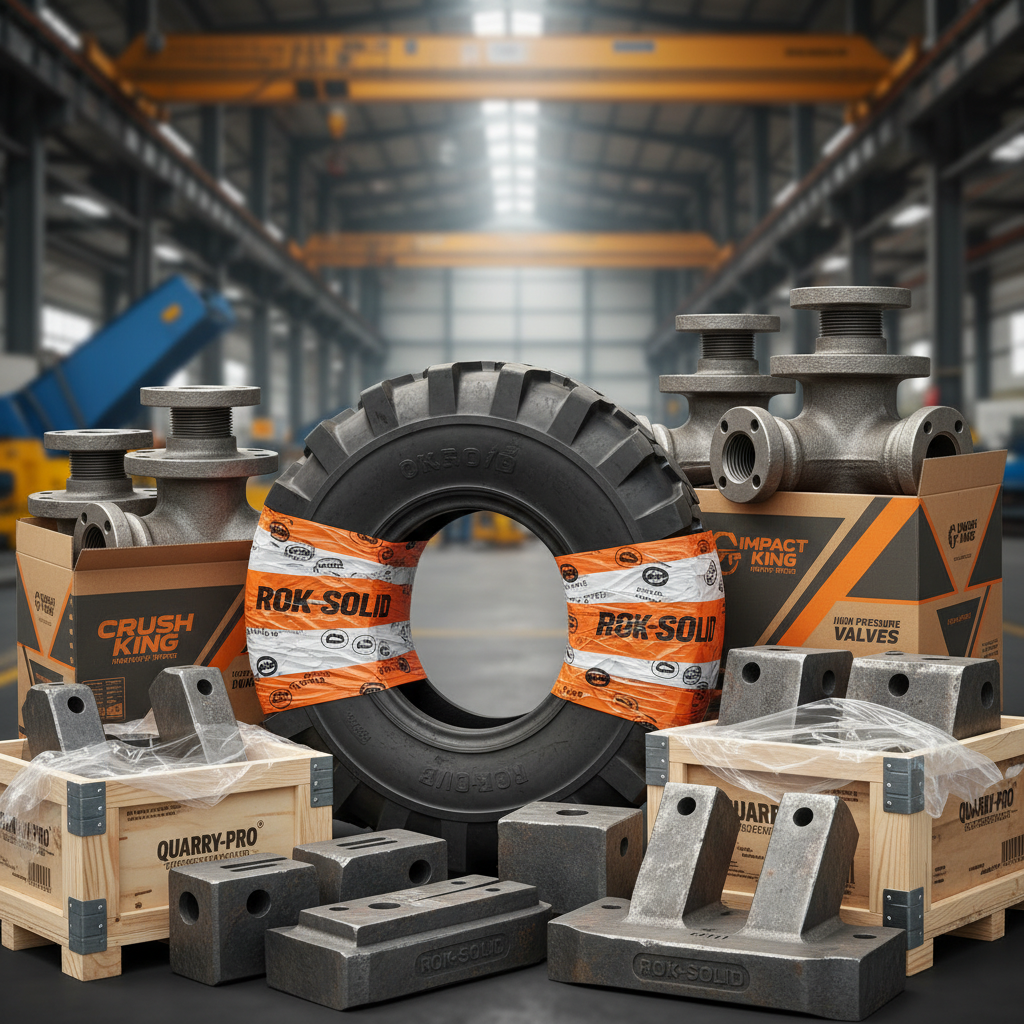
At its core, impact crusher wear parts refer to the sacrificial components of a crusher—such as blow bars, impact plates, and liners—that are designed to take the brunt of the mechanical energy during the crushing process. Unlike the main frame or motor, these parts are engineered to wear down over time, protecting the expensive structural integrity of the machine from catastrophic failure.
Modern industry requires these parts to be more than just "hard." The true definition of high-performance wear parts involves a sophisticated balance of hardness (to resist abrasion) and toughness (to resist fracturing under high-impact loads). This is particularly crucial in "Mechanical Parts Of Mine Crusher" categories, where the material processed can vary from soft limestone to highly abrasive quartzite.
From a humanitarian and infrastructural perspective, these components are the unsung heroes of urban development. Every road, bridge, and skyscraper depends on the aggregates produced by impact crushers. By improving the lifespan of these wear parts, the industry reduces the frequency of smelting and casting new steel, thereby lowering the overall carbon footprint of the construction sector.
Core Factors Driving Part Durability
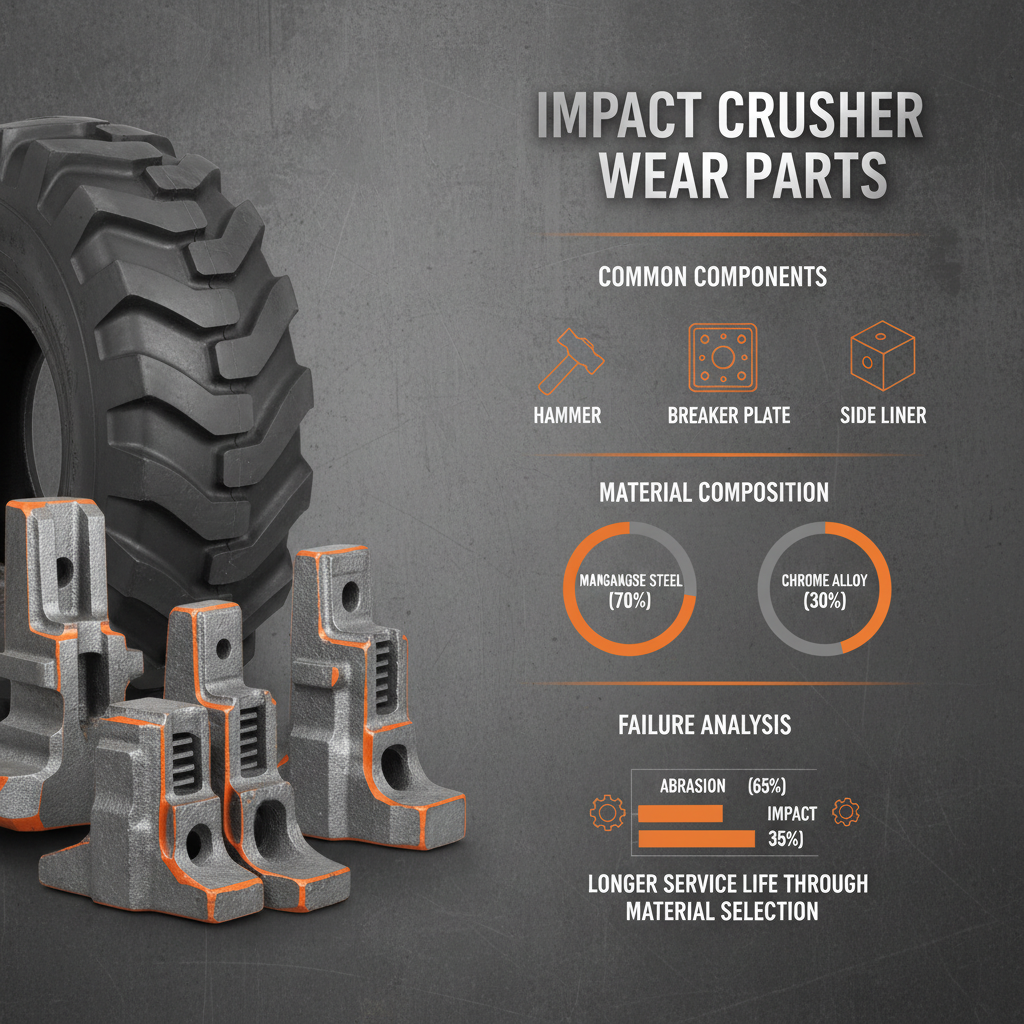
The first critical factor is Material Composition. The use of high-chromium cast irons or specialized manganese steels ensures that impact crusher wear parts can withstand the extreme stresses of impact crushing. The alloy chemistry determines whether a part will chip under pressure or wear smoothly, which is vital for maintaining output quality.
Heat Treatment Precision plays an equally vital role. Through controlled quenching and tempering, the internal microstructure of the steel is optimized. For impact crusher wear parts, this means creating a surface that is exceptionally hard while maintaining a ductile core that prevents the part from snapping during the impact of an oversized rock.
Lastly, Geometric Design influences how energy is distributed across the part. An optimally curved blow bar reduces localized stress concentrations, ensuring that the wear is distributed evenly across the entire surface. This design efficiency extends the usable life of the part and prevents premature failure in high-tonnage applications.
Comparative Analysis of Material Performance
When selecting impact crusher wear parts, operators often choose between different metallurgical approaches based on the hardness of the feed material. While high-manganese steel is excellent for high-impact applications due to its work-hardening properties, high-chromium alloys are superior for highly abrasive materials where sliding wear is the primary concern.
The trade-off between toughness and hardness is a constant engineering challenge. A part that is too hard may shatter when encountering "tramp iron" (unwanted metal in the feed), while a part that is too soft will wear away far too quickly, leading to excessive replacement costs and lost production time.
Wear Performance Comparison of Different Material Methods
Global Applications and Industrial Use Cases
In the remote industrial zones of the Andes or the Outback, the logistics of replacing impact crusher wear parts can be a nightmare. In these regions, "Heat Resistant Steel Products" and specialized alloys are favored not just for their longevity, but for their ability to withstand extreme temperature fluctuations without losing structural integrity.
Beyond traditional mining, these components are utilized in recycling plants for crushing concrete and asphalt. In these urban environments, the wear parts must handle a heterogeneous mix of materials, including rebar and plastics, requiring a level of versatility in material toughness that only precision-cast components can provide.
Long-Term Economic and Operational Value
Investing in premium impact crusher wear parts offers a clear ROI through the reduction of "Total Cost of Ownership." While lower-grade parts may have a lower initial purchase price, their shorter lifespan leads to more frequent shutdowns, higher labor costs for installation, and increased energy consumption due to inefficient crushing profiles.
Moreover, the psychological impact on a workforce cannot be understated. Reliable equipment reduces the stress associated with emergency repairs and improves overall site safety. When operators trust that their blow bars will not catastrophically fail, they can focus on optimizing throughput and maintaining a safe working environment.
From a sustainability angle, longer-lasting parts mean fewer shipments of heavy steel across the globe, significantly reducing the carbon emissions associated with transport and the energy intensive process of casting. This aligns with the growing global trend toward "Green Mining" and sustainable industrial practices.
Future Trends in Wear-Resistant Metallurgy
The future of impact crusher wear parts lies in the intersection of material science and digital monitoring. We are seeing the emergence of "Smart Wear Parts" embedded with sensors that can signal the exact moment of replacement, eliminating the guesswork of manual inspection and preventing the risk of part failure.
Furthermore, the development of nano-structured alloys and 3D-printed metal components is paving the way for parts with varying hardness gradients. Imagine a blow bar that is ultra-hard on the impact surface but becomes progressively tougher toward the core—this would virtually eliminate the risk of fracturing while maximizing abrasion resistance.
Automation in the casting process, utilizing AI to optimize the cooling curves of the metal, is also ensuring that every single part produced has identical properties. This consistency is the bedrock of operational stability in the modern aggregate industry.
Comparative Analysis of Metallurgy Trends for Wear Parts
| Material Technology |
Abrasion Resistance |
Impact Toughness |
Expected Life Increase |
| High-Mn Steel (Standard) |
Moderate |
High |
Baseline |
| High-Cr Cast Iron |
Very High |
Low/Moderate |
+40% (Abrasive) |
| Advanced Alloy Steel |
High |
High |
+60% (Mixed) |
| Heat Resistant Steel |
High |
Very High |
+80% (Extreme) |
| Ceramic Inserts Hybrid |
Extreme |
Low |
+120% (Sliding) |
| Nano-Structured Alloys |
Extreme |
Extreme |
+150% (Future) |
FAQS
Replacement frequency depends on the material hardness and throughput. Generally, blow bars should be inspected weekly. When the profile has worn down by 30-50%, replacement is recommended to avoid efficiency loss and potential damage to the rotor. High-quality manganese or chrome parts typically last significantly longer than standard cast steel.
High-manganese steel is "work-hardening," meaning it gets harder as it is hit, making it ideal for high-impact environments. High-chromium steel is inherently hard and resists abrasion (scratching/sliding) better, making it the preferred choice for highly abrasive materials like quartz or granite, though it is more brittle.
Yes. While the initial cost is lower, cheaper impact crusher wear parts wear out faster, leading to more frequent downtime. Additionally, worn-out parts increase the electrical load on the motor and produce an inconsistent final product size, which may lead to rejected batches or the need for secondary crushing.
Key indicators include a noticeable decrease in the percentage of "fines" in your output, an increase in power draw from the main motor, and visible uneven wear or "cupping" on the blow bar surface. Excessive vibration in the crusher can also indicate that parts have worn unevenly, causing an imbalance in the rotor.
They are particularly beneficial for operations dealing with high-temperature materials or those operating in extreme climates. However, for standard limestone crushing at room temperature, high-manganese steel is usually the most cost-effective choice. The selection should always be based on the specific hardness and chemistry of your feed material.
Ensure a consistent feed size to avoid oversized "shock" loads, maintain a steady feed rate to prevent idling (which can lead to uneven wear), and regularly check the tightness of the fasteners. Using high-quality, precision-cast parts from reputable manufacturers is the most effective way to ensure maximum longevity.
Conclusion
The strategic selection of impact crusher wear parts is far more than a simple procurement task; it is a critical component of operational engineering. By balancing metallurgical properties—specifically the duality of hardness and toughness—and leveraging advanced heat treatment processes, mining and construction firms can secure a competitive edge. The transition from standard cast components to high-performance alloys significantly reduces downtime and elevates the overall efficiency of aggregate production.
Looking ahead, the integration of smart materials and AI-driven maintenance will redefine the lifespan of these components, moving the industry toward a zero-unplanned-downtime reality. For operators looking to optimize their output and reduce long-term overhead, investing in precision-engineered wear solutions is the most sustainable path forward. To explore our range of high-durability components, visit our website: www.dzmccasting.com.