0%

Table of Contents

Alloy 310S is a premium austenitic stainless steel celebrated for its exceptional resistance to oxidation and corrosion, even at elevated temperatures. It's a crucial material in industries demanding reliability under harsh conditions, from aerospace to chemical processing. Understanding its composition, properties, and applications is vital for engineers and designers seeking materials that can withstand extreme environments.

The global demand for high-temperature alloys like alloy 310S is steadily increasing, driven by advancements in power generation, particularly in the development of more efficient gas turbines. According to the International Energy Agency, global electricity demand is projected to grow by 60% by 2050, necessitating the development of advanced materials capable of operating at higher temperatures and pressures.

Alloy 310S plays a critical role in addressing this need, providing a robust solution for components exposed to intense heat and corrosive atmospheres. Its increasing adoption highlights its importance in supporting sustainable energy production and industrial innovation.

Exploring the Superior Properties and Diverse Applications of Alloy 310S Stainless Steel

Defining alloy 310S and its Significance

Exploring the Superior Properties and Diverse Applications of Alloy 310S Stainless Steel

Alloy 310S is an austenitic stainless steel known for its superior high-temperature strength and resistance to oxidation. The 'S' designation indicates a stabilized grade, meaning niobium is added to minimize carbide precipitation during welding, enhancing corrosion resistance. This alloy is specifically designed for applications demanding prolonged exposure to extreme heat and corrosive environments.

Its significance lies in its ability to maintain its mechanical properties and integrity at temperatures where other materials would fail. Alloy 310S is a cornerstone in industries reliant on durable, high-performance materials for critical components, contributing to safety, efficiency, and longevity of operations.

Global Relevance and Industry Challenges

The demand for alloy 310S is globally distributed, with significant consumption in North America, Europe, and Asia-Pacific. This demand is heavily influenced by the growth of energy sectors, including power generation, oil & gas, and petrochemicals. Developing nations with rapidly expanding infrastructure also represent a growing market for this alloy.

A key challenge facing industries utilizing alloy 310S is the increasing cost of raw materials and fabrication. Nickel, a primary component, experiences price fluctuations, impacting overall production costs. Furthermore, the specialized welding techniques required for alloy 310S can be complex and demand skilled labor, adding to operational expenses.

These challenges necessitate a focus on optimizing material usage, exploring alternative alloys with similar properties, and investing in advanced manufacturing processes to enhance cost-effectiveness without compromising quality and performance. alloy 310s producers are continually researching to mitigate these pressures.

Composition and Key Characteristics of alloy 310S

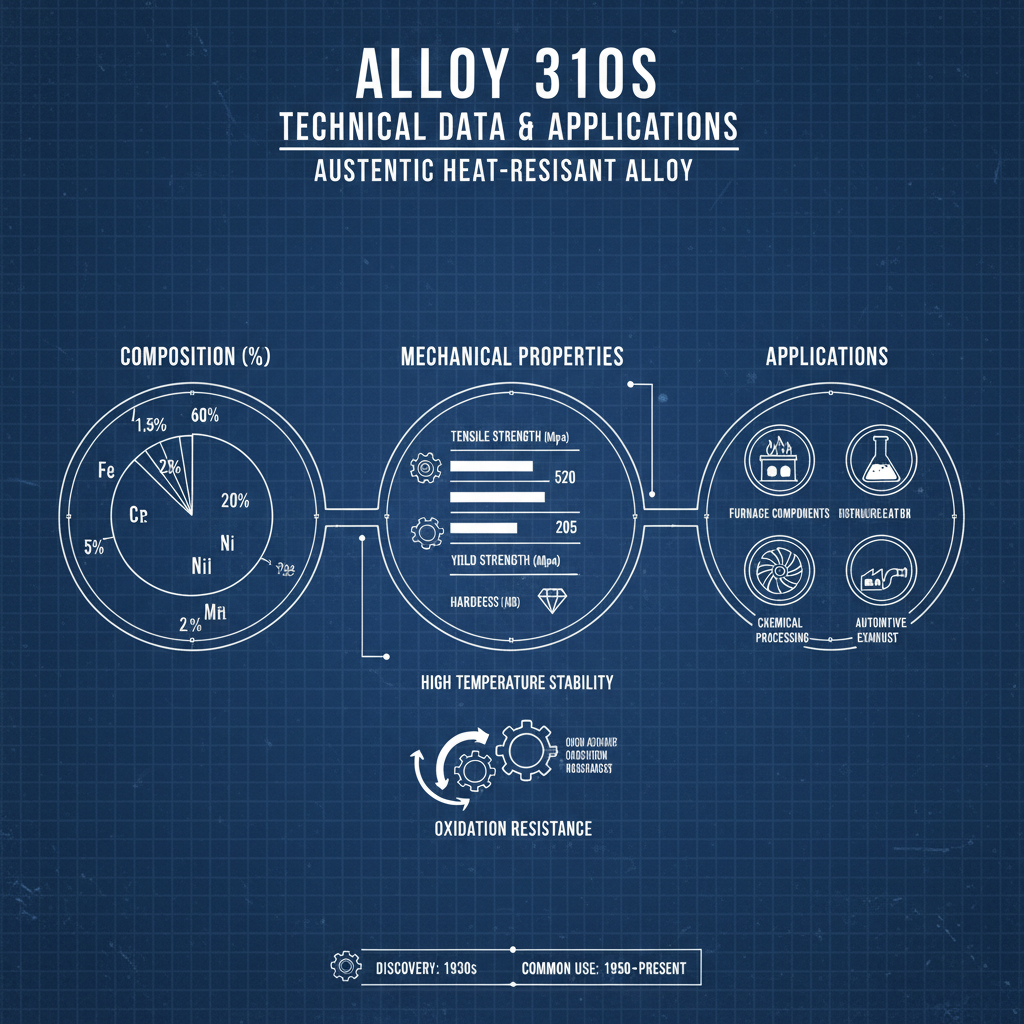
Alloy 310S typically comprises approximately 25% chromium, 20% nickel, 2% molybdenum, and a stabilizing addition of 0.4-1.0% niobium. The precise composition can vary slightly depending on the manufacturer and intended application. The high chromium content is fundamental to its exceptional corrosion resistance, while nickel contributes to its austenitic structure and high-temperature strength.

Key characteristics include excellent resistance to oxidation at temperatures up to 1100°C (2000°F), superior creep strength, and good weldability – particularly when employing appropriate stabilized welding techniques. The addition of niobium prevents sensitization, meaning it resists intergranular corrosion after welding. It also possesses high ductility and toughness, even at cryogenic temperatures.

The combination of these properties makes alloy 310S exceptionally versatile and suitable for a wide array of demanding applications. Careful control of the composition during manufacturing is crucial to achieving consistent performance characteristics and ensuring reliability in critical environments.

Core Properties Driving alloy 310S Applications

The primary driver behind alloy 310S’s use is its exceptional resistance to oxidation and corrosion. This stems from the formation of a protective chromium oxide layer on the surface, preventing further degradation. This property is vital in high-temperature applications where oxidation can rapidly weaken materials.

Secondly, alloy 310S exhibits outstanding creep resistance – its ability to withstand prolonged stress at elevated temperatures without significant deformation. This is crucial for components in furnaces, heat exchangers, and other systems operating under constant load at high temperatures.

alloy 310S Property Ratings (1-10)


Worldwide Applications of alloy 310S

Alloy 310S is extensively used in the construction of furnace components, such as muffles, radiant tubes, and retorts, where it withstands prolonged exposure to high temperatures and corrosive gases. It's also vital in the fabrication of heat exchangers used in power plants and chemical processing facilities.

In the aerospace industry, alloy 310S finds applications in jet engine components, exhaust systems, and other critical parts exposed to extreme thermal stress. The petrochemical industry utilizes it for catalytic converters, reactors, and piping systems handling corrosive fluids at elevated temperatures. Furthermore, alloy 310s is crucial in the production of cryogenics.

Advantages and Long-Term Value Proposition

The advantages of using alloy 310S extend beyond its technical properties. Its exceptional durability translates to reduced maintenance costs and extended service life for critical equipment. This is particularly valuable in industries where downtime can be extremely expensive. The lower lifecycle cost often offsets the initial higher material expense.

From a sustainability perspective, its longevity minimizes the need for frequent replacements, reducing resource consumption and waste generation. The enhanced safety it provides in high-temperature and corrosive environments contributes to a more reliable and secure operational environment, fostering trust and innovation.

Future Trends and Emerging Innovations in alloy 310S Use

Research is underway to develop advanced coatings for alloy 310S, further enhancing its oxidation and corrosion resistance. Additive manufacturing (3D printing) techniques are being explored to create complex geometries and optimize material usage, potentially lowering production costs.

The integration of alloy 310S into solid oxide fuel cell (SOFC) technology is a promising area of development, leveraging its high-temperature stability and corrosion resistance for efficient energy generation. Furthermore, advancements in digital twins and predictive maintenance are enabling optimized monitoring and management of components made from alloy 310S.

These innovations will expand the applications of alloy 310S and solidify its position as a critical material in a wide range of industries.

FAQS

What are the primary differences between alloy 310S and alloy 304 stainless steel?

While both are austenitic stainless steels, alloy 310S possesses significantly higher chromium and nickel content than 304. This results in superior high-temperature oxidation resistance and creep strength. Alloy 310S is preferred in applications exceeding 800°F (427°C) where 304 would rapidly degrade. The 'S' designation, due to niobium content, enhances weldability and minimizes sensitization in 310S, a trait 304 lacks without stabilization.

What welding techniques are recommended for alloy 310S?

Due to its austenitic structure, alloy 310S is readily weldable using various techniques like GTAW (TIG), GMAW (MIG), and SMAW (stick). However, stabilized welding procedures are crucial. Using a stabilized electrode or adding niobium to the weld metal is recommended to prevent carbide precipitation and maintain corrosion resistance in the heat-affected zone. Preheating and post-weld heat treatment may also be necessary depending on the application.

Is alloy 310S susceptible to any forms of corrosion?

While exceptionally resistant, alloy 310S can experience pitting or crevice corrosion in highly chloride-rich environments, particularly if stagnant. Stress corrosion cracking can also occur under specific conditions involving tensile stress and corrosive media. Proper design, avoiding crevices, and controlling the environment can mitigate these risks. Passivation treatments can enhance corrosion resistance.

What is the typical lifespan of components made from alloy 310S?

The lifespan of alloy 310S components varies significantly depending on the operating environment, temperature, stress levels, and maintenance practices. However, under typical high-temperature, oxidizing conditions, components can often last 10-20 years or more. Proper design and regular inspections are essential to maximize service life.

What are the cost considerations when using alloy 310S?

Alloy 310S generally has a higher initial cost compared to standard stainless steels due to its nickel and niobium content. However, its extended lifespan, reduced maintenance requirements, and increased reliability often result in lower lifecycle costs. Careful consideration of the total cost of ownership is crucial when selecting materials.

What are some common substitutes for alloy 310S and when might they be considered?

Alternatives include other stabilized austenitic stainless steels like 316L with niobium addition, or even nickel-based alloys for extremely demanding applications. Substitution depends on specific temperature, corrosion, and stress requirements. 316L is often a more cost-effective option for moderately high temperatures, while nickel alloys are preferred for the most extreme environments, but at a higher price point.

Conclusion

Alloy 310S stands as a critical material in numerous industries, offering unparalleled resistance to high temperatures and corrosive environments. Its exceptional durability, coupled with its ability to maintain structural integrity under extreme conditions, makes it a cornerstone in power generation, aerospace, petrochemicals, and more. Understanding its properties, applications, and future trends is vital for engineers and decision-makers seeking reliable, long-lasting solutions.

Looking ahead, continued research and development in alloy 310S, including advanced coatings, additive manufacturing, and integration into emerging technologies like SOFCs, will unlock even greater potential. Investing in this material and its associated technologies is essential for driving innovation, enhancing sustainability, and ensuring the reliable operation of critical infrastructure worldwide. For more information and to explore our range of alloy 310S products, visit our website: www.dzmccasting.com

Michael Johnson

Michael Johnson

Michael Johnson is the Lead Design Engineer at Hebei Dezhong Machinery Co., Ltd. Michael brings a wealth of experience in engineering design, specializing in castings for high-pressure valves, pump components, and metallurgical rollers. He uses three-dimensional coordinate measuring machines(CMM) and CAD software to develop detailed designs based on customer specifications.
Previous Optimizing AR400 Steel Heat Treatment for Enhanced Durability and Performance
Next High Performance Heat Resistant Stainless Steel Sheet for Industrial Applications