Heat resistant stainless steel sheet plays a critical role in a multitude of industries, offering a robust solution for applications demanding high-temperature performance and corrosion resistance. From aerospace components to industrial furnaces and chemical processing equipment, its unique properties make it an indispensable material in modern engineering. Understanding the nuances of these sheets—their composition, manufacturing processes, and performance characteristics—is paramount for engineers, designers, and procurement specialists alike.
Globally, the demand for heat resistant stainless steel sheet is steadily increasing, driven by growth in key sectors such as energy production, automotive manufacturing, and healthcare. Emerging economies, in particular, are investing heavily in infrastructure projects that require durable, high-performance materials. The ISO standards and stringent quality control measures ensure a consistent level of performance, which are critical for safety and reliability in these applications.
The benefits of utilizing heat resistant stainless steel sheet extend beyond simple material properties. Its longevity reduces the need for frequent replacements, leading to cost savings and minimized downtime. Furthermore, the recyclability of stainless steel aligns with growing sustainability initiatives and reduces environmental impact. This makes it a crucial material for building a more resilient and efficient future.
The Importance of Heat Resistant Stainless Steel Sheet
Heat resistant stainless steel sheet isn't merely a construction material; it's a critical enabling technology. Its ability to maintain structural integrity and resist degradation at elevated temperatures makes it essential in sectors where failure is not an option. Industries from power generation to chemical processing rely on its consistent performance to ensure operational safety and efficiency.
Investing in high-quality heat resistant stainless steel sheet translates directly into long-term reliability and reduced life-cycle costs. While the initial investment may be higher than that of alternative materials, the extended service life and minimized maintenance requirements result in substantial savings over time. This makes it a financially sound choice for applications demanding long-term performance.
Global Context and Industry Applications
The global market for stainless steel, including heat resistant grades, is substantial and growing. According to the World Stainless Steel Association, over 50 million tonnes of stainless steel are produced annually worldwide. A significant portion of this output is dedicated to specialized applications requiring high-temperature resistance. Demand is particularly strong in Asia-Pacific, driven by rapid industrialization and infrastructure development.
These sheets find application in numerous industries. The aerospace sector utilizes them for exhaust systems and turbine blades. The chemical processing industry leverages their corrosion resistance in reactors and pipelines. Power generation plants rely on them for boiler components and flue gas desulfurization systems. Even the food processing industry benefits from their hygienic properties and resistance to cleaning agents.
Furthermore, the demand for heat resistant stainless steel sheet is intrinsically linked to sustainability initiatives. Its durability and recyclability contribute to a circular economy, reducing waste and minimizing environmental impact. This aligns with the growing global emphasis on responsible manufacturing and sustainable practices.
Defining Heat Resistant Stainless Steel Sheet
Heat resistant stainless steel sheet refers to a family of stainless steel alloys specifically engineered to maintain their mechanical strength and resist oxidation at elevated temperatures. Unlike standard stainless steels, these alloys incorporate higher levels of chromium, nickel, and other stabilizing elements such as molybdenum and niobium. This unique composition allows them to withstand the harsh conditions found in high-temperature environments without significant degradation.
The defining characteristic of these sheets is their ability to resist creep, oxidation, and corrosion at temperatures typically exceeding 500°C (932°F). Different grades offer varying levels of heat resistance, allowing engineers to select the optimal material for specific application requirements. The connection to modern industry is direct; without these materials, many critical processes would simply be impossible.
The importance extends to humanitarian needs, too. In developing nations, reliable infrastructure built with durable materials like heat resistant stainless steel is crucial for powering hospitals, providing clean water, and supporting economic growth. Its longevity and low maintenance requirements make it a particularly valuable asset in resource-constrained environments.
Key Properties and Composition
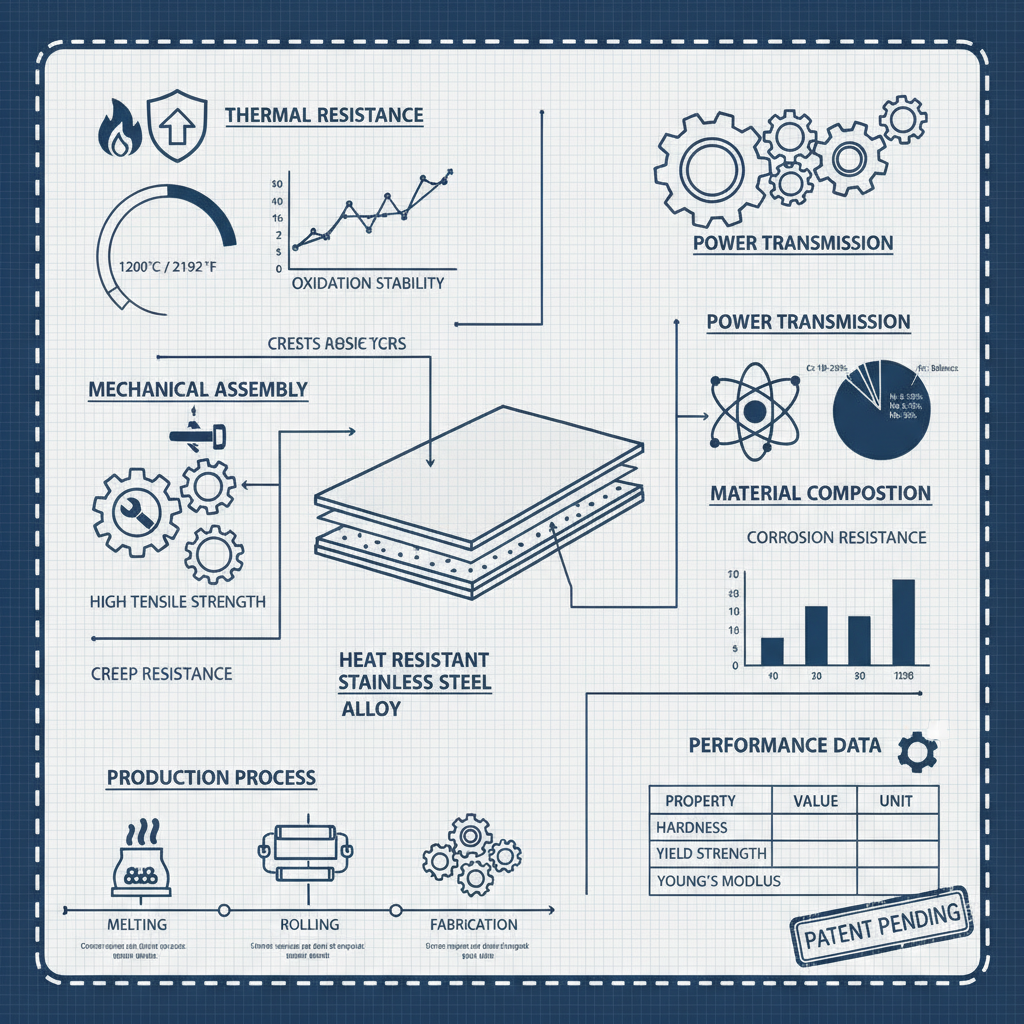
The exceptional performance of heat resistant stainless steel sheet stems from a combination of key properties. Firstly, its high chromium content (typically 18% or higher) forms a protective chromium oxide layer on the surface, preventing corrosion even at elevated temperatures. Secondly, the addition of nickel enhances its strength and ductility, allowing it to withstand mechanical stress without cracking.
Comparative Heat Resistance of Stainless Steel Alloys
Real-World Applications of Heat Resistant Stainless Steel Sheet
The applications of heat resistant stainless steel sheet are diverse and impactful. In the power generation industry, it’s used to construct boiler tubes, superheater components, and gas turbine blades, withstanding extreme temperatures and pressures. The aerospace industry utilizes it in jet engine exhaust systems and heat shields, ensuring reliable performance under demanding conditions.
Within the chemical processing sector, these sheets are integral to reactors, heat exchangers, and storage tanks handling corrosive substances at elevated temperatures. The automotive industry employs them in catalytic converters and exhaust systems to reduce emissions and comply with stringent environmental regulations. These are just a few examples illustrating the widespread utility of this versatile material.
Advantages and Long-Term Value
The advantages of choosing heat resistant stainless steel sheet extend far beyond its ability to withstand high temperatures. Its exceptional corrosion resistance minimizes maintenance costs and extends the service life of components. The material’s inherent strength and durability reduce the risk of failure, enhancing safety and reliability. Furthermore, its recyclability contributes to a more sustainable lifecycle.
The long-term value proposition is compelling. While the initial cost may be higher than alternative materials, the reduced maintenance, extended lifespan, and increased reliability translate into significant cost savings over time. Investing in heat resistant stainless steel sheet is an investment in durability, efficiency, and peace of mind.
Future Trends and Innovations
The future of heat resistant stainless steel sheet is poised for continued innovation. Research is ongoing to develop new alloys with even higher temperature resistance and improved mechanical properties. Additive manufacturing (3D printing) techniques are emerging as a promising method for creating complex components with optimized designs.
The integration of digital technologies, such as sensors and data analytics, will enable real-time monitoring of material performance and predictive maintenance. These advancements, coupled with a growing emphasis on sustainability, will drive the development of even more efficient and environmentally friendly solutions utilizing heat resistant stainless steel sheet.
Furthermore, the increasing demand for sustainable energy sources is creating new opportunities for these materials in applications like concentrated solar power and advanced nuclear reactors. These technologies require materials capable of withstanding extreme temperatures and corrosive environments, positioning heat resistant stainless steel sheet as a critical enabler of a cleaner energy future.
FAQS
The lifespan of equipment constructed from heat resistant stainless steel sheet varies depending on the application and operating conditions. However, with proper maintenance, these components can reliably operate for 20-30 years or even longer. Their inherent durability and corrosion resistance contribute to this extended service life, minimizing the need for frequent replacements and reducing overall life-cycle costs.
While Inconel offers superior high-temperature strength and creep resistance, heat resistant stainless steel sheet provides a more cost-effective solution for many applications. Stainless steel also exhibits better corrosion resistance in many environments. The choice between the two depends on the specific requirements of the application – Inconel for extreme conditions and stainless steel for a balance of performance and cost.
Common grades include 310S, 316Ti, 321, and Alloy 800. 310S offers excellent oxidation resistance at very high temperatures. 316Ti provides enhanced resistance to sensitization. 321 is stabilized with titanium for improved weldability. Alloy 800 delivers a good balance of strength, oxidation resistance, and cost-effectiveness.
The weldability of heat resistant stainless steel sheet varies depending on the grade. Grades like 321 and 316Ti are generally considered readily weldable, while others like 310S may require specific welding techniques to prevent sensitization. Proper pre- and post-weld heat treatment is often necessary to maintain the material’s corrosion resistance.
Heat resistant stainless steel sheet typically costs more than standard grades due to the addition of alloying elements like nickel, molybdenum, and niobium. However, this higher initial cost is often offset by the material’s extended service life, reduced maintenance requirements, and enhanced reliability, resulting in a lower total cost of ownership.
Various surface finishes are available, including mill finish, polished, brushed, and pickled. The choice of finish depends on the application’s aesthetic requirements and functional needs. Polished surfaces offer improved corrosion resistance and ease of cleaning, while brushed finishes provide a more decorative appearance.
Conclusion
Heat resistant stainless steel sheet stands as a cornerstone material for numerous industries demanding high-temperature performance and corrosion resistance. Its unique composition, offering exceptional strength, durability, and recyclability, ensures long-term reliability and minimizes life-cycle costs. From power generation to aerospace and chemical processing, these sheets play a vital role in enabling critical processes and driving innovation.
Looking ahead, continued advancements in alloy development, manufacturing techniques, and digital technologies will further enhance the capabilities of heat resistant stainless steel sheet. Its increasing adoption in sustainable energy applications positions it as a key enabler of a greener future. To learn more about our range of high-quality heat resistant stainless steel sheet products and explore how they can benefit your specific application, visit our website: dzmccasting.com.