The operational efficiency of a crushing plant often hinges on a single, high-wear component: the jaw plate. When these plates fail prematurely, the result is not just the cost of the part, but the staggering expense of unplanned downtime and lost production throughput in mining and quarrying operations.
Selecting a reliable jaw plate manufacturer requires moving beyond simple price comparisons to an analysis of metallurgical properties and casting precision. The interaction between the raw material—whether it be granite, basalt, or iron ore—and the alloy of the jaw plate determines the total cost per ton of material processed.
This report examines the technical criteria for evaluating wear parts, the role of advanced alloys in extending service life, and how to align material selection with specific geological challenges to maximize crusher uptime.


The effectiveness of a jaw plate is rooted in its ability to balance hardness with toughness. In heavy-duty crushing, a material that is too hard may crack under sudden impact (brittle failure), while a material that is too soft will erode quickly (abrasive wear).
Modern casting focuses on alloys that exhibit work-hardening capabilities. High-manganese steels, for instance, start with a relatively low hardness but increase in hardness at the surface as they are struck by rock, creating a self-protecting wear layer.
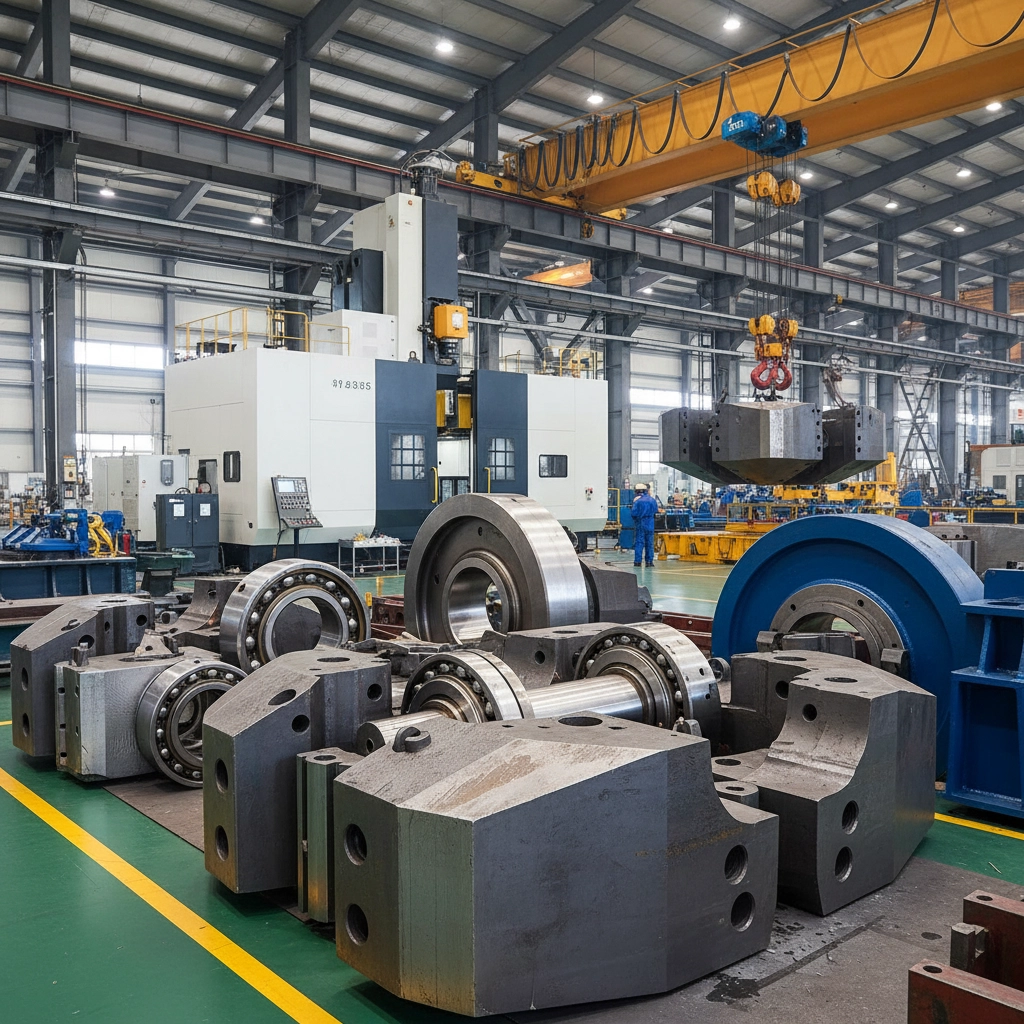
Dimensional precision is as critical as the material itself. If a jaw plate does not fit the crusher frame perfectly, it creates stress concentrations and uneven loading. This often leads to premature cracking or "cupping" of the plate, where the center wears out significantly faster than the edges, reducing the effective crushing volume.
Advanced CNC machining and strict adherence to OEM specifications (such as those for Metso, Sandvik, or Terex models) ensure that the plate maintains optimal geometry throughout its lifecycle. This ensures that the crushing force is distributed evenly across the face of the plate, preventing localized failure.
Furthermore, heat treatment optimization is essential. By controlling the cooling rates during the casting process, manufacturers can refine the microstructure of the steel, ensuring that the manganese and carbon are distributed uniformly to prevent "soft spots" that would otherwise become focal points for wear.
Choosing the correct alloy depends entirely on the mineralogy of the feed material. For high-impact environments involving hard rocks like basalt, toughness is the priority. For highly abrasive materials like quartz, surface hardness is the dominant requirement.
The optimal selection follows a clear hierarchy: High-manganese steel for impact, High-chromium iron for abrasion, and Bimetal composites for severe mixed-wear conditions where both toughness and hardness are required.
Hebei Dezhong Machinery Co., Ltd. (DZMC) implements this logic by offering specialized grades such as Mn13 and Mn18 for work-hardening applications, and Cr26 or Cr28 for environments where extreme abrasion resistance (HRC 58-62) is mandatory to maintain sharp crushing edges.
To quantify the value of different materials, we look at the "wear life index" relative to standard carbon steel. While initial costs may be higher for alloyed plates, the reduction in replacement frequency often results in a significantly lower cost per ton of crushed rock.
The following index illustrates the relative performance of common alloys used by a professional jaw plate manufacturer based on typical industry durability benchmarks.
In a typical industrial setting, such as a granite quarry, the primary risk is impact-induced cracking. Here, high-manganese steel is the industry standard because it can absorb the energy of massive rock falls without fracturing. Conversely, in a plant processing recycled concrete or asphalt, the wear is more consistent and abrasive, making bimetal composites a more cost-effective choice due to their balanced toughness and hardness.
Operators must also monitor "tramp metal"—unintended steel pieces entering the crusher. These can cause catastrophic failure of the jaw plate regardless of the material used. Regular inspections for cracks and deformation are mandatory to prevent these components from damaging the crusher's main frame.
The transition toward "Zero-Defect" casting is driven by technologies such as lost foam casting and resin sand casting. These methods allow for more complex geometries and higher material density, which directly translates to a longer service life. When the internal structure of a casting is uniform, it eliminates the hidden voids that often lead to internal stress cracks.
Furthermore, Non-Destructive Testing (NDT) has become a prerequisite for high-performance parts. By using ultrasonic or magnetic particle inspection before delivery, manufacturers can verify the structural integrity of the plate, ensuring that it will not fail unexpectedly under load.
Integration of CNC vertical and horizontal machining centers allows for the production of plates that fit OEM models with micron-level accuracy. This reduces installation time and ensures that the wear is distributed exactly as the original equipment manufacturer intended.
When evaluating a supplier, the decision should be based on a "Total Cost of Ownership" (TCO) model rather than the unit purchase price. A cheaper plate that lasts 30% less time increases the frequency of shutdowns, which costs the operator significantly more in lost tonnage than the savings on the part.
A professional manufacturer should be able to provide a material selection guide based on your specific rock hardness (Mohs scale) and crushing volume. The ability to reverse-develop parts from samples or precise drawings is also a key indicator of a manufacturer's technical capability.
Below is a decision matrix for selecting jaw plate materials based on operational requirements.
| Material Type | Primary Strength | Ideal Application | Relative Suitability |
|---|---|---|---|
| Mn13 Steel | Impact Toughness | Soft/Medium Hard Rocks | High (General Purpose) |
| Mn18 Steel | Work-Hardening | Hard Rocks (Basalt) | High (Heavy Duty) |
| High-Cr Iron | Surface Hardness | Abrasive Ore (Quartz) | Medium (Specific Use) |
| Bimetal Composite | Hybrid Performance | Recycled Aggregates | High (Severe Wear) |
| Carbon Steel | Low Cost | Light Duty/Testing | Low (Short Life) |
| Alloy Steel | Structural Rigidity | Specialized Industrial | Medium (Specialized) |
Manganese steel is designed for impact; it is tough and "work-hardens," meaning it becomes harder as it is struck. This makes it ideal for hard, heavy rocks. Chromium iron is designed for abrasion; it starts with very high hardness and maintains it, making it superior for materials that "sand down" the metal, like quartz, but it is more prone to cracking under sudden high-impact loads.
Uneven wear is typically indicated by "cupping" (deep wear in the center) or localized gouging. This is often caused by improper installation, alignment issues, or feeding material that is too small for the jaw opening. Regular visual inspections during maintenance stops are the best way to identify these patterns before they lead to structural failure.
Yes. As a jaw plate wears down and loses its optimal profile, the crusher must work harder to achieve the same reduction ratio. Materials that maintain their geometry longer (like high-chromium or bimetal options) help maintain consistent crushing efficiency, which can reduce the energy required per ton of output over the long term.
The primary risks are poor fitment and inconsistent metallurgy. A plate that doesn't fit perfectly can put undue stress on the crusher's eccentric shaft and bearings. Additionally, low-quality castings may contain internal voids or "soft spots" that lead to premature breakage, resulting in expensive unplanned downtime that far outweighs the initial savings.
Replacement frequency depends on the material processed and the alloy used. However, a general rule is to replace them when the profile is so worn that the output size becomes inconsistent or when structural cracks are detected. Using a high-performance jaw plate manufacturer can extend this interval by 30-50% compared to standard parts.
Bimetal composites are highly versatile because they combine a tough manganese base with a hard chromium overlay. While they are excellent for most "mixed" wear scenarios (like recycled concrete), they may be overkill for very soft rocks or insufficient for the most extreme high-impact basalt applications where a pure high-manganese grade is safer to prevent catastrophic failure.
The selection of jaw plates is a strategic operational decision, not a simple procurement task. By aligning the metallurgical properties of the plate—whether utilizing high-manganese steel for impact or high-chromium iron for abrasion—with the specific geological characteristics of the feed material, operators can significantly reduce their cost per ton.
Investing in precision casting and verified heat treatments from an experienced manufacturer ensures that the equipment runs at peak efficiency with minimal unplanned downtime. As crushing demands increase globally, the shift toward high-durability, engineered wear parts remains the most effective way to optimize the lifecycle of heavy mining machinery.