0%

Table of Contents

Heat resistant stainless steel is a critical engineering material employed across a vast spectrum of industries, from aerospace and automotive to chemical processing and power generation. Its ability to maintain structural integrity and corrosion resistance at elevated temperatures makes it indispensable in applications where conventional materials would fail. Understanding the nuances of its composition, properties, and applications is paramount for engineers, designers, and procurement specialists alike, driving innovation and ensuring the safety and longevity of critical infrastructure.

The global demand for heat resistant stainless steel is steadily increasing, fueled by the expansion of industries requiring high-temperature performance, such as renewable energy (concentrated solar power, geothermal), and advanced manufacturing. According to a report by the World Stainless Steel Association, specialty stainless steels, including those with high heat resistance, are experiencing faster growth rates than standard grades. This trend reflects a broader shift towards materials that can withstand harsh operating conditions and contribute to improved efficiency and sustainability.

Furthermore, advancements in material science are continually refining the composition and processing techniques for heat resistant stainless steel, leading to improved performance characteristics and expanded application possibilities. This evolution directly addresses challenges faced by industries striving for higher operating temperatures, increased efficiency, and reduced environmental impact, positioning heat resistant stainless steel as a cornerstone material for future technological progress.
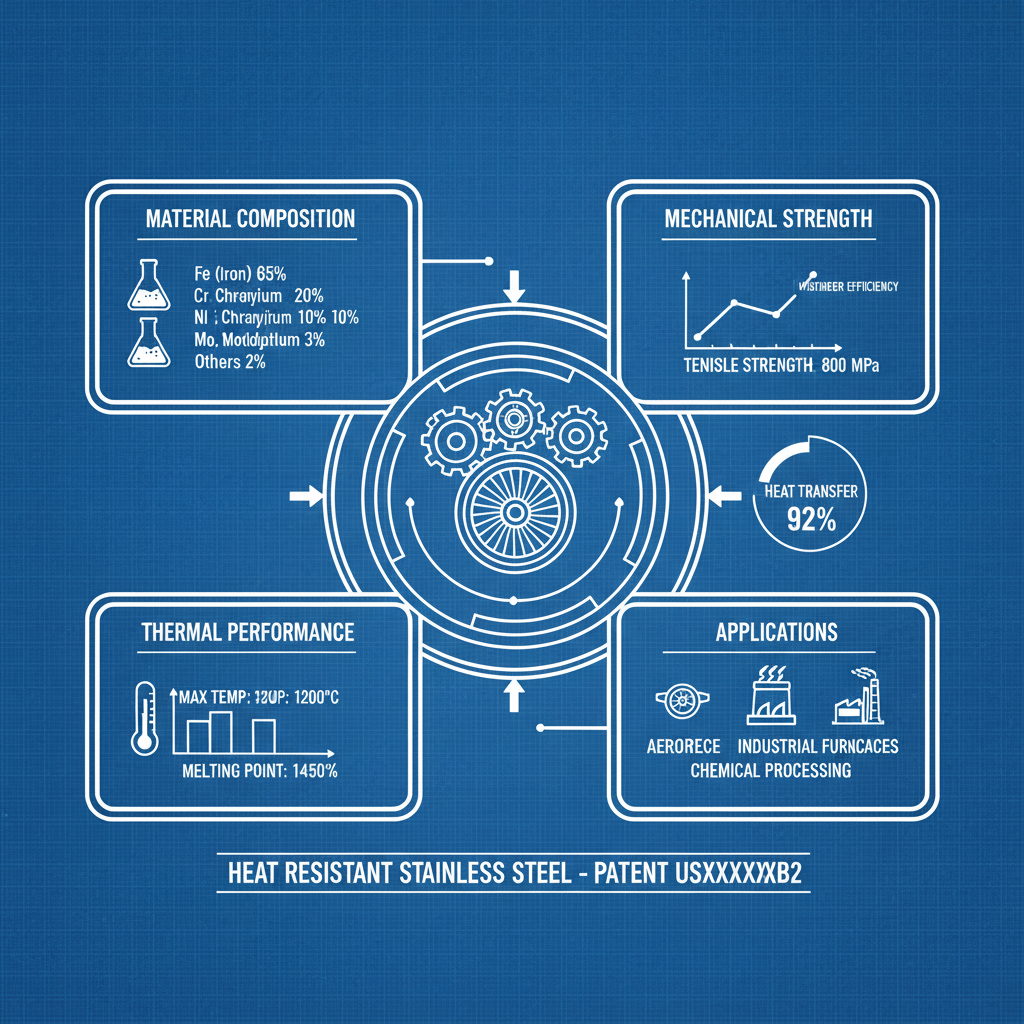
Exploring Heat Resistant Stainless Steel Applications and Future Trends

Introduction to Heat Resistant Stainless Steel

Exploring Heat Resistant Stainless Steel Applications and Future Trends

Heat resistant stainless steel isn’t a single alloy, but rather a family of stainless steels designed to maintain their mechanical strength and resist degradation in high-temperature environments. This is achieved through careful alloying additions – primarily chromium, nickel, and molybdenum – that stabilize the steel’s microstructure and prevent oxidation or corrosion at elevated temperatures. The specific composition dictates the steel’s upper temperature limit and its suitability for various applications.

These materials find vital use in environments where extreme temperatures and corrosive atmospheres coexist, such as jet engines, chemical reactors, and power generation systems. The development of increasingly sophisticated heat resistant stainless steels is directly linked to advancements in industries demanding higher efficiency, improved reliability, and reduced maintenance costs.

Defining Heat Resistant Stainless Steel

Heat resistant stainless steel refers to a group of austenitic, ferritic, and martensitic stainless steels possessing the ability to retain their mechanical properties, resist oxidation, and maintain corrosion resistance at elevated temperatures. Unlike standard stainless steels, which lose strength rapidly at higher temperatures, heat resistant alloys are specifically engineered to perform reliably under these conditions. The critical factor is the formation of a protective oxide layer, typically chromium oxide, that inhibits further corrosion.

This capability is crucial in industries demanding long-term performance in harsh thermal environments. From the combustion chambers of gas turbines to the furnace components in steelmaking, heat resistant stainless steel enables processes that would otherwise be impossible or prohibitively expensive. It’s a fundamental material enabling modern industrial processes.

The selection of the appropriate grade of heat resistant stainless steel depends on the specific operating temperature, corrosive environment, and mechanical load requirements. Different alloys offer varying levels of performance, necessitating careful consideration during the design and material selection phases.

Core Properties of Heat Resistant Stainless Steel

The defining characteristics of heat resistant stainless steel are its exceptional high-temperature strength, oxidation resistance, and corrosion resistance. These properties stem from the precise alloying elements and heat treatment processes used in their manufacture. Chromium plays a pivotal role in forming the protective oxide layer, while nickel enhances ductility and toughness at elevated temperatures. Molybdenum further improves creep resistance, the tendency of a material to deform slowly under sustained stress.

Furthermore, heat resistant stainless steel exhibits excellent thermal stability, meaning its properties remain relatively consistent over a wide range of temperatures. This is essential for applications where dimensional stability and predictable performance are critical. The steel’s resistance to thermal cycling – repeated heating and cooling – minimizes the risk of fatigue cracking and failure.

Beyond these core properties, specific grades of heat resistant stainless steel may exhibit other desirable characteristics, such as low thermal expansion, high electrical resistivity, or resistance to specific corrosive agents. The ability to tailor the alloy composition to meet specific application requirements is a key advantage of these materials.

Key Factors Influencing Heat Resistance

Several factors directly influence the heat resistance of stainless steel. Chromium content is paramount, with higher percentages generally equating to greater oxidation resistance. However, the overall alloy composition and the presence of other elements like nickel, molybdenum, and silicon play significant roles in stabilizing the microstructure and enhancing creep resistance.

Grain size also affects heat resistance. A finer grain structure typically results in improved strength and toughness at elevated temperatures. Heat treatment processes are employed to control grain size and ensure optimal performance. The specific manufacturing process, including melting and casting techniques, can also influence the material’s susceptibility to high-temperature degradation.

Comparative Heat Resistance of Different Stainless Steel Alloys


Global Applications and Industries Utilizing Heat Resistant Stainless Steel

The applications of heat resistant stainless steel are incredibly diverse, spanning numerous industries. The aerospace sector relies heavily on these alloys for jet engine components, exhaust systems, and turbine blades, where extreme temperatures and stresses are commonplace. In the chemical processing industry, they are used in reactors, heat exchangers, and piping systems handling corrosive fluids at elevated temperatures.

Power generation plants utilize heat resistant stainless steel in boiler tubes, gas turbine components, and steam lines. The automotive industry employs these alloys in exhaust manifolds, catalytic converters, and turbocharger components. Furthermore, emerging applications in renewable energy, such as concentrated solar power and geothermal energy, are driving increased demand for these specialized materials.

Advantages and Long-Term Value Proposition

The advantages of employing heat resistant stainless steel extend far beyond its ability to withstand high temperatures. Its inherent corrosion resistance minimizes maintenance costs and extends the service life of components, reducing downtime and improving overall operational efficiency. The superior mechanical properties, including creep resistance and tensile strength, ensure long-term structural integrity and reliability.

From a sustainability perspective, the longevity and recyclability of stainless steel contribute to reduced material consumption and waste generation. The enhanced efficiency of processes utilizing heat resistant stainless steel can also lead to energy savings and reduced emissions. In many applications, the increased safety and reliability offered by these alloys justify the initial investment.

Future Trends and Innovations in Heat Resistant Stainless Steel

Ongoing research and development efforts are focused on pushing the boundaries of heat resistance in stainless steels. Novel alloying strategies, including the addition of rare earth elements and advanced processing techniques like powder metallurgy, are being explored to create alloys with even higher temperature capabilities and improved creep resistance. Digital transformation is also playing a role, with machine learning algorithms being used to optimize alloy compositions and predict performance under extreme conditions.

The drive for sustainability is fostering the development of more efficient and environmentally friendly manufacturing processes for heat resistant stainless steel. Simultaneously, the integration of these materials into emerging technologies, such as hydrogen production and carbon capture, is creating new opportunities for innovation.

FAQS

What are the key differences between various grades of heat resistant stainless steel?

Different grades of heat resistant stainless steel vary in their alloy composition, impacting their specific properties and suitable applications. For example, 310S contains higher chromium and nickel content than 304, offering superior oxidation resistance at elevated temperatures. 321 includes titanium, enhancing resistance to sensitization (carbide precipitation) during welding, crucial for maintaining corrosion resistance. Selecting the correct grade requires careful consideration of the operating temperature, corrosive environment, and required mechanical properties.

How does heat treatment affect the performance of heat resistant stainless steel?

Heat treatment is crucial for optimizing the microstructure and mechanical properties of heat resistant stainless steel. Solution annealing, followed by rapid cooling, is often used to dissolve carbides and ensure a homogenous microstructure. Stabilization heat treatments, like those applied to 321 stainless steel, prevent intergranular corrosion. Proper heat treatment enhances strength, ductility, creep resistance, and overall durability, making it an indispensable step in the manufacturing process.

What are the common challenges in welding heat resistant stainless steel?

Welding heat resistant stainless steel presents challenges due to its sensitivity to carbide precipitation, which can reduce corrosion resistance. Proper welding procedures, including the use of stabilized grades (e.g., 321) or low-carbon grades (e.g., 316L), and controlled cooling rates are essential. The selection of appropriate filler metals is also critical to ensure weld integrity and maintain the desired corrosion resistance. Post-weld heat treatment may be necessary in some cases.

What is the typical service life of components made from heat resistant stainless steel?

The service life of components made from heat resistant stainless steel varies significantly based on the operating conditions, alloy grade, and application. However, with proper material selection, design, and maintenance, components can reliably operate for decades. In less demanding applications, service life can exceed 50 years, while in extreme environments, regular inspection and replacement may be necessary to ensure continued performance and safety.

Is heat resistant stainless steel recyclable?

Yes, heat resistant stainless steel is highly recyclable. Stainless steel is one of the most recycled materials globally, with a high recovery rate. Recycling stainless steel reduces the demand for virgin materials, conserves energy, and minimizes environmental impact. The recycled material retains the same high-quality properties as virgin stainless steel, making it a sustainable choice for various applications.

How does the cost of heat resistant stainless steel compare to other high-temperature alloys?

Heat resistant stainless steel generally offers a more cost-effective solution compared to nickel-based superalloys or refractory metals for many high-temperature applications. While the initial material cost may be higher than standard carbon steel, the extended service life, reduced maintenance requirements, and improved reliability often result in lower total lifecycle costs. The specific cost depends on the alloy grade, quantity purchased, and market conditions.

Conclusion

In conclusion, heat resistant stainless steel stands as a cornerstone material for industries operating in demanding high-temperature environments. Its unique combination of strength, corrosion resistance, and thermal stability makes it an indispensable component in sectors ranging from aerospace and power generation to chemical processing and automotive. Continued advancements in alloying and manufacturing techniques promise even greater performance capabilities and expanded application opportunities.

Looking ahead, embracing innovation in heat resistant stainless steel is critical for addressing the challenges of a rapidly evolving technological landscape. Investing in research and development, promoting sustainable manufacturing practices, and fostering collaboration between material scientists, engineers, and end-users will unlock the full potential of these alloys, driving efficiency, reliability, and sustainability across a wide spectrum of industries. Visit our website at dzmccasting.com to learn more about our range of heat resistant stainless steel products.
David Chen

David Chen

David Chen is the Production Manager at Hebei Dezhong Machinery Co., Ltd. David oversees all aspects of the casting process, from lost foam casting and coated sand shell molding to mechanical processing. He’s responsible for the efficient operation of the production lines, boasting an annual output exceeding 10,000 tons of
Previous High Performance Heat Resistant Steel Plate for Critical Industrial Applications
Next Advanced Heat Resistant Metal Sheet Solutions for Critical Industrial Applications