Heat resistant steel composition isn’t just some lab formula; it's the backbone of industries that literally keep the world turning. From power generation to aerospace, these specialized alloys endure conditions that would melt ordinary metals. Understanding these compositions – the precise blend of elements, their ratios, and how they’re processed – is critical for engineers, fabricators, and anyone involved in building and maintaining high-performance infrastructure. It's about more than just strength; it's about reliability, safety, and pushing the boundaries of what’s possible. heat resistant steel composition is a constant evolution, driven by the demands of increasingly extreme environments.
Globally, demand for heat resistant steel is escalating. The World Bank projects continued growth in infrastructure development across emerging economies, particularly in energy and manufacturing sectors, directly boosting the need for high-temperature materials. Furthermore, the shift towards more efficient power generation – including combined cycle gas turbines and waste-to-energy plants – relies heavily on these alloys. According to ISO standards, materials used in these applications face increasingly rigorous performance criteria. This isn’t a niche market; it's a foundational component of modern industry.
We’re talking about steels specifically designed to maintain their mechanical strength and resist degradation at elevated temperatures. Think 500°C, 800°C, even exceeding 1200°C in some applications. Unlike conventional steels that lose strength and become susceptible to creep and oxidation at high temperatures, heat resistant steels are engineered to withstand these challenges. This capability isn't just for preventing catastrophic failures; it directly impacts efficiency, lifespan, and operational costs of critical equipment. It's the difference between a power plant needing maintenance every year versus running reliably for decades.
The Importance of Understanding Heat Resistant Steel Composition
As someone who’s spent years on sites, seeing things fail firsthand, I can tell you that choosing the right material isn’t about saving a few bucks upfront. It’s about preventing a shutdown that costs millions. Understanding heat resistant steel composition means knowing what alloys hold up under intense heat and pressure, and more importantly, what doesn’t. It’s about understanding creep resistance, oxidation rates, and the long-term effects of thermal cycling. heat resistant steel composition is absolutely vital.
It’s also about working with the material. Knowing how different alloys respond to welding, machining, and forming is crucial for successful fabrication. You can have the best composition on paper, but if it can’t be reliably manufactured and integrated into a system, it's worthless. That’s where the experience of the team – metallurgists, welders, and engineers – comes into play.
Introduction: Global or Industry Context
The demand for heat resistant steels is intrinsically linked to global energy production and infrastructure development. Power plants, particularly those utilizing fossil fuels and increasingly, renewable energy sources like concentrated solar power, demand materials capable of withstanding extreme temperatures and pressures. Aerospace applications, including jet engines and rocket nozzles, place even more stringent requirements on high-temperature alloys. Emerging markets in Asia and Africa are driving significant growth in these sectors, increasing the demand for specialized steel compositions.
Furthermore, the drive for increased efficiency in industrial processes is also a major factor. Higher operating temperatures generally lead to greater thermodynamic efficiency, but this requires materials that can withstand the associated stresses. This is especially true in the chemical processing industry, where reactors and heat exchangers operate under harsh conditions. The need for sustainable energy solutions is only accelerating this trend.
We’re also seeing increased scrutiny on material lifecycles and environmental impact. The push for longer-lasting components reduces the need for frequent replacements, minimizing waste and resource consumption. This has led to research into advanced alloys with improved corrosion resistance and creep performance, further emphasizing the importance of understanding precise heat resistant steel composition.
Definition & Meaning
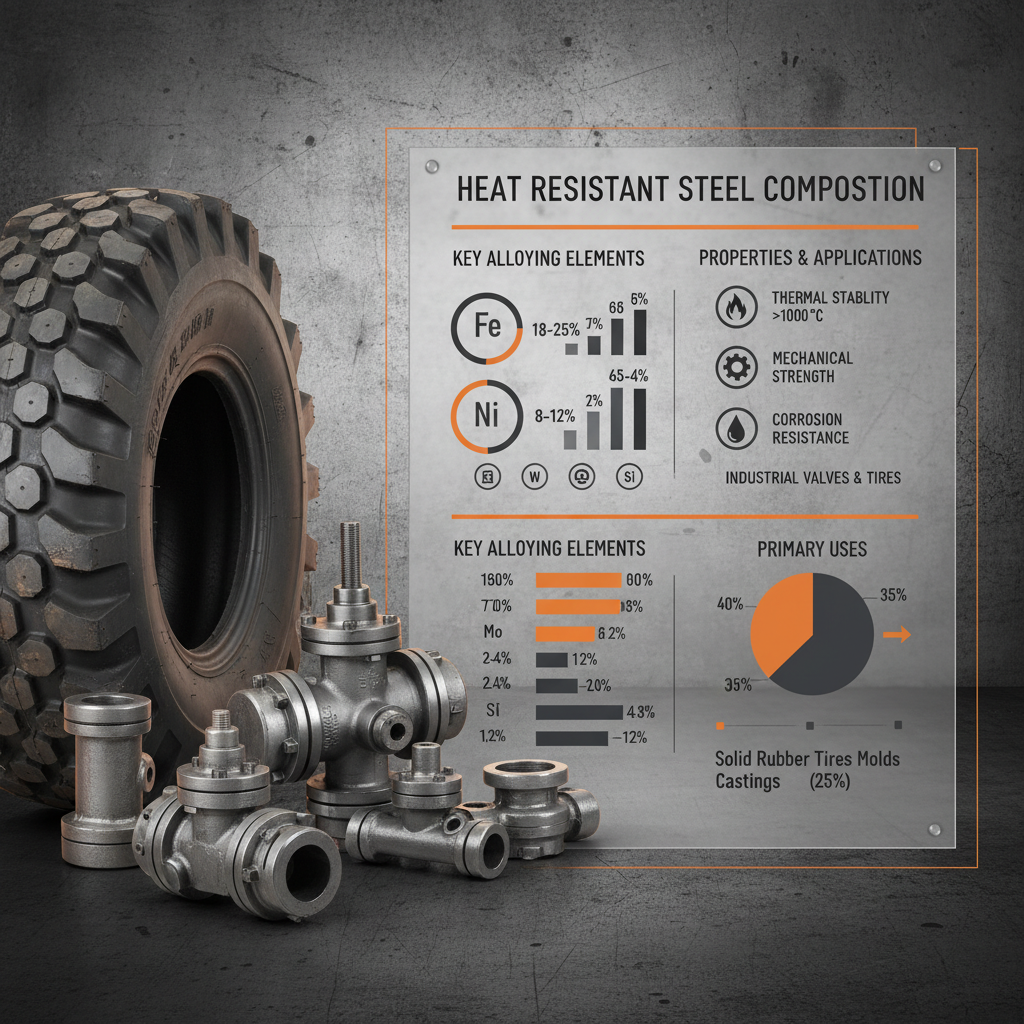
In its simplest form, heat resistant steel composition refers to the carefully controlled blend of elements – primarily iron, chromium, nickel, molybdenum, and vanadium – that imparts exceptional high-temperature performance. It’s not about one single element; it’s about the synergy between them. Chromium, for example, forms a protective oxide layer that resists corrosion, while nickel enhances ductility and creep resistance. Molybdenum contributes to solid-solution strengthening, improving high-temperature strength.
This capability is crucial to modern industry. Consider a gas turbine – the heart of a power plant. Without heat resistant steels in the turbine blades and combustion chamber, these components would rapidly degrade, leading to catastrophic failure. Similarly, in the automotive industry, exhaust systems rely on these alloys to withstand the intense heat generated by the engine. It's a direct connection to our daily lives.
Ultimately, heat resistant steel composition isn’t just a technical specification; it’s an enabling technology that allows us to operate in extreme environments and push the limits of engineering performance. It’s about creating reliable, efficient, and sustainable solutions for some of the world’s most challenging problems.
Key Factors or Core Components
One critical factor is Creep Resistance. This refers to the tendency of a material to slowly deform under sustained stress at high temperatures. Alloys with high chromium and molybdenum content generally exhibit superior creep resistance, preventing components from losing their shape over time. Another key element is Oxidation Resistance. At high temperatures, metals react with oxygen, forming scale that can weaken the material. Chromium is the primary element responsible for forming a protective oxide layer.
Thermal Fatigue Resistance is also vital. Components subjected to repeated heating and cooling cycles can develop cracks and failures. Alloys with good ductility and toughness are better able to withstand thermal fatigue. Weldability is a practical concern; even the best composition is useless if it can’t be reliably joined to other components. Controlling the carbon content and adding specific alloying elements can improve weldability. heat resistant steel composition choices always require practical assessment.
Finally, Cost-Effectiveness plays a significant role. While exotic alloys offer superior performance, they often come with a hefty price tag. Engineers must balance performance requirements with budgetary constraints, selecting the most cost-effective composition that meets the application’s needs. It’s a constant trade-off.
Heat Resistant Steel Composition Performance Metrics
Global Applications & Use Cases
You’ll find these alloys in power generation facilities globally, particularly in gas turbine blades, boiler tubes, and superheater components. Europe and North America have long been leaders in this field, but Asia, particularly China and India, are rapidly expanding their energy infrastructure and driving demand for these materials. In the aerospace industry, jet engine components, rocket nozzles, and exhaust systems rely heavily on heat resistant steels.
The chemical processing industry utilizes these alloys in reactors, heat exchangers, and pipelines to withstand corrosive environments and high temperatures. This is especially prevalent in petrochemical plants and fertilizer production facilities worldwide. Even in waste-to-energy plants, these materials are critical for handling the aggressive conditions created during incineration.
Furthermore, they’re finding increasing applications in specialized fields like nuclear power, where they’re used in reactor components, and in the development of advanced materials for fusion energy research. These applications demand the highest levels of performance and reliability, and heat resistant steel composition meets that challenge.
Advantages & Long-Term Value
The cost savings from using heat resistant steels are significant. Reduced maintenance downtime, extended component lifespan, and increased efficiency all contribute to lower operating costs. From a sustainability standpoint, these alloys enable more efficient energy production and reduce waste by minimizing the need for frequent replacements. These materials are an investment, not an expense.
The reliability and safety benefits are paramount. Preventing catastrophic failures in critical infrastructure like power plants or aircraft engines is invaluable. Knowing that a component can withstand extreme conditions provides peace of mind and protects lives. That's the bottom line for me, having seen firsthand what can happen when materials fail.
Future Trends & Innovations
We’re seeing a lot of research into single-crystal alloys, which eliminate grain boundaries and further enhance creep resistance. Additive manufacturing, or 3D printing, is also gaining traction, allowing for the creation of complex geometries and customized compositions. This opens up possibilities for optimizing designs and reducing material waste.
The integration of digital technologies, such as machine learning and AI, is also playing a role. These tools can be used to predict material performance, optimize alloy compositions, and identify potential failure modes. The drive towards more sustainable materials is leading to the exploration of new alloying elements and processing techniques that minimize environmental impact.
Challenges & Solutions
One of the biggest challenges is the cost of these alloys. The specialized alloying elements and complex processing techniques drive up the price. Solutions include developing more cost-effective manufacturing processes and exploring alternative alloying elements that offer comparable performance at a lower cost. Another challenge is maintaining consistent quality control throughout the production process.
Weldability can also be an issue, particularly with highly alloyed steels. Developing advanced welding techniques and filler materials is crucial for ensuring reliable joints. Finally, predicting long-term performance in extreme environments remains a challenge. Accelerated testing methods and advanced modeling techniques are needed to accurately assess material degradation and predict remaining useful life. heat resistant steel composition requires a holistic approach to overcome these issues.
Collaboration between material scientists, engineers, and manufacturers is essential for addressing these challenges and driving innovation in the field of heat resistant steels. Sharing data, best practices, and research findings will accelerate the development of more reliable, efficient, and sustainable materials.
Frequently Asked Questions About Heat Resistant Steel Composition
| Application |
Composition |
Performance |
Cost |
| Power Generation |
High Cr, Ni, Mo |
Excellent creep resistance |
Moderate to High |
| Aerospace |
Nickel-based superalloys |
Exceptional high-temperature strength |
Very High |
| Chemical Processing |
Stainless steels with added Mo |
Good corrosion and oxidation resistance |
Low to Moderate |
| Waste Incineration |
High-silicon steels |
Resistance to hot corrosion |
Moderate |
| Thermal Processing |
Chromium-molybdenum steels |
High strength and toughness |
Moderate |
| Heat Exchangers |
Austenitic stainless steels |
High thermal conductivity |
Low to Moderate |
FAQS
While both resist corrosion, heat resistant steels are specifically engineered to maintain their strength and structural integrity at extremely high temperatures, typically exceeding those that stainless steel can handle. Stainless steel relies on chromium to form a protective oxide layer against corrosion, while heat resistant steels incorporate additions like molybdenum, vanadium, and tungsten to enhance creep resistance and oxidation resistance at elevated temperatures. They’re designed for different operational extremes.
Higher carbon content and certain alloying elements like molybdenum and tungsten can reduce weldability, increasing the risk of cracking. Careful control of these elements, along with the use of appropriate welding techniques and filler metals, is essential for ensuring sound welds. Preheating and post-weld heat treatment are often required to mitigate these issues. It's a delicate balance between strength and manufacturability.
Creep is the tendency of a material to slowly deform under sustained stress at high temperatures. It's a critical consideration because even relatively low stresses can cause significant deformation over time, leading to component failure. Heat resistant steels are designed with specific alloying elements, like molybdenum and tungsten, to resist creep and maintain their structural integrity over extended periods.
Testing involves subjecting samples to elevated temperatures and sustained stresses for extended durations, often in specialized creep testing machines. These tests measure creep rates, rupture strength, and oxidation resistance. Non-destructive evaluation techniques, like ultrasonic testing and radiography, are also used to detect any flaws or defects that could compromise performance. It's a rigorous process.
Chromium is crucial for forming a protective oxide layer on the steel's surface, which resists corrosion and oxidation at high temperatures. This layer acts as a barrier, preventing the underlying metal from reacting with the environment. The higher the chromium content, generally the better the oxidation resistance, although other alloying elements also play a role.
The production of these alloys can be energy-intensive and may involve the use of scarce resources. However, their long lifespan and the increased efficiency they enable contribute to overall sustainability. Research is ongoing to develop more sustainable production methods and explore the use of recycled materials. Responsible sourcing and end-of-life management are also key considerations.
Conclusion
Understanding heat resistant steel composition is far more than just knowing the chemical formulas. It's about understanding the interplay between composition, processing, and application, and recognizing the critical role these alloys play in ensuring the reliability and efficiency of vital infrastructure. From power plants to aerospace, these materials are the unsung heroes of modern industry.
Looking ahead, continued innovation in alloy design, manufacturing processes, and digital modeling will be essential for addressing the challenges of increasingly extreme operating environments. Investing in research and development, fostering collaboration between industry and academia, and prioritizing sustainable materials solutions will ensure that heat resistant steels continue to play a crucial role in shaping a more efficient and sustainable future. Visit our website at www.dzmccasting.com to learn more about our range of high-performance alloys.