Heat resistant stainless steel grades are crucial materials in numerous industries, playing a vital role in applications demanding high-temperature performance and corrosion resistance. Their significance extends beyond simple material science, impacting efficiency, safety, and longevity in sectors ranging from aerospace and power generation to chemical processing and automotive engineering. Understanding these specialized alloys is therefore paramount for engineers, designers, and procurement professionals alike.
The global demand for heat resistant stainless steel grades is continuously escalating, driven by the ongoing pursuit of efficiency and innovation in energy production, particularly in renewable energy systems and advanced power plants. Simultaneously, increasingly stringent environmental regulations require materials capable of withstanding harsh chemical environments and high operating temperatures without degrading or releasing harmful byproducts. This dynamic landscape necessitates a deep understanding of the different grades, their properties, and optimal application scenarios.
These specialized stainless steels aren't merely about withstanding heat; they represent a commitment to reliability and safety in critical infrastructure. From turbine blades in jet engines to components in nuclear reactors, the consistent performance of these materials is non-negotiable. Investment in research and development in this area directly translates into advancements across diverse industries, bolstering economic growth and technological progress.
Introduction to Heat Resistant Stainless Steel Grades
Heat resistant stainless steel grades represent a specialized subset of stainless steels engineered to maintain their mechanical strength and resist corrosion at elevated temperatures. These alloys are distinguished by their unique chemical compositions, incorporating elements like chromium, nickel, molybdenum, and silicon to enhance their resistance to oxidation, creep, and thermal fatigue. They are essential in applications where conventional steels would rapidly degrade and fail.
The development of these materials has been instrumental in advancing numerous industries, allowing for the creation of more efficient and durable equipment. They often undergo rigorous testing and quality control procedures to ensure compliance with industry standards and specific application requirements. Choosing the correct heat resistant stainless steel grades is crucial for ensuring long-term performance and reliability.
Defining Heat Resistance in Stainless Steel
Heat resistance, in the context of stainless steel, doesn’t simply mean the ability to withstand high temperatures. It encompasses a complex interplay of properties including oxidation resistance, creep resistance, and thermal stability. Oxidation resistance refers to the material's ability to prevent the formation of scale or corrosion products on its surface when exposed to oxygen at high temperatures. Creep resistance, on the other hand, describes the material’s ability to resist slow deformation under sustained stress at elevated temperatures.
Stainless steels gain their heat resistance primarily through the addition of chromium, which forms a protective chromium oxide layer on the surface, preventing further oxidation. The inclusion of other alloying elements, such as nickel and molybdenum, further enhances these properties and improves resistance to specific types of corrosion. Understanding the specific heat resistance requirements of an application is therefore critical for selecting the optimal alloy.
These specialized alloys find applications where failure could have catastrophic consequences, ranging from power generation facilities to aerospace components. Maintaining structural integrity at high temperatures is not merely a matter of performance; it’s a matter of safety and environmental responsibility.
Key Factors Influencing Heat Resistance
Several key factors determine the heat resistance of stainless steel grades. Firstly, chemical composition is paramount. The percentage of chromium, nickel, molybdenum, silicon, and other alloying elements directly impacts the alloy’s ability to resist oxidation and creep. Higher chromium content generally improves oxidation resistance.
Secondly, microstructure plays a critical role. The grain size, phase distribution, and the presence of precipitates can significantly affect the alloy’s mechanical properties and resistance to high-temperature degradation. Fine-grained structures generally offer better creep resistance. Thirdly, surface finish influences oxidation rates. A smoother surface can minimize the formation of stress concentrations and reduce the rate of scale growth.
Finally, environmental conditions such as atmosphere, temperature cycling, and the presence of corrosive agents have a significant impact. Exposure to sulfurous gases or molten salts can accelerate corrosion rates, requiring the selection of alloys specifically designed for such environments. Understanding these factors is essential for proper material selection and ensuring long-term performance.
Global Applications of Heat Resistant Stainless Steel Grades
Heat resistant stainless steel grades are integral to a diverse range of global industries. In the power generation sector, they are extensively used in gas turbines, steam turbines, and nuclear reactors, where they withstand extremely high temperatures and pressures. The aerospace industry relies on these alloys for jet engine components, exhaust systems, and high-temperature structural parts, demanding exceptional strength and corrosion resistance.
The chemical processing industry utilizes these materials in reactors, heat exchangers, and piping systems handling corrosive fluids at elevated temperatures. They also find critical applications in automotive exhaust systems, where they must withstand high temperatures and corrosive gases. Furthermore, the oil and gas industry employs these alloys in downhole equipment and refinery processes, offering reliability in harsh environments.
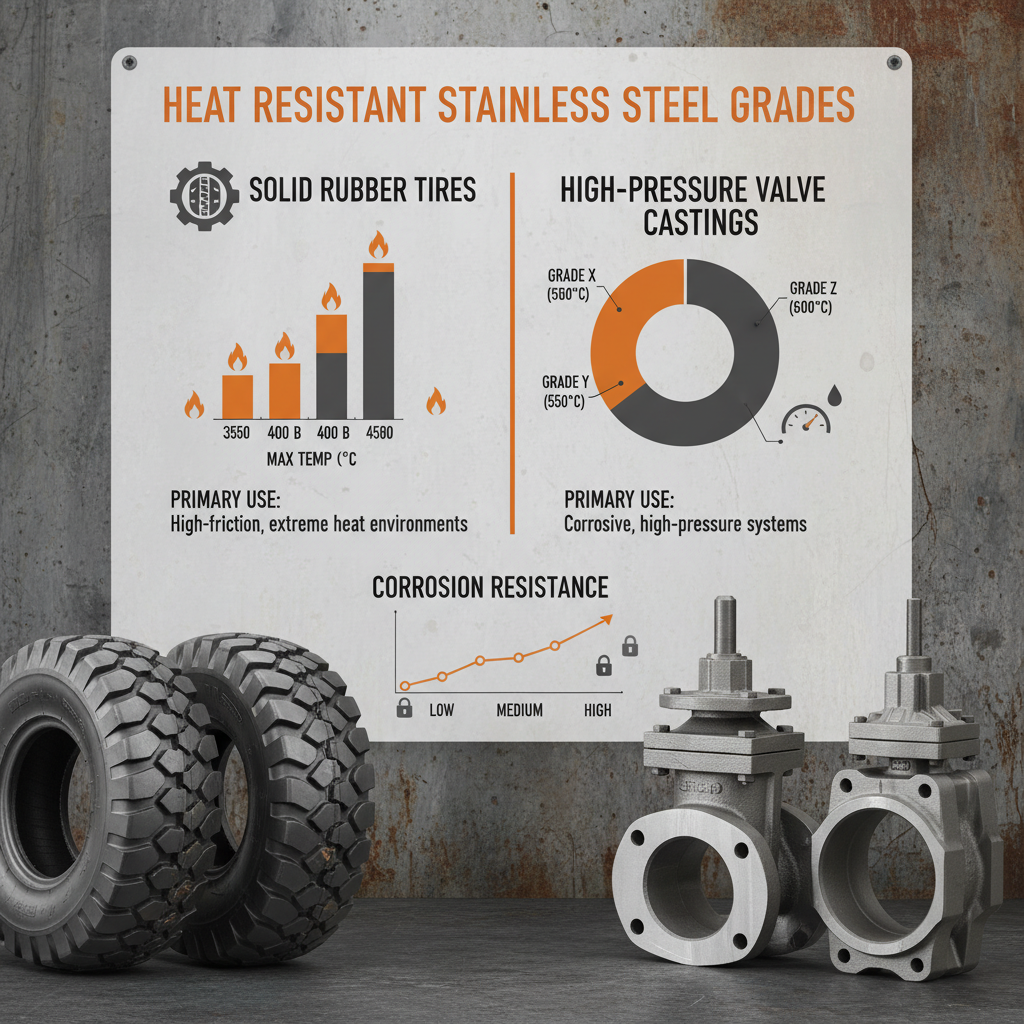
Comparative Heat Resistance of Common Stainless Steel Grades
Advantages & Long-Term Value Proposition
Utilizing heat resistant stainless steel grades offers numerous advantages. Significant cost savings are realized through reduced maintenance and extended equipment lifespan, minimizing downtime and replacement costs. Furthermore, improved safety is a key benefit, as these materials maintain their integrity under extreme conditions, reducing the risk of catastrophic failures.
The long-term value extends beyond purely economic factors. These materials contribute to enhanced sustainability by reducing the need for frequent replacements, conserving resources and minimizing waste. Their reliability fosters trust and confidence in critical infrastructure, contributing to the overall stability and efficiency of various industries.
Future Trends in Heat Resistant Stainless Steel
The future of heat resistant stainless steel lies in ongoing advancements in alloy composition and processing techniques. Research is focusing on developing alloys with even higher temperature capabilities and improved resistance to specific corrosive environments. Additive manufacturing (3D printing) is also emerging as a promising technique for creating complex geometries with tailored microstructures.
The integration of digital technologies, such as machine learning and artificial intelligence, is enabling more precise control over alloy design and manufacturing processes, leading to optimized performance. A growing emphasis on sustainability is driving the development of more environmentally friendly alloy compositions and recycling strategies.
Challenges and Solutions in Heat Resistant Applications
Despite their superior properties, challenges remain in the application of heat resistant stainless steel grades. High material costs can be a significant barrier, particularly for large-scale projects. Fabrication and welding can also be complex, requiring specialized techniques and skilled personnel.
Solutions include exploring cost-effective alloy compositions, optimizing manufacturing processes to minimize waste, and developing innovative joining techniques. The development of predictive maintenance strategies, utilizing sensor technology and data analytics, can also help extend component lifespan and reduce overall costs.
Collaboration between material scientists, engineers, and industry partners is crucial for overcoming these challenges and unlocking the full potential of these essential materials.
Summary of Common Challenges and Proposed Solutions for Heat Resistant Stainless Steel Applications
| Challenge |
Impact on Application |
Proposed Solution |
Implementation Level (1-10) |
| High Material Cost |
Limits affordability for large-scale projects |
Explore cost-effective alloy compositions & optimize material usage |
7 |
| Fabrication Complexity |
Increased manufacturing time & cost |
Develop advanced welding & machining techniques |
6 |
| Corrosion in Harsh Environments |
Reduced lifespan & potential for failure |
Utilize alloys with enhanced corrosion resistance & protective coatings |
8 |
| Creep Deformation at High Temperatures |
Loss of structural integrity over time |
Optimize alloy composition for creep resistance & reduce operating stress |
9 |
| Limited Availability of Specialized Alloys |
Delays in project timelines & increased lead times |
Strengthen supply chains & diversify sourcing options |
5 |
| Lack of Skilled Personnel |
Poor quality fabrication & increased risk of errors |
Invest in training & certification programs for welders & machinists |
6 |
FAQS
While both 304 and 316 are austenitic stainless steels, 316 contains molybdenum, which significantly enhances its corrosion resistance, particularly in chloride environments. This makes 316 a better choice for applications exposed to saltwater or harsh chemicals, even at elevated temperatures. 304 offers good oxidation resistance but is more susceptible to pitting and crevice corrosion in these conditions. The choice depends on the specific operating environment and required longevity.
Selecting the correct grade involves considering several factors: the operating temperature, the corrosive environment, the stress levels, and the required lifespan. Consulting material data sheets and performing thorough testing are crucial. Factors like oxidation resistance, creep strength, and thermal fatigue resistance should be assessed. Often, collaboration with a metallurgist or materials engineer is recommended to ensure optimal material selection for long-term performance and safety.
Nickel is a key alloying element in many heat resistant stainless steels. It enhances austenite stability, improving the material’s toughness and ductility at both room and elevated temperatures. This stability is critical for resisting deformation and preventing brittle fracture under high stress. Nickel also improves resistance to certain types of corrosion and contributes to the overall strength of the alloy.
Creep is the tendency of a solid material to slowly deform permanently under the influence of persistent mechanical stresses. At elevated temperatures, even relatively low stresses can cause significant creep deformation over time. This can lead to dimensional changes, reduced load-bearing capacity, and ultimately, component failure. Selecting alloys with high creep resistance and minimizing operating stresses are crucial for mitigating creep damage.
Besides alloy composition, several methods can enhance heat resistance. These include surface treatments like aluminizing or chromizing to create protective layers, applying ceramic coatings to provide thermal barriers, and optimizing heat treatment processes to achieve desired microstructures. Controlling the grain size and morphology can also improve creep resistance. Proper design to minimize stress concentrations is also essential.
Regular inspection for signs of oxidation, corrosion, or creep damage is essential. Implementing a preventative maintenance schedule, including cleaning and surface treatment renewal, can significantly extend component lifespan. Monitoring operating temperatures and stresses, and avoiding exceeding design limits, are also critical. Documenting maintenance activities and performing periodic performance assessments are recommended.
Conclusion
In conclusion, heat resistant stainless steel grades represent a cornerstone of modern engineering, offering a crucial balance of strength, corrosion resistance, and high-temperature performance. Understanding the intricacies of these alloys, from their composition and microstructure to their applications and limitations, is vital for ensuring the reliability and efficiency of numerous critical industries. The correct selection and application of these materials translate directly into enhanced safety, extended lifespan, and reduced operational costs.
Looking ahead, continued innovation in alloy development, manufacturing techniques, and digital monitoring will further unlock the potential of heat resistant stainless steels. Embracing these advancements is not merely a matter of technological progress; it’s a strategic imperative for building a more sustainable, resilient, and efficient future. For all your heat resistant stainless steel needs, visit our website: www.dzmccasting.com.