Galvanized steel, known for its robust corrosion resistance, often faces challenges when exposed to high temperatures. Understanding the limits of galvanized steel heat resistance is crucial for ensuring structural integrity and safety in diverse applications, ranging from industrial infrastructure to automotive components. The performance of galvanized coatings diminishes at elevated temperatures, requiring careful consideration of operating conditions and potential mitigation strategies.
The global demand for durable and cost-effective materials has propelled the widespread adoption of galvanized steel. However, many engineers and designers often overlook the critical factor of its behavior under thermal stress. This lack of awareness can lead to premature failure, costly repairs, and even safety hazards. Therefore, detailed knowledge of galvanized steel heat resistance is paramount across numerous industries.
Specifically, understanding the mechanisms of coating degradation at high temperatures, the impact on mechanical properties, and available protective measures allows for informed material selection and design optimization. From protecting critical infrastructure in harsh environments to enhancing the performance of automotive parts, a comprehensive grasp of galvanized steel heat resistance unlocks significant advantages.
Introduction to Galvanized Steel Heat Resistance
Galvanized steel, prized for its exceptional corrosion protection, finds widespread use in construction, automotive, and infrastructure. However, the protective zinc coating’s performance is significantly affected by elevated temperatures. Understanding this vulnerability is fundamental to ensuring long-term structural integrity.
The primary concern arises from the lower melting point of zinc compared to steel. As temperatures increase, the zinc coating begins to undergo phase changes, eventually leading to its degradation and a reduction in its protective capabilities. This impacts the overall galvanized steel heat resistance.
The Global Significance of Heat Resistance in Galvanized Steel
Globally, galvanized steel constitutes a significant portion of steel production, estimated to be over 50% in many regions (World Steel Association). This widespread adoption is driven by its cost-effectiveness and corrosion resistance. However, the growing demand for galvanized steel in high-temperature applications – such as exhaust systems, industrial ovens, and heating infrastructure – necessitates a deeper understanding of its thermal limitations.
Failure to account for galvanized steel heat resistance can lead to substantial economic losses. Infrastructure projects requiring materials exposed to extreme heat—power plants, oil refineries, and solar thermal installations— are particularly vulnerable. The United Nations Sustainable Development Goals, particularly Goal 9 (Industry, Innovation and Infrastructure), emphasize the need for resilient infrastructure.
Furthermore, standards organizations like ISO are increasingly focusing on material performance under diverse operating conditions. The integration of heat resistance considerations into material specifications is becoming increasingly important for ensuring the safety and reliability of galvanized steel structures worldwide.
Defining Galvanized Steel Heat Resistance
Galvanized steel heat resistance refers to the ability of a galvanized steel component to maintain its structural integrity and corrosion protection at elevated temperatures. This isn't simply about the melting point of zinc, but encompasses the complex interplay between zinc coating degradation, steel substrate oxidation, and the formation of intermetallic layers.
In practical terms, heat resistance is often quantified by the temperature at which the zinc coating begins to significantly degrade – typically characterized by changes in coating thickness, adhesion, or the formation of undesirable compounds. It is directly related to the type of galvanizing process used (hot-dip galvanizing, electrogalvanizing, etc.) and the composition of the zinc coating.
The concept is integral to modern industrial needs as many applications demand materials capable of withstanding high-temperature environments, without compromising safety or longevity. This is crucial not only for industrial applications but also in sectors like automotive, where exhaust systems require high levels of thermal stability and galvanized steel heat resistance.
Key Factors Influencing Heat Resistance
Several factors influence the heat resistance of galvanized steel. The thickness of the zinc coating is paramount; thicker coatings offer greater protection, delaying the onset of degradation. The composition of the zinc coating also plays a role, with alloy coatings (e.g., zinc-nickel, zinc-iron) often exhibiting superior thermal stability.
The steel substrate itself is another key consideration. The type of steel, its carbon content, and the presence of alloying elements all affect its oxidation rate at high temperatures. The formation of intermetallic layers between the zinc coating and the steel substrate, while beneficial for adhesion at lower temperatures, can become brittle and prone to cracking at elevated temperatures, reducing overall galvanized steel heat resistance.
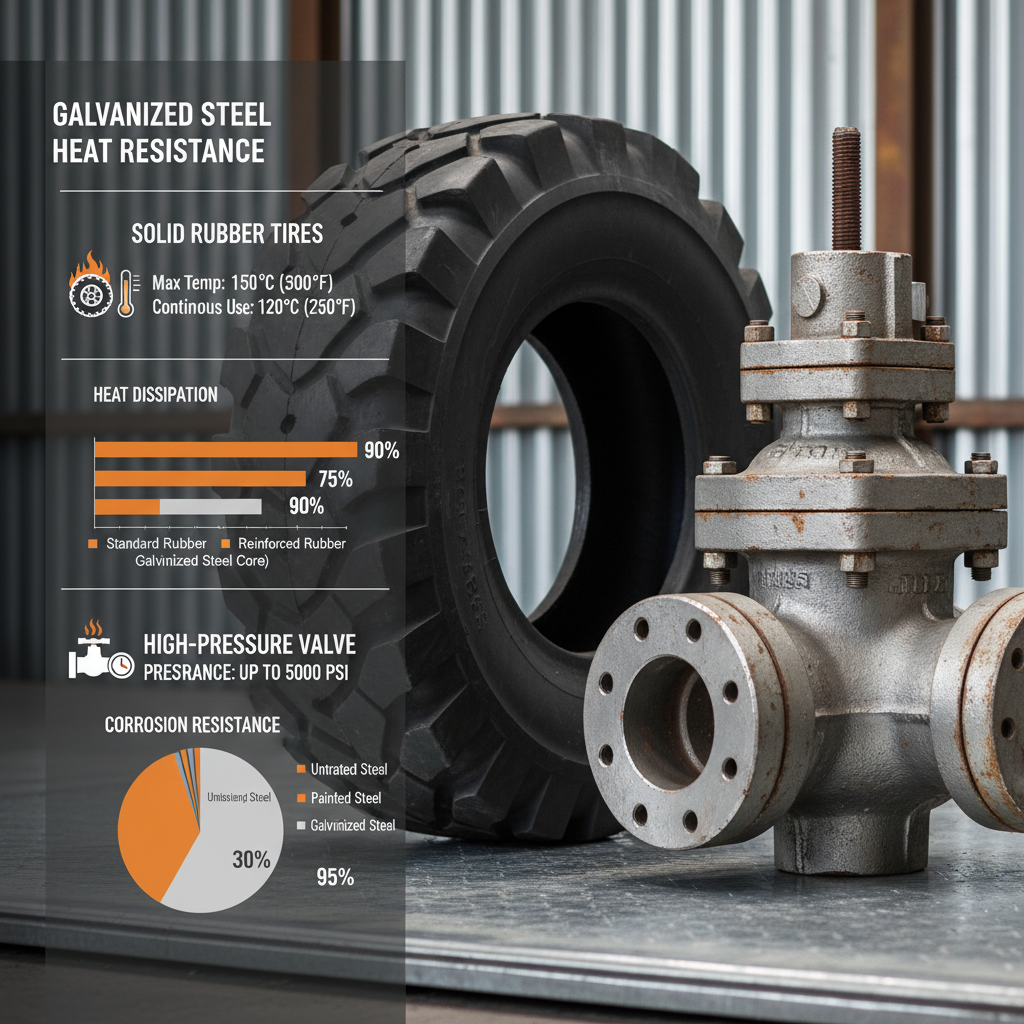
Galvanized Steel Heat Resistance Comparison
Applications Across Industries
The need for galvanized steel heat resistance is particularly critical in the automotive industry, where exhaust systems are subjected to extremely high temperatures. Similarly, in the power generation sector, components within power plants and boilers require materials that can withstand prolonged exposure to heat without compromising structural integrity.
Industrial ovens and furnaces, utilized in manufacturing and processing, also necessitate materials with high thermal stability. Beyond these core sectors, galvanized steel finds applications in renewable energy infrastructure – such as concentrated solar power plants – where high temperatures are inherent to the technology. In remote industrial zones and harsh environmental conditions, these requirements are amplified.
Advantages and Long-Term Value
Selecting galvanized steel with appropriate galvanized steel heat resistance translates to significant cost savings over the lifecycle of a project. Reduced maintenance, fewer repairs, and extended service life all contribute to a lower total cost of ownership. The inherent corrosion resistance of galvanized steel, even at elevated temperatures, adds to its long-term economic value.
From a sustainability perspective, the durability of galvanized steel minimizes the need for frequent replacements, reducing material consumption and waste generation. This aligns with circular economy principles. The safety benefits are equally compelling, as reliable performance under thermal stress prevents catastrophic failures that could endanger personnel and infrastructure.
Future Trends and Challenges
Ongoing research is focused on developing advanced coatings and surface treatments to enhance the galvanized steel heat resistance. This includes exploring new alloy compositions, incorporating ceramic coatings, and employing innovative surface modification techniques. Digital transformation, using sensor technology and predictive modeling, will allow for real-time monitoring of coating performance and proactive maintenance.
Automation in galvanizing processes promises to improve coating uniformity and adhesion, contributing to enhanced thermal stability. The growing emphasis on green energy and sustainable materials is driving demand for more environmentally friendly galvanizing processes and coatings. Overcoming the challenges associated with scaling up these technologies and ensuring cost-effectiveness will be crucial for widespread adoption.
Future regulations and standards are expected to prioritize materials with demonstrably superior heat resistance, particularly in critical infrastructure applications. Adapting to these evolving requirements will be essential for galvanized steel manufacturers and end-users alike.
Summary of Challenges and Mitigation Strategies for Galvanized Steel Heat Resistance
| Challenge |
Impact on Heat Resistance |
Mitigation Strategy |
Implementation Cost (1-10) |
| Zinc Coating Degradation |
Reduced corrosion protection at high temperatures |
Utilize thicker coatings or alloy coatings (Zn-Ni, Zn-Fe) |
6 |
| Intermetallic Layer Brittleness |
Cracking and delamination of the coating |
Control the galvanizing process to optimize intermetallic layer formation |
7 |
| Steel Substrate Oxidation |
Weakening of the steel structure |
Select steel alloys with higher oxidation resistance |
5 |
| Coating Adhesion Loss |
Premature coating failure |
Surface preparation and post-treatment to enhance adhesion |
4 |
| Environmental Corrosion |
Accelerated degradation in harsh environments |
Application of protective coatings or sealants |
3 |
| Process Control Inconsistencies |
Variations in coating quality and performance |
Implement strict quality control measures during galvanizing |
8 |
FAQS
Generally, galvanized steel begins to exhibit noticeable degradation around 200°C (392°F). While it can withstand higher temperatures for short periods, prolonged exposure above this threshold leads to zinc coating erosion and reduced corrosion protection. The specific temperature limit depends heavily on the galvanizing process, coating thickness, and alloy composition. Understanding these factors is crucial for effective material selection, particularly when assessing galvanized steel heat resistance.
Hot-dip galvanizing typically provides a thicker coating than electrogalvanizing, offering greater initial protection. However, alloy coatings like zinc-nickel, often applied through electrodeposition, demonstrate superior heat resistance due to their different metallurgical properties. Thermal spray coatings can also provide enhanced protection, but their adhesion can be a concern at elevated temperatures. The choice depends on the application’s specific temperature requirements and performance expectations related to galvanized steel heat resistance.
Yes, applying heat-resistant coatings – such as ceramic coatings or specialized paints – over galvanized steel can significantly improve its thermal performance. These coatings act as a barrier, protecting the zinc layer from degradation at high temperatures. However, it's crucial to ensure the coating is compatible with the galvanized surface and can withstand the thermal stresses of the application. The correct integration of these layers enhances the overall galvanized steel heat resistance.
Common signs include discoloration of the coating (e.g., darkening or yellowing), blistering, cracking, peeling, and a reduction in coating thickness. The formation of white rust (zinc oxide) can also indicate degradation. Visual inspection, coupled with coating thickness measurements, can help assess the extent of heat damage. Monitoring these factors allows for early intervention and maintenance, preserving galvanized steel heat resistance.
While there isn't a single universally accepted standard, several tests are used to evaluate heat resistance. These include thermal cycling tests (simulating repeated temperature fluctuations), salt spray tests at elevated temperatures (assessing corrosion resistance), and metallographic analysis (examining coating structure and intermetallic layer formation). These tests provide valuable data for comparing different galvanizing processes and coatings in terms of their galvanized steel heat resistance capabilities.
The steel substrate’s composition significantly impacts its oxidation resistance at high temperatures. Steels with higher chromium or silicon content generally exhibit better oxidation resistance. The substrate’s surface preparation before galvanizing is also critical; a clean, rough surface promotes better coating adhesion and improves heat resistance. A well-matched steel substrate is fundamental for optimizing the overall galvanized steel heat resistance properties.
Conclusion
In conclusion, understanding galvanized steel heat resistance is essential for engineers, designers, and end-users across a wide range of industries. Factors such as coating thickness, alloy composition, substrate material, and environmental conditions all play a crucial role in determining the longevity and performance of galvanized steel components in high-temperature applications. By carefully considering these factors and implementing appropriate mitigation strategies, we can maximize the benefits of this versatile material.
Looking ahead, continued research and development in advanced coatings and surface treatments will further enhance the heat resistance of galvanized steel. Embracing innovative technologies, like digital monitoring and automation, will enable proactive maintenance and optimize material performance. Visit our website at www.dzmccasting.com to learn more about our solutions and expertise in galvanized steel and heat-resistant materials.