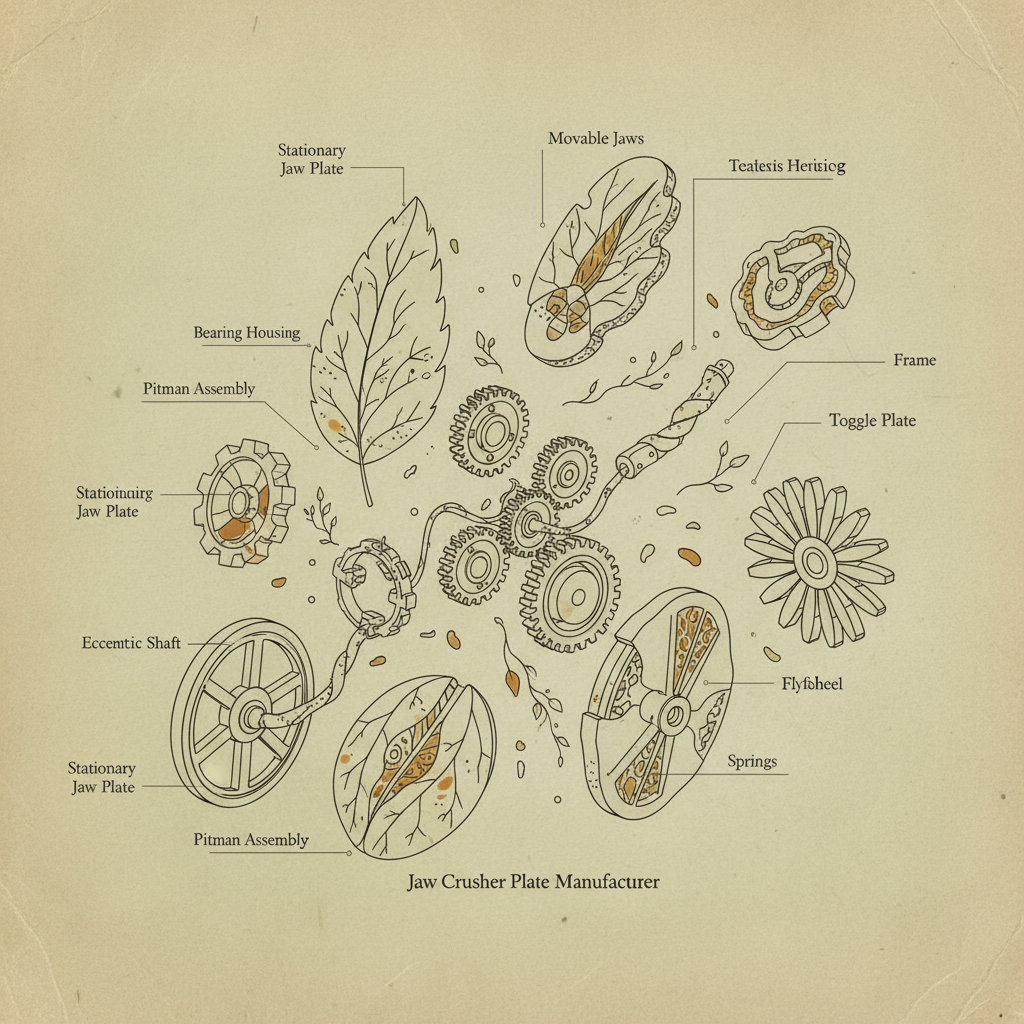
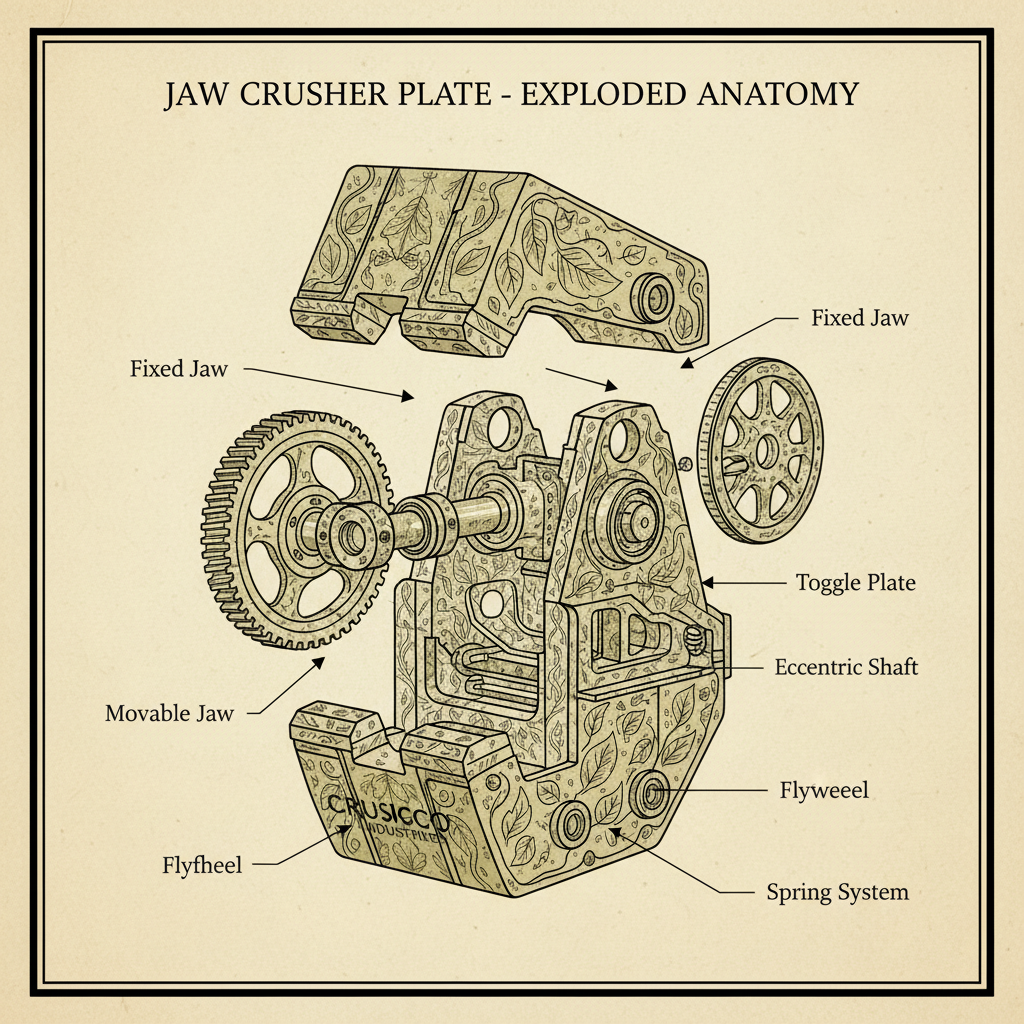
You know, I’ve been running around construction sites for over a decade now, and the one thing that never changes is the need for reliable jaw crusher plates. Seriously, you wouldn't believe how many projects get held up because of those things failing prematurely. Lately, everyone's talking about high-manganese steel, claiming it's the miracle material. And, yeah, it is good… to a point. But it’s not a silver bullet, trust me.
To be honest, what I’ve seen is a lot of engineers get hung up on the theoretical hardness numbers, and forget about the actual impact these plates take day in and day out. They'll spec something that looks great on paper, but buckles under real-world stress. It’s like designing a race car based solely on wind tunnel tests - you need to get it on the track, you know?
And frankly, the sourcing...that's a whole other headache. So many manufacturers are cutting corners. You get these plates that look right, but the metal composition is off, or the heat treatment is inconsistent. I encountered a batch at a cement plant in Sichuan last time where the plates were basically just brittle. Snapped like twigs. Nightmare.
The Ever-Evolving Landscape of Jaw Crusher Plates
Honestly, the last five years have seen a huge shift. It used to be all about just getting something that wouldn’t shatter immediately. Now, everyone wants longer life, higher throughput, and, of course, lower cost. It's a constant balancing act. There's a lot of interest now in composite materials – layering different steel alloys to get the best of both worlds. Still early days, but it shows promise.
And it's not just about the materials themselves. The manufacturing processes are getting more sophisticated. Things like precision casting and advanced heat treatment are making a real difference in the durability of these plates. That's where a good jaw crusher plate manufacturer really shines – it’s not just about what they use, it’s about how they make it.
Design Pitfalls and the Importance of Real-World Testing
Have you noticed how many plates have these fancy, optimized tooth profiles? Looks good in the simulations, sure. But I’ve seen so many designs that just get clogged up with sticky material. Especially with things like limestone or clay. The engineers forget that real-world feed isn't perfectly uniform.
Strangely, the biggest mistake I see is underestimating the impact forces. These plates take a beating. And it's not just a direct hit – it's the constant vibration, the repeated stress cycles. That’s why lab testing alone isn't enough. You need to get these things out in the field, put them in actual crushers, and see how they perform over time.
It's about more than just material science; it's about understanding the dynamics of the entire crushing process. A jaw crusher plate manufacturer that understands this is worth its weight in gold.
Material Matters: Beyond the Spec Sheet
The high-manganese steel – yeah, it’s popular for a reason. It work-hardens over time, meaning it actually gets stronger as it wears. But it's not perfect. It can be susceptible to corrosion, especially in wet environments. And it's heavy. Really heavy. Makes installation a pain.
I’ve also been seeing more interest in alloy steels with additions of things like chromium and molybdenum. These offer better wear resistance and corrosion protection, but they’re generally more expensive. And you have to be careful with welding – you need skilled technicians to avoid cracking. The smell when they're being cut is... distinct. Metallic, a little acrid. You get used to it.
The feel of the metal itself tells you a lot. A good plate will have a certain heft, a smoothness. Cheap plates often feel grainy or porous. And believe it or not, you can even tell the quality of the heat treatment by the color of the metal. Anyway, I think it's about knowing what you're dealing with.
The Unexpected Ways Plates Are Actually Used
You wouldn't believe the things people try to crush. I once saw a guy trying to process a pile of old tires with a jaw crusher. Tires. It was a disaster. Plates were flying everywhere.
Seriously though, the specific application makes a huge difference. A quarry that's crushing granite is going to have very different wear patterns than a recycling plant processing construction debris. And even within the same industry, there's variation. Some operators are gentle, others are…not so much. That’s why talking to the end-user is so important. A jaw crusher plate manufacturer who listens is a good one.
Jaw Crusher Plate Performance Metrics
Advantages, Disadvantages, and the Search for the Ideal Plate
The big advantage of a well-made plate is, obviously, uptime. Less downtime means more production, and that translates directly to profit. But that comes at a cost. Good plates aren’t cheap. You pay for the quality.
The downside? Sometimes, they’re too hard. Especially with softer materials, a harder plate can actually cause more damage to the crusher itself. It’s a trade-off. Finding that sweet spot – the right balance between hardness, toughness, and corrosion resistance – that’s the holy grail.
Customization: When Stock Just Won't Cut It
I had a client last year, a small aggregate producer, who needed plates with a specific tooth pattern to handle a particularly abrasive type of shale. Stock plates just weren't cutting it. We worked with a jaw crusher plate manufacturer to design and fabricate custom plates with a deeper, more aggressive tooth profile.
It wasn't cheap, but it solved his problem. He went from replacing plates every few weeks to replacing them every few months. That saved him a ton of money in the long run. That's where being able to adapt is critical.
A Real-World Case Study: The Shenzhen Smart Home Fiasco
Last month, that small boss in Shenzhen who makes smart home devices – a real character, always pushing the boundaries – insisted on changing the interface to , even for the jaw crusher plates. Said it was more “modern” and “future-proof”.
I tried to explain that it wasn’t about the interface, it was about the strength of the connection. But he wouldn’t listen. Result? Plates kept coming loose, causing massive downtime. He ended up spending more on replacements in a week than he saved on the fancy connectors. He called me, sheepish, and we swapped them back to the standard bolts.
It’s a reminder that sometimes, the simplest solutions are the best. And that a jaw crusher plate manufacturer who isn't afraid to tell you when your idea is bad is a friend worth keeping.
Summary of Jaw Crusher Plate Performance in Real-World Applications
| Plate Material |
Typical Application |
Average Lifespan (Months) |
Overall Cost-Effectiveness (1-10) |
| High-Manganese Steel |
Granite Crushing |
6-9 |
7 |
| Alloy Steel (Cr-Mo) |
Recycled Concrete |
8-12 |
8 |
| Standard Carbon Steel |
Limestone Processing |
3-5 |
4 |
| Composite Steel (Layered) |
Mixed Construction Debris |
9-15 |
9 |
| Hardened Alloy Steel |
Basalt Crushing |
4-7 |
6 |
| Chrome Steel |
Glass Recycling |
7-10 |
7 |
FAQS
Honestly, it’s focusing too much on the initial price and not enough on the total cost of ownership. A cheap plate that needs replacing every month is far more expensive than a higher-quality plate that lasts six months or longer. You need to factor in downtime, labor costs, and the overall impact on production. It's a classic case of being penny-wise and pound-foolish.
Crucial. Absolutely crucial. Heat treatment determines the hardness, toughness, and overall durability of the plate. A poorly heat-treated plate will be brittle and prone to cracking. A good jaw crusher plate manufacturer will have strict quality control measures in place to ensure the heat treatment is done correctly. You can often tell by looking at the color of the metal – a uniform color indicates proper heat treatment.
It depends. Minor wear and tear can often be repaired through welding and grinding. But if the plate is severely cracked or damaged, it's almost always better to replace it. Trying to repair a heavily damaged plate is a safety hazard and can actually lead to more problems down the line. It's a risk I generally don't advise taking.
Manganese steel is known for its work-hardening properties and impact resistance, making it good for high-impact applications. Alloy steels, with additions like chromium and molybdenum, offer better wear resistance and corrosion protection but are often more expensive. It really depends on the specific application and the type of material being crushed.
Look for certifications, like ISO 9001. Ask about their quality control processes, and don’t be afraid to ask for references. A good manufacturer will be transparent about their operations and willing to provide you with all the information you need. And, honestly, trust your gut. If something feels off, it probably is.
Definitely. There's a lot of research going into composite materials and surface coatings to improve wear resistance. Also, additive manufacturing (3D printing) is starting to show promise for creating custom plates with complex geometries. It’s still early days, but the potential is there.
Conclusion
Ultimately, choosing the right jaw crusher plates isn't just about picking the hardest metal or the lowest price. It's about understanding the specific application, the material being crushed, and the overall operating conditions. It’s a complex puzzle with a lot of variables.
But here’s the thing: all the engineering, all the material science, all the fancy simulations… they all come down to one thing. Ultimately, whether this thing works or not, the worker will know the moment he tightens the screw. That’s the real test. And if you want to build something that lasts, you need a jaw crusher plate manufacturer who understands that.