Comprehensive Guide to Heat Resistant Steel Products Quotes and Procurement
Heat Resistant Steel Products Quotes
When sourcing materials for high-temperature applications, understanding heat resistant steel products is crucial. Obtaining accurate quotes, and knowing the factors that influence pricing, can streamline your procurement process. This article will delve into the types of heat resistant steels, typical applications, factors influencing quotes, and how to effectively request pricing from suppliers like DZM Casting. We’ll cover key considerations for cost optimization and ensuring you receive competitive heat resistant steel products quotes.
Types of Heat Resistant Steel
Several alloys are classified as heat resistant steels, each possessing unique properties and suited to different applications. Austenitic stainless steels (like 304, 310, and 316) offer excellent oxidation resistance and are frequently used in furnace components. Ferritic and martensitic steels, while less corrosion resistant, provide high strength at elevated temperatures. Superalloys (like Inconel and Hastelloy) are specifically engineered for extreme heat environments and offer superior creep resistance. The choice of steel depends heavily on the temperature range, the corrosive environment, and the mechanical stresses the component will endure. Understanding these differences is vital when requesting heat resistant steel products quotes, as it directly affects material costs.
Key Takeaway: The selection of the correct heat resistant steel is paramount and will heavily influence the quote price.
Applications Driving Demand for Heat Resistant Steel
Demand for heat resistant steel products stems from diverse industries. The aerospace sector utilizes these materials for turbine blades and exhaust systems. The power generation industry relies on them for boiler tubes, superheater components, and gas turbine parts. Chemical processing plants require heat resistant steel for reactors, heat exchangers, and piping systems. Furthermore, the automotive industry increasingly employs these materials in exhaust manifolds and catalytic converters. The specific application influences the required alloy, component geometry, and any necessary post-processing treatments – all factors impacting heat resistant steel products quotes.
Key Application Areas:
• Aerospace: Turbine blades, exhaust systems
• Power Generation: Boiler tubes, gas turbine parts
• Chemical Processing: Reactors, heat exchangers
• Automotive: Exhaust manifolds, catalytic converters
Factors Influencing Heat Resistant Steel Products Quotes
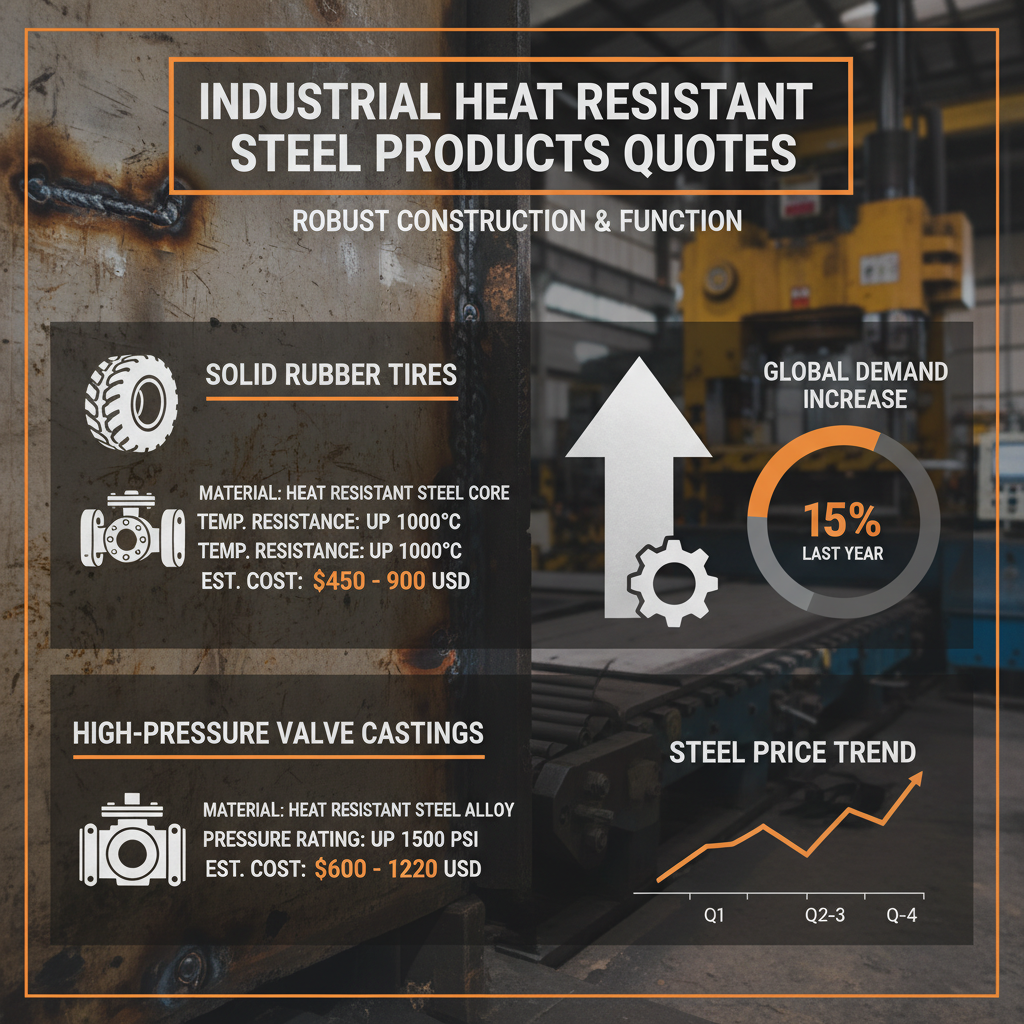
Several factors directly impact the price you’ll receive for heat resistant steel products quotes. These include the alloy composition (superalloys are significantly more expensive than standard stainless steels), the quantity ordered (larger volumes typically benefit from economies of scale), the complexity of the component (intricate designs require more machining time), and any required certifications or testing. Material sourcing also plays a role; prices fluctuate based on global steel market conditions. Furthermore, manufacturing processes such as casting, forging, or machining will add to the overall cost. Finally, shipping and handling charges must be considered.
Obtaining Accurate Heat Resistant Steel Products Quotes
When requesting heat resistant steel products quotes, be as detailed as possible. Provide precise specifications including the alloy grade, dimensions, quantity, and any required tolerances. Include drawings or CAD models to illustrate the component's design. Specify any necessary certifications or testing requirements. Clearly state your delivery timeframe. Suppliers like DZM Casting excel at providing competitive quotes when provided with comprehensive information. Providing a clear and concise Request for Quote (RFQ) streamlines the process and ensures accurate pricing.
Working with DZM Casting for Heat Resistant Steel Solutions
DZM Casting specializes in the production of high-quality heat resistant steel castings. We offer a wide range of alloys and manufacturing capabilities to meet diverse application requirements. Our experienced engineering team can assist with design optimization and material selection. We are committed to providing competitive heat resistant steel products quotes and delivering superior products on time. Contact us today to discuss your project needs.
Conclusion: Partnering for Optimal Heat Resistance
Choosing the right heat resistant steel and a reliable supplier like DZM Casting is critical for the success of your high-temperature applications. By understanding the factors that influence heat resistant steel products quotes and providing detailed specifications, you can ensure cost-effective solutions without compromising on quality or performance.
Frequently Asked Questions (FAQs)
What information do I need to provide to get an accurate quote?
To receive an accurate heat resistant steel products quote, please include the following: alloy specification, component drawings (CAD preferred), quantity required, desired tolerances, any specific heat treatment or surface finishing requirements, and any applicable industry standards or certifications. The more detailed your information, the more precise the quote will be. We also need to know your delivery timeframe and preferred shipping method.
What are the typical lead times for heat resistant steel castings?
Lead times vary depending on the complexity of the component, the alloy used, and our current production schedule. Generally, lead times range from 4-8 weeks for standard castings. For more complex designs or custom alloys, lead times may be longer. We provide a firm delivery date with each quote, and we are committed to meeting your deadlines.
Do you offer material certifications?
Yes, DZM Casting provides full material certifications upon request. These certifications verify that the steel meets the specified alloy composition and mechanical properties. We can also provide testing reports to demonstrate compliance with relevant industry standards. We understand the importance of traceability and quality assurance in critical applications.
Can you assist with material selection for my application?
Absolutely. Our experienced engineering team can provide guidance on material selection based on your specific application requirements. We consider factors such as temperature, corrosive environment, mechanical stress, and cost to recommend the most suitable alloy. We can also help optimize your component design for manufacturability and performance.
-
High Performance oem cast heat resistant steel for Industrial UseNewsApr.16,2026
-
Guide to Selecting High Quality Cast Heat Resistant Steel AlloysNewsApr.09,2026
-
Custom Cast Heat Resistant Steel Solutions for High Temperature ApplicationsNewsApr.07,2026
-
Comprehensive Guide to Wholesale Cast Heat Resistant Steel for Industrial ApplicationsNewsApr.04,2026
-
Comprehensive Guide to High Performance Heat Resistant Metal Product SolutionsNewsMar.31,2026
-
Expert Guidance on Heat Resistant Metal Quotes and Alloy SelectionNewsMar.28,2026