Finding the Right Cheap Heat Resistant Metal for Optimal Project Performance
Finding the Right Cheap Heat Resistant Metal for Your Project
When tackling projects that involve high temperatures, selecting the appropriate metal is critical. Cheap heat resistant metal options exist, offering a balance between affordability and performance. This article will explore various metals known for their heat resistance, their applications, and factors to consider when making your selection. From industrial furnaces to automotive components, understanding the properties of these materials will ensure the success and longevity of your project. DZMCCasting offers a wide range of metal casting solutions to meet your specific needs.
Understanding Heat Resistance in Metals
Heat resistance isn't simply about a metal's melting point; it encompasses a range of properties including thermal conductivity, thermal expansion, and oxidation resistance. Metals with high melting points, like tungsten and molybdenum, are inherently heat resistant, but they can be expensive and difficult to work with. More affordable options like certain steels and alloys offer sufficient heat resistance for many applications. The best choice depends heavily on the specific temperature requirements, the operating environment, and budgetary constraints. Consider the duration of exposure to high temperatures, whether the metal will be exposed to corrosive atmospheres, and the mechanical stresses it will endure.
Key Considerations: Melting point, thermal conductivity, oxidation resistance, mechanical strength at high temperatures, and cost.
Popular Choices for Cheap Heat Resistant Metal
Several metals stand out as cost-effective choices for applications requiring heat resistance. Stainless steel, particularly grades 304 and 316, are widely used due to their excellent corrosion resistance and ability to maintain strength at elevated temperatures. Carbon steel, while less expensive, requires protective coatings to prevent oxidation. Cast iron, especially gray cast iron, offers good heat resistance and damping capacity, making it suitable for furnace components. Aluminum alloys, though generally lower in melting point than steel, can be effective in specific applications where lightweight properties are crucial.
Common Heat Resistant Metals:
• Stainless Steel (304, 316)
• Carbon Steel (with protective coating)
• Gray Cast Iron
• Aluminum Alloys
Comparing Heat Resistance and Cost
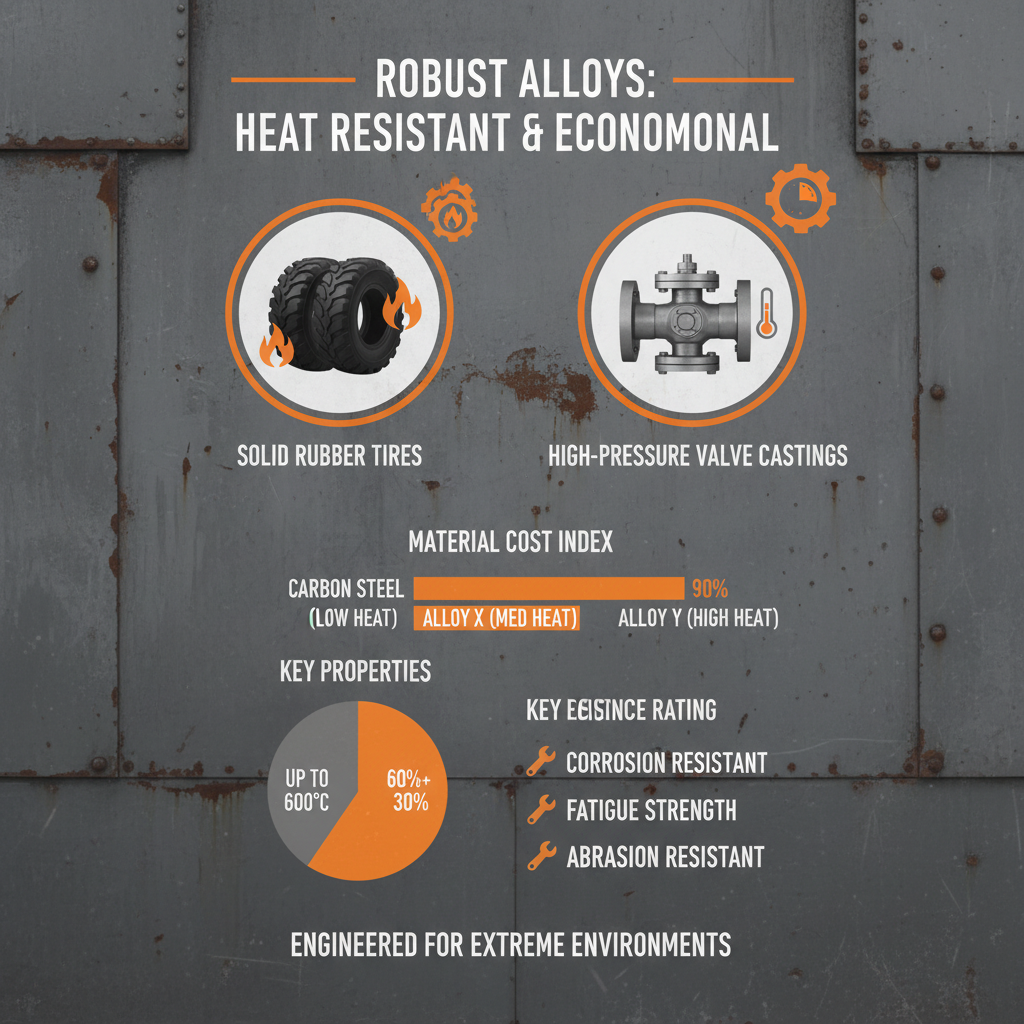
The relationship between heat resistance and cost is often a trade-off. Higher performance alloys typically come with a higher price tag. Here's a comparative overview to help you navigate the options. DZMCCasting specializes in providing cost-effective metal casting solutions tailored to your heat resistance requirements.
Applications of Cheap Heat Resistant Metal
The applications for these metals are diverse. Stainless steel is common in exhaust systems, furnace components, and heat exchangers. Carbon steel, with proper coating, finds use in structural supports and tooling. Cast iron is frequently used in engine blocks, cookware, and fireplace inserts. Aluminum alloys are ideal for applications where weight is a concern, such as heat sinks and certain automotive parts. The selection process hinges on matching the metal’s properties to the specific demands of the application.
Choosing the Right Metal for Your Project
Selecting the right cheap heat resistant metal requires careful consideration. Evaluate the operating temperature, the presence of corrosive environments, mechanical stress levels, and your budget. Consulting with a metal casting expert, like those at DZMCCasting, can provide valuable insights and guidance. We offer a range of metal casting services to meet your specific project needs, ensuring both quality and cost-effectiveness.
Conclusion: Finding the Optimal Heat Resistant Metal Solution
Choosing the right cheap heat resistant metal is crucial for project success. By carefully evaluating your needs and considering the properties of different metals, you can find a cost-effective solution that delivers the performance and durability you require. DZMCCasting provides the expertise and resources to help you navigate this process and achieve optimal results.
Frequently Asked Questions (FAQs)
What is the best cheap heat resistant metal for a DIY furnace project?
For a DIY furnace, gray cast iron is often a good choice due to its good heat resistance, damping capacity, and relative affordability. It can withstand high temperatures without significant deformation. However, consider the furnace's operating temperature – if it exceeds cast iron’s limits (around 700-800°C), stainless steel 304 or 316 would be more suitable, though potentially more expensive. Ensure proper ventilation and safety precautions are in place when working with high temperatures and potentially hazardous materials.
How can I protect carbon steel from oxidation at high temperatures?
Carbon steel is prone to oxidation at high temperatures. Applying a protective coating is essential. Common options include ceramic coatings, aluminizing (coating with aluminum), or painting with high-temperature paint specifically designed for furnaces or exhaust systems. Regularly inspecting and reapplying the coating as needed will help maintain its effectiveness and prevent corrosion. Consider the specific operating environment when selecting a coating.
What are the benefits of using stainless steel over other heat resistant metals?
Stainless steel offers a superior combination of heat resistance, corrosion resistance, and strength. It requires less maintenance than carbon steel as it doesn’t need frequent coating. While more expensive than carbon steel or cast iron, its longevity and reliability often make it a cost-effective choice in the long run. It’s also relatively easy to fabricate and weld, contributing to its widespread use in diverse applications.
Is aluminum a good option for high-temperature applications?
Aluminum alloys generally have lower melting points than steel or cast iron (typically around 660°C/1220°F). However, they can be suitable for applications where lightweight properties are essential and the operating temperature doesn’t exceed their limits. They also exhibit good thermal conductivity, making them effective for heat sinks. It’s crucial to select an aluminum alloy specifically designed for elevated temperatures.
-
High Performance oem cast heat resistant steel for Industrial UseNewsApr.16,2026
-
Guide to Selecting High Quality Cast Heat Resistant Steel AlloysNewsApr.09,2026
-
Custom Cast Heat Resistant Steel Solutions for High Temperature ApplicationsNewsApr.07,2026
-
Comprehensive Guide to Wholesale Cast Heat Resistant Steel for Industrial ApplicationsNewsApr.04,2026
-
Comprehensive Guide to High Performance Heat Resistant Metal Product SolutionsNewsMar.31,2026
-
Expert Guidance on Heat Resistant Metal Quotes and Alloy SelectionNewsMar.28,2026