Expert Heat Resistant Metal Factory Solutions for High Temperature Applications
Heat Resistant Metal Factory: Your Guide to High-Temperature Alloys
In demanding industries like aerospace, automotive, and energy, the need for metals that can withstand extreme temperatures is paramount. A heat resistant metal factory specializes in producing alloys designed to maintain their strength, integrity, and performance even under intense heat. This article will explore the types of heat-resistant metals, their applications, the manufacturing processes involved, and why choosing a reliable factory like DZM Casting is crucial for your project. We'll cover key considerations for sourcing these critical materials and the advantages of working with a specialized supplier.
Understanding Heat Resistant Metals
Heat-resistant metals and alloys are engineered to retain their mechanical properties – strength, creep resistance, and oxidation resistance – at high temperatures. These materials are not simply metals that don't melt easily; they're specifically formulated to resist deformation and degradation in extreme thermal environments. Common types include stainless steels, nickel-based alloys (like Inconel and Hastelloy), cobalt-based alloys, and refractory metals such as molybdenum and tungsten. The selection of the right material depends heavily on the specific application and temperature requirements.
Key Applications of Heat Resistant Alloys
The demand for heat-resistant alloys spans numerous industries. Aerospace uses them extensively in jet engine components, turbine blades, and rocket nozzles. The automotive industry relies on these materials for exhaust systems and turbocharger parts. Power generation plants utilize them in gas turbines and boiler tubes. Chemical processing benefits from their corrosion resistance at elevated temperatures. Even medical applications leverage these alloys for implants and surgical instruments requiring sterilization at high temperatures. The versatility of these materials makes a dedicated heat resistant metal factory essential for various sectors.
Manufacturing Processes at a Heat Resistant Metal Factory
Producing heat-resistant alloys requires specialized manufacturing processes. Investment casting (lost-wax casting) is a common technique for creating complex shapes with tight tolerances. Vacuum induction melting (VIM) and vacuum arc remelting (VAR) are used to refine the alloy composition and remove impurities, crucial for achieving desired properties. Forging, rolling, and extrusion are employed to shape the metal into various forms. Finally, heat treatment processes like solution annealing, aging, and precipitation hardening are applied to optimize the alloy's microstructure and enhance its performance. A reputable factory will employ stringent quality control measures throughout each stage.
Common Heat Resistant Alloys and Their Properties
Different alloys excel in different temperature ranges and applications. Here's a comparison of some commonly used heat-resistant alloys:
Quality Control and Certifications
A reputable heat resistant metal factory prioritizes quality control. This includes rigorous testing of raw materials, in-process inspections, and final product testing to ensure compliance with industry standards (like ASTM, AMS, and EN). Certifications like ISO 9001 demonstrate a commitment to quality management systems. Non-destructive testing methods, such as radiographic inspection and ultrasonic testing, are used to detect internal flaws without damaging the material. Traceability of materials is also essential, allowing for full accountability throughout the production process.
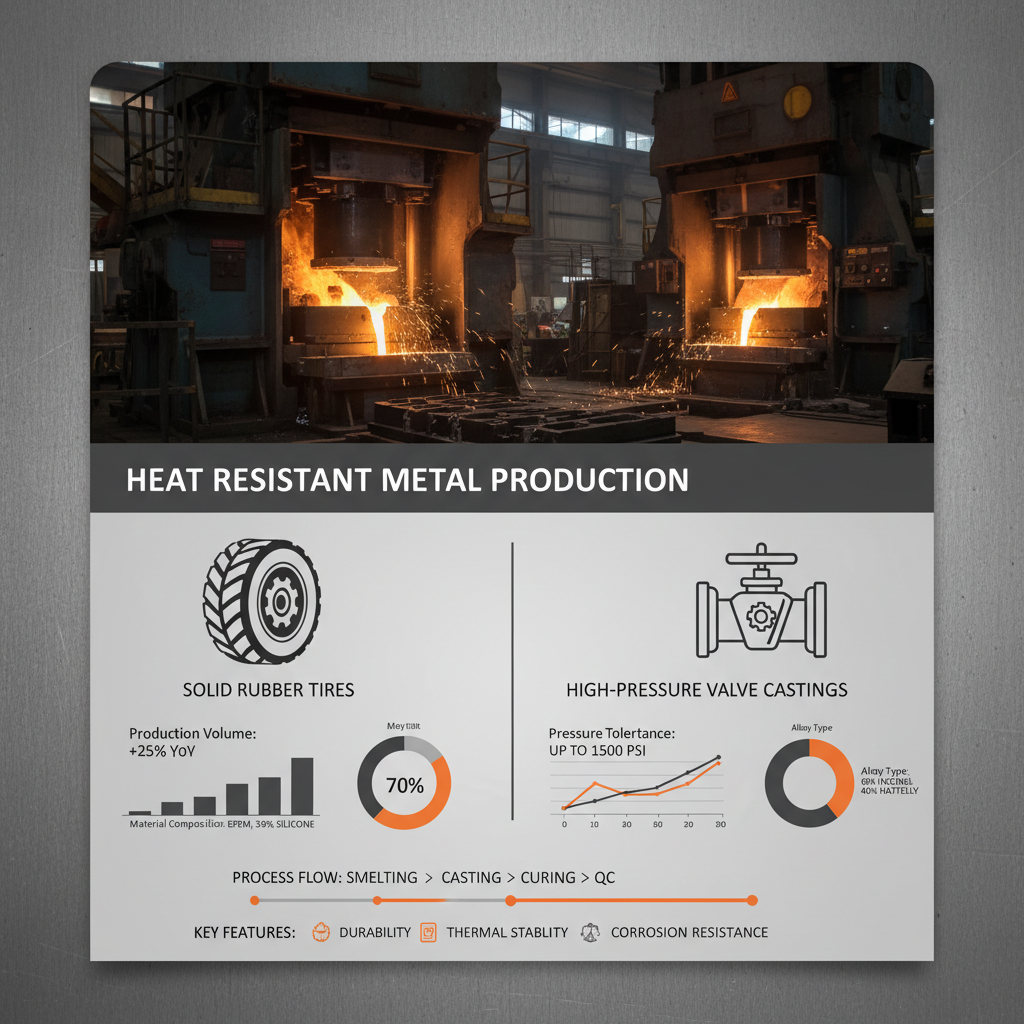
Choosing the Right Heat Resistant Metal Factory
Selecting the right factory is critical. Consider factors like their experience, capabilities, quality control procedures, and certifications. Look for a factory that specializes in the specific alloy you require and can provide customized solutions. Evaluate their capacity to meet your production volume and delivery deadlines. Excellent communication and technical support are also essential. DZM Casting offers a comprehensive range of heat-resistant alloys, advanced manufacturing processes, and a commitment to quality, making us a trusted partner for industries demanding high-performance materials.
Conclusion: Partnering for Success with a Specialized Factory
Sourcing heat-resistant metals is a critical decision with significant implications for the performance and reliability of your products. By partnering with a specialized heat resistant metal factory like DZM Casting, you gain access to expertise, quality materials, and a commitment to meeting your unique requirements. Don’t compromise on quality – choose a partner who understands the demands of your industry.
Frequently Asked Questions (FAQs)
What factors influence the cost of heat-resistant alloys?
The cost of these alloys is influenced by several factors, including the base metal composition (nickel, cobalt, molybdenum, etc.), the manufacturing process (e.g., VIM, VAR), the quantity ordered, and any special requirements like custom alloying or tight tolerances. Rare earth elements and specialized processing techniques will significantly increase the price. Working directly with a factory like DZM Casting can help you optimize cost-effectiveness through efficient production planning and material selection.
What is creep resistance and why is it important in heat-resistant alloys?
Creep resistance is the ability of a material to resist slow, permanent deformation under sustained stress at high temperatures. It's a crucial property for components operating in high-heat environments, as even slight deformation can lead to failure. Alloying elements and specific microstructures are engineered to enhance creep resistance. Nickel-based superalloys, for instance, are specifically designed for superior creep performance at elevated temperatures. A heat resistant metal factory will be able to provide alloys with optimized creep resistance for your specific application.
Can a heat resistant metal factory provide custom alloy development?
Yes, many specialized factories, including DZM Casting, offer custom alloy development services. This involves working closely with your engineers to create an alloy composition tailored to your precise performance requirements. This process typically includes alloy design, prototype production, testing, and refinement to achieve optimal properties. Custom alloy development is ideal for applications with unique challenges or demanding specifications.
What are some common testing methods used to verify the quality of heat-resistant alloys?
Common testing methods include tensile testing to determine strength, creep testing to assess long-term deformation resistance, oxidation testing to evaluate resistance to corrosion at high temperatures, and microstructural analysis to examine the alloy's internal structure. Non-destructive testing methods like radiography and ultrasonic testing are also used to detect internal flaws. A reputable factory will provide comprehensive test reports to verify the alloy's compliance with specifications.
-
High Performance oem cast heat resistant steel for Industrial UseNewsApr.16,2026
-
Guide to Selecting High Quality Cast Heat Resistant Steel AlloysNewsApr.09,2026
-
Custom Cast Heat Resistant Steel Solutions for High Temperature ApplicationsNewsApr.07,2026
-
Comprehensive Guide to Wholesale Cast Heat Resistant Steel for Industrial ApplicationsNewsApr.04,2026
-
Comprehensive Guide to High Performance Heat Resistant Metal Product SolutionsNewsMar.31,2026
-
Expert Guidance on Heat Resistant Metal Quotes and Alloy SelectionNewsMar.28,2026