Comprehensive Guide to High Quality Heat Resistant Metal Selection and Applications
High Quality Heat Resistant Metal: A Comprehensive Guide
In industries ranging from aerospace and automotive to energy and manufacturing, the demand for high quality heat resistant metal is continuously growing. These specialized alloys are crucial for components operating in extreme temperature environments, ensuring durability, performance, and safety. This article provides an in-depth look at heat resistant metals, their properties, applications, and the factors to consider when selecting the right material for your specific needs. Understanding these materials is key to achieving optimal results in high-temperature applications.
Understanding Heat Resistance in Metals
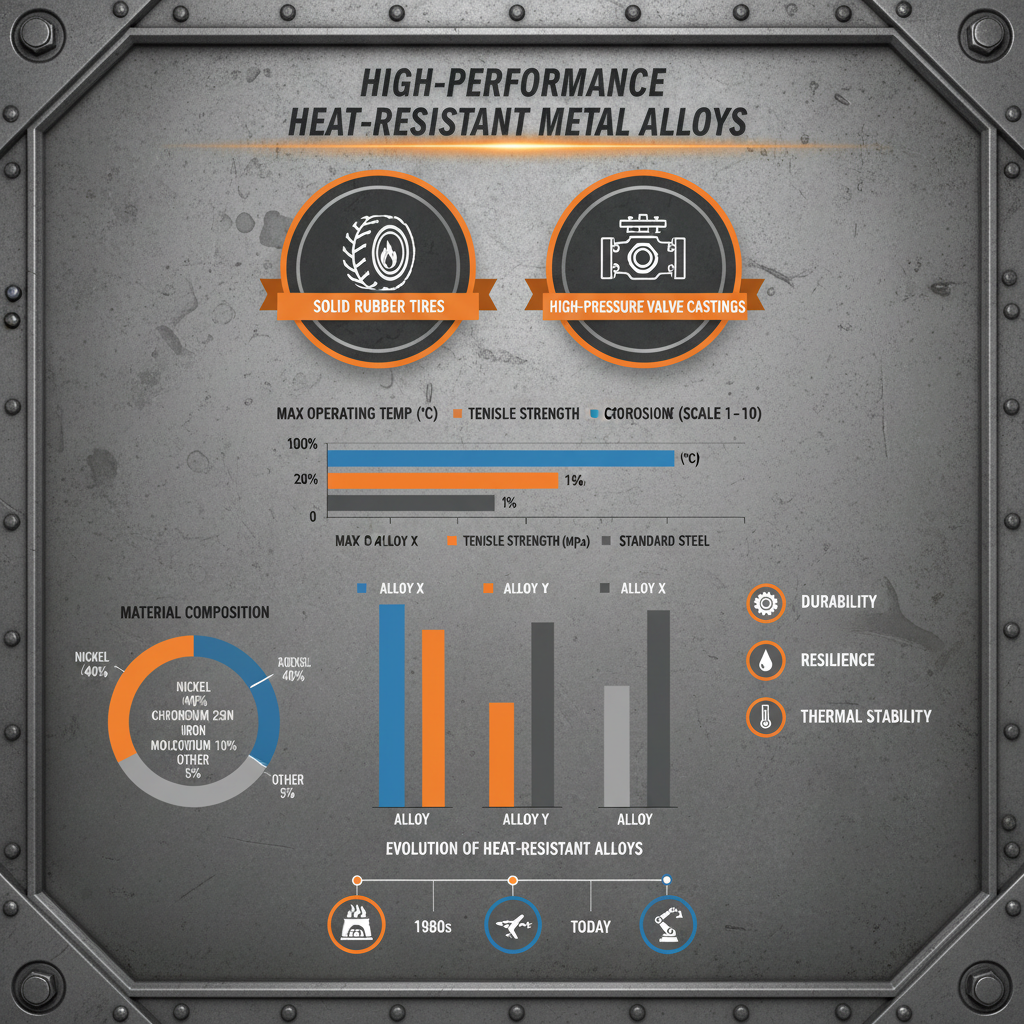
Heat resistance isn't a single property, but rather a combination of characteristics. It primarily involves a metal’s ability to maintain its mechanical strength and resist degradation – such as oxidation, creep, and corrosion – at elevated temperatures. Several factors influence this, including the alloy composition, the presence of protective surface layers (like oxides), and the operating environment. Metals like aluminum and titanium form protective oxide layers which enhance their resistance, while others rely on the addition of elements like chromium and molybdenum to stabilize their microstructure. The selection of the right heat resistant metal depends heavily on the specific temperature range and the application's requirements.
Key Considerations: Alloy composition, protective layers, operating environment, temperature range, and mechanical strength requirements are all crucial when assessing heat resistance.
Common Types of High Quality Heat Resistant Metals
Several metals and alloys excel in high-temperature applications. Here's a look at some of the most commonly used:
- Nickel-based Superalloys: Known for exceptional strength and oxidation resistance at extremely high temperatures. Commonly used in gas turbines and aerospace components.
- Cobalt-based Superalloys: Similar to nickel-based alloys but often exhibit better hot corrosion resistance.
- Stainless Steels: Certain grades, particularly austenitic stainless steels containing chromium and nickel, offer good heat resistance for moderate temperature applications.
- Titanium Alloys: Possess a high strength-to-weight ratio and good oxidation resistance up to moderate temperatures, making them suitable for aerospace and automotive applications.
- Molybdenum Alloys: Exhibits excellent high-temperature strength but requires protective coatings to prevent oxidation.
Key Properties of High Quality Heat Resistant Metal
When evaluating high quality heat resistant metal, several key properties must be considered. These properties directly impact the material’s performance and longevity in demanding applications. These include:
Applications of Heat Resistant Metals
The applications of high quality heat resistant metal are widespread and vital in many sectors. Some key examples include:
- Aerospace: Turbine blades, exhaust systems, and combustion chambers in jet engines.
- Power Generation: Gas turbine components, boiler tubes, and heat exchangers in power plants.
- Automotive: Exhaust manifolds, turbocharger components, and catalytic converters.
- Chemical Processing: Reactors, furnaces, and heat treatment equipment.
- Medical: Surgical instruments and implants requiring sterilization at high temperatures.
Selecting the Right Heat Resistant Metal: Key Considerations
Choosing the appropriate high quality heat resistant metal requires a careful evaluation of several factors. This includes the operating temperature, the specific environment (oxidizing, corrosive, etc.), the required mechanical properties (strength, ductility), and cost considerations. Consulting with materials engineers and metallurgists is highly recommended to ensure optimal material selection. DZM Casting provides expert guidance and a wide range of heat-resistant alloy solutions to meet your specific needs. We leverage our expertise in precision casting to deliver components with exceptional quality and performance.
Conclusion: Investing in Performance and Reliability
Selecting the right heat resistant metal is a crucial decision impacting the performance, longevity, and safety of your applications. By understanding the properties, types, and applications discussed in this guide, you can make informed choices that optimize your results. Contact DZM Casting today for expert assistance in selecting and sourcing the ideal heat-resistant alloy for your specific requirements.
Frequently Asked Questions (FAQs)
What is the difference between heat resistance and heat treatment?
Heat resistance is an inherent property of a material, describing its ability to maintain its strength and integrity at high temperatures. Heat treatment, on the other hand, is a process applied to a material to alter its physical and mechanical properties, often to improve its heat resistance or other characteristics. For instance, solution annealing and aging can enhance the strength and creep resistance of certain alloys, while surface treatments can improve oxidation resistance. Heat resistance is what the material is capable of, while heat treatment is how we modify its properties.
How important is alloy composition in determining heat resistance?
Alloy composition is paramount. The specific elements added to a base metal drastically influence its high-temperature performance. For example, chromium enhances oxidation resistance by forming a protective oxide layer. Nickel and molybdenum contribute to solid-solution strengthening, improving creep resistance. The precise percentages of these alloying elements, along with other minor additions, are carefully controlled to achieve desired properties. Choosing an alloy with the appropriate composition is the first crucial step in ensuring adequate heat resistance.
Are coatings used to improve heat resistance?
Yes, coatings are frequently used to enhance heat resistance. These coatings, often ceramic-based, provide a thermal barrier, protecting the underlying metal from extreme temperatures and oxidation. They can significantly extend the lifespan of components operating in harsh environments. Examples include aluminide coatings, MCrAlY coatings (where M represents nickel, cobalt, or iron), and thermal barrier coatings (TBCs). The selection of the appropriate coating depends on the specific operating conditions and the base metal.
What is creep, and why is creep resistance important?
Creep is the tendency of a solid material to slowly deform permanently under the influence of persistent mechanical stresses. This deformation becomes more pronounced at elevated temperatures. Creep resistance is vital because it determines how well a component will maintain its shape and functionality over time in high-temperature applications. Components subject to creep can experience dimensional changes, leading to failure. High creep resistance ensures structural integrity and long-term performance.
-
High Performance oem cast heat resistant steel for Industrial UseNewsApr.16,2026
-
Guide to Selecting High Quality Cast Heat Resistant Steel AlloysNewsApr.09,2026
-
Custom Cast Heat Resistant Steel Solutions for High Temperature ApplicationsNewsApr.07,2026
-
Comprehensive Guide to Wholesale Cast Heat Resistant Steel for Industrial ApplicationsNewsApr.04,2026
-
Comprehensive Guide to High Performance Heat Resistant Metal Product SolutionsNewsMar.31,2026
-
Expert Guidance on Heat Resistant Metal Quotes and Alloy SelectionNewsMar.28,2026