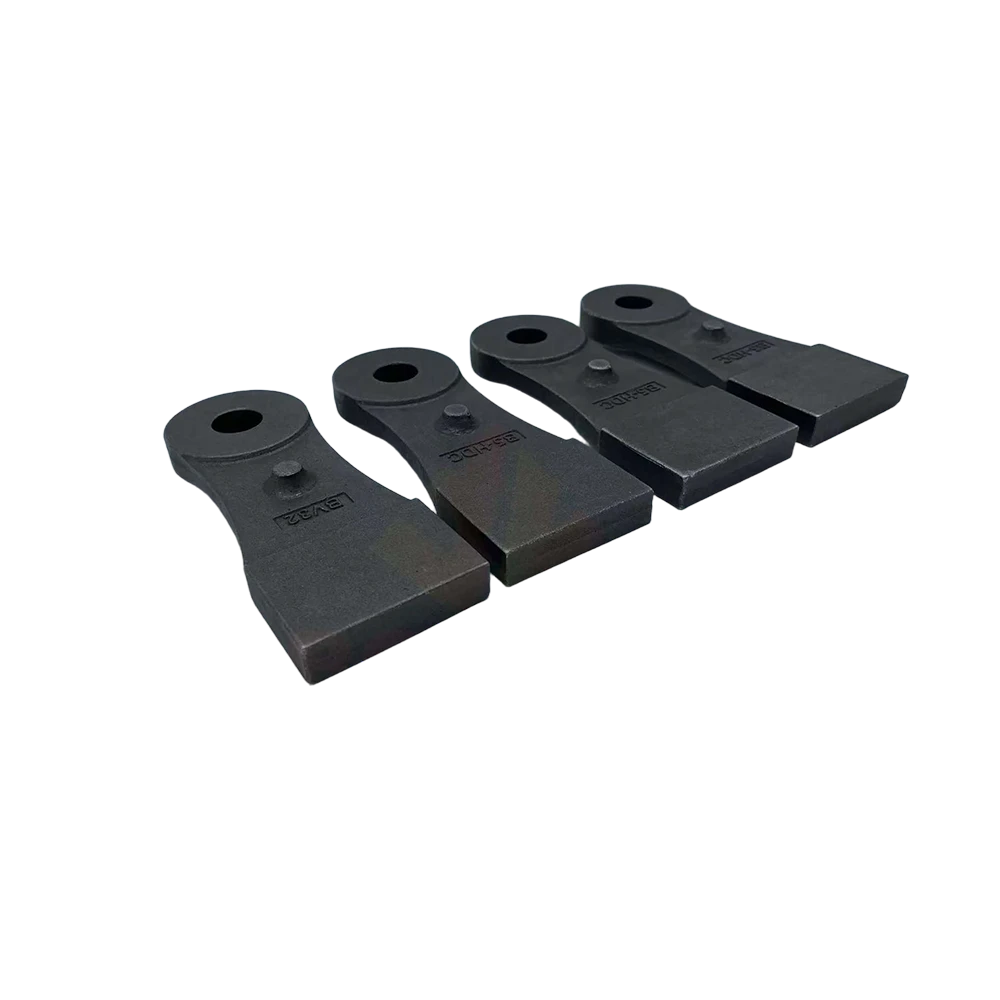
The Indispensable Role of Crusher Hammers in Material Processing
In the world of aggregate production, mining, and recycling, few components are as fundamentally important as the crusher hammer. These unassuming yet critical parts serve as the primary interface between massive mechanical forces and the raw materials being processed. Far from being simple blunt instruments, modern crusher hammers represent a sophisticated fusion of metallurgical science and engineering design, directly influencing operational efficiency, maintenance costs, and final product quality.
The Mechanics of Impact Crusher Hammers
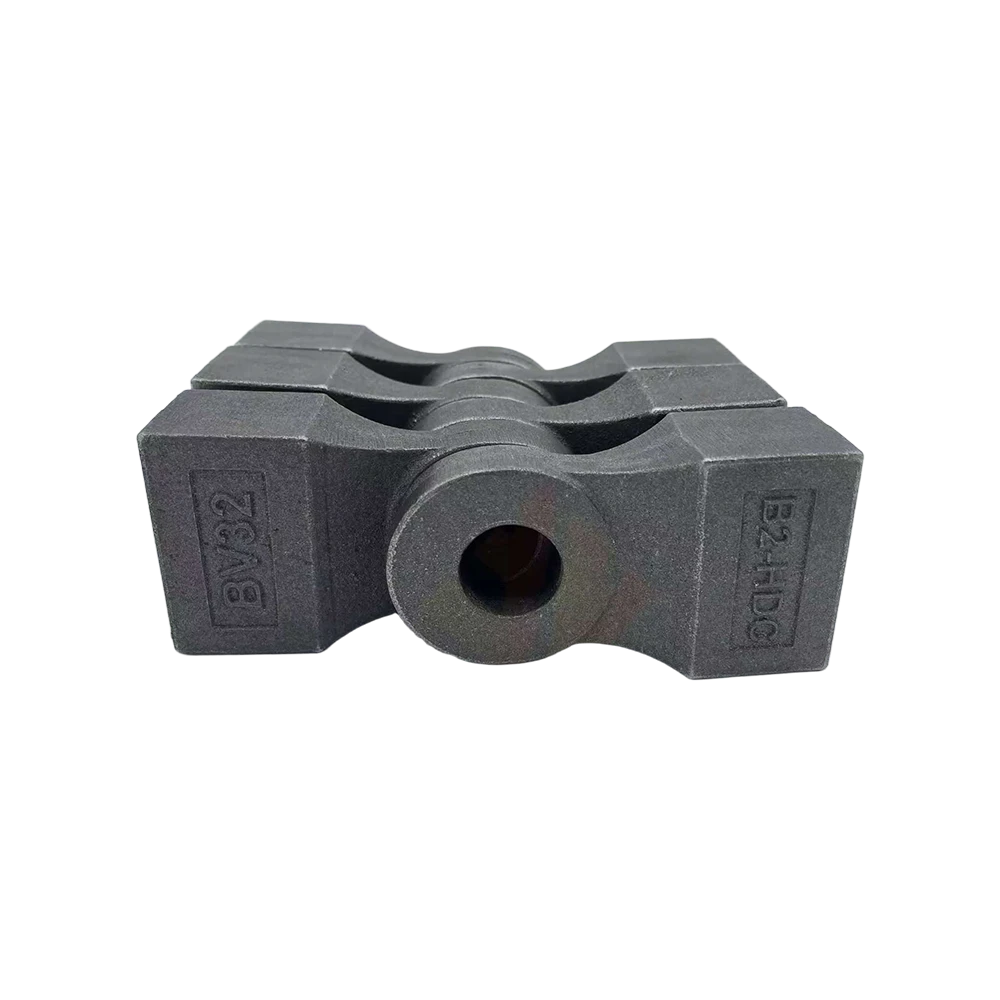
Crusher hammers operate on the principle of kinetic energy transfer. Mounted on a rotating rotor within horizontal or vertical shaft impactors, these hammers accelerate to high velocities before striking incoming material. The sudden transfer of energy fractures the material along its natural fault lines, reducing large chunks into smaller, more manageable pieces. This impact crushing mechanism differs fundamentally from the compressive action of jaw crushers or the abrasive grinding of roller mills, offering unique advantages in terms of particle shape control and throughput capacity.
The effectiveness of this process depends heavily on hammer design and composition. A well-engineered hammer maintains its structural integrity through countless impacts while efficiently transmitting energy to the material. The geometry of the hammer's striking face influences both the crushing efficiency and the wear pattern, with various profiles optimized for different material types and desired product specifications.
Material Science Behind Crusher Hammer Durability
The selection of materials for crusher hammers involves careful balancing of hardness, toughness, and wear resistance. Traditional manganese steel remains popular for its ability to work-harden under impact, developing a hardened surface layer while maintaining a tough core. More advanced alloys incorporate chromium, molybdenum, and other elements to enhance specific performance characteristics in different operating environments.
Modern metallurgical advancements have introduced composite hammer designs that strategically place different materials in specific zones. The striking face might incorporate ultra-hard alloys or ceramic inserts to resist abrasion, while the body maintains sufficient ductility to withstand repetitive impact stresses. Some manufacturers now employ specialized heat treatment processes that create graduated material properties within a single hammer, hard at the surface but gradually becoming more ductile toward the core.
Crusher Hammer’s Design Variations for Specific Applications
Crusher hammer designs have evolved to address the challenges posed by different materials and processing requirements. For soft, non-abrasive materials like limestone, hammers with larger surface areas and blunt profiles maximize impact force distribution. When processing highly abrasive materials such as quartzite or recycled concrete, narrower hammer profiles with reinforced leading edges help concentrate force while minimizing wear.
In the recycling sector, specialized hammer designs have emerged to handle variable feed materials. These might feature reversible or rotatable elements that extend service life by presenting fresh striking surfaces as wear occurs. Some designs incorporate shock-absorbing elements to protect the rotor assembly when encountering uncrushable objects, a common challenge in construction waste processing.
The Relationship Between Crusher Hammers and Product Quality
Beyond simple size reduction, crusher hammers significantly influence the characteristics of the final product. The angle and velocity of impact affect particle shape, with optimal parameters producing cubical aggregates prized in construction applications. Excessive hammer wear leads to rounding of particles and generation of undesirable fines, while properly maintained hammers produce more consistent gradation.
In mineral processing operations, hammer condition can impact liberation characteristics—the degree to which valuable minerals separate from waste rock. Well-maintained hammers create cleaner fracture planes, improving downstream separation efficiency. This consideration becomes particularly important in operations where subsequent processing steps like flotation or magnetic separation depend on proper particle preparation.
Crusher Hammer: Maintenance Strategies for Optimal Performance
Effective hammer management extends beyond simple replacement when wear becomes evident. Progressive monitoring of hammer condition allows for predictive maintenance, scheduling replacements during planned downtime rather than emergency stoppages. Some operations implement rotation programs, periodically repositioning hammers to equalize wear across the rotor assembly.
Advanced operations employ non-destructive testing methods to assess hammer integrity, detecting internal cracks or structural weaknesses before they lead to catastrophic failure. Thermal imaging can reveal abnormal heating patterns indicating misalignment or imbalance, while ultrasonic testing identifies subsurface flaws that might not be visible during routine inspections.
The Economic Impact of Crusher Hammer Selection
The choice of crusher hammers carries significant financial implications throughout an operation's lifecycle. Premium hammers with higher upfront costs often prove more economical when considering total cost of ownership, offering extended service life and reduced downtime. Conversely, selecting inappropriate hammers for a specific application can lead to excessive wear, increased energy consumption, and poor product quality—all of which erode profitability.
Forward-thinking operations conduct comprehensive cost-benefit analyses that account not just for hammer purchase price, but for installation labor, expected service life, impact on energy efficiency, and influence on downstream processes. This holistic approach frequently reveals that investing in superior hammer technology yields substantial long-term returns.
Emerging Technologies in Crusher Hammer Design
The crusher hammer continues to evolve through technological innovation. Computer simulations now optimize hammer geometry for specific applications, using finite element analysis to predict stress distribution and wear patterns. Additive manufacturing techniques enable complex internal structures that were previously impossible to produce, allowing for weight reduction without sacrificing strength.
Smart hammer concepts incorporating embedded sensors are entering the market, providing real-time data on wear rates and impact forces. This information enables predictive maintenance and helps operators fine-tune crusher parameters for maximum efficiency. Some experimental designs even explore self-sharpening mechanisms inspired by biological systems, though these remain in developmental stages.
The humble crusher hammer stands as a testament to how seemingly simple components can have outsized importance in industrial processes. From its metallurgical composition to its geometric design, every aspect of a crusher hammer influences the efficiency, cost-effectiveness, and output quality of size reduction operations.
As material processing demands grow more sophisticated and environmental considerations gain prominence, crusher hammer technology will continue advancing. Operations that recognize the strategic importance of proper hammer selection and maintenance will gain competitive advantages in productivity, product quality, and operational costs. In the relentless environment of material reduction, the crusher hammer remains both the workhorse and the precision instrument—a tool whose proper application makes all the difference between mediocre and exceptional performance.
-
High Performance oem cast heat resistant steel for Industrial UseNewsApr.16,2026
-
Guide to Selecting High Quality Cast Heat Resistant Steel AlloysNewsApr.09,2026
-
Custom Cast Heat Resistant Steel Solutions for High Temperature ApplicationsNewsApr.07,2026
-
Comprehensive Guide to Wholesale Cast Heat Resistant Steel for Industrial ApplicationsNewsApr.04,2026
-
Comprehensive Guide to High Performance Heat Resistant Metal Product SolutionsNewsMar.31,2026
-
Expert Guidance on Heat Resistant Metal Quotes and Alloy SelectionNewsMar.28,2026